 Orji Chigozie Henry
A vision board is more than just a collage of images and words. It is a powerful tool for clarifying your goals, maintaining focus, and turning your dreams into reality. By visually representing your aspirations, a vision board serves as a daily reminder of what you want to bring into your life. Whether your goals involve personal growth, career success, health improvements, or deeper relationships, a vision board helps you focus your energy on what truly matters. It’s a creative, intentional practice that bridges imagination and action, allowing you to see your future in a tangible form.
The power of a vision board lies in its ability to engage both your conscious and subconscious mind. When you repeatedly see images, quotes, or objects that represent your goals, your mind starts to internalize these aspirations. This can influence your decisions, habits, and overall mindset in subtle but meaningful ways. Essentially, a vision board transforms abstract dreams into concrete targets, making it easier to act toward them with confidence and clarity.
Creating a vision board is not just about crafting something visually appealing—it’s about intentionality. The process encourages reflection, self-awareness, and proactive goal setting. By taking the time to define your goals, select inspiring visuals, and interact with your board daily, you cultivate a mindset of focus and possibility.
How to Make a Vision Board
1. Clarify Your Goals
Before you start gathering images and materials, it’s essential to take a step back and reflect on what you truly want. Ask yourself meaningful questions such as: “What do I want to achieve this year?” “How do I want to feel in my daily life?” and “Which areas of my life need growth or improvement?” By thinking deeply about your intentions, you create a strong foundation for your vision board.
Writing down your goals in clear, specific terms makes them more tangible and actionable. Instead of vague statements like “I want to be healthier,” specify what that looks like—perhaps exercising three times a week or eating more whole foods. Similarly, career goals might include completing a certification or landing a promotion, while personal growth could focus on building confidence or improving communication skills.
It’s also helpful to categorize your goals across different areas of life, such as career, health, relationships, finances, travel, and personal development. This approach ensures that your vision board reflects a holistic view of your aspirations, helping you maintain balance while striving toward success in multiple areas. Clarifying your goals is the first step in transforming your dreams into a visible and motivating reality.

2. Gather Your Materials
Once your goals are clear, it’s time to gather the materials you’ll use to create your vision board. The options are nearly limitless, and the key is to choose items that resonate with you personally. Physical boards typically use a poster board, corkboard, or even a simple cardboard base. Digital alternatives allow for apps, graphic design software, or platforms like Pinterest.
You can source images from magazines, printed photos, or online resources, and complement them with inspirational quotes, phrases, or affirmations. Scissors, glue, tape, markers, and colorful pens help bring your board to life. Beyond images and text, consider including symbolic items that hold personal meaning—like ticket stubs, postcards, or small objects representing your aspirations.
The more personalized and visually appealing your materials are, the more engaging your vision board will be. The goal is to create a piece that captures your imagination and inspires daily motivation. Gathering materials is not just a practical step—it’s an opportunity to reflect on the sensory and emotional aspects of your goals, making the creative process both meaningful and enjoyable.
Related: 8 Effective Ways To Create a To-Do List
3. Choose Images and Words That Inspire You
Selecting the right visuals and words is the heart of your vision board. Choose images, phrases, or affirmations that evoke strong positive emotions and resonate deeply with your goals. For instance, if travel is a priority, select photos of destinations you want to visit. If personal development is a focus, include quotes or statements that reinforce motivation and self-belief.
Emotional connection is essential because your brain responds more readily to things that carry meaning and significance. The more you feel inspired when you look at your board, the stronger the impact on your mindset and actions. This emotional engagement helps align your thoughts, habits, and decisions with your goals over time.
Don’t hesitate to mix and match mediums—photos, words, hand-drawn elements, or even digital printouts. The combination of visuals and text creates a multi-layered reminder of your aspirations, reinforcing your goals each time you interact with the board.
4. Arrange and Assemble Your Vision Board
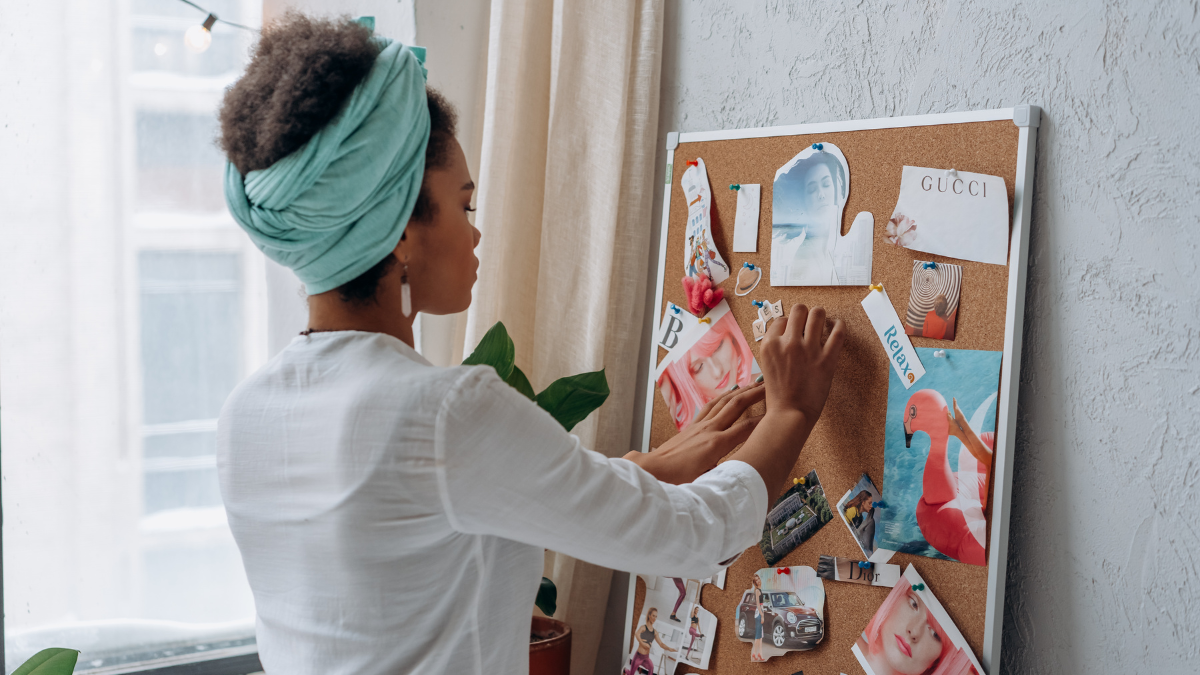
Before permanently attaching your images and words, lay them out on your board and experiment with placement. Some people prefer a structured, organized layout, while others enjoy a more free-form, collage-style approach. The arrangement should feel natural and inspiring to you, reflecting both your goals and personal aesthetic.
Once you are satisfied with the layout, glue, tape, or pin everything in place. Feel free to add doodles, colors, or other decorative touches that make the board uniquely yours. This is not only a creative process but also a moment to visualize your goals coming to life in real time.
Assembling your vision board is more than a craft project—it’s a symbolic act of commitment. Each image and word you place represents a conscious step toward realizing your dreams. Taking your time during this stage helps solidify your intentions and deepens your connection to the goals you’re striving to achieve.
5. Place Your Vision Board Where You Can See It Daily
A vision board is most effective when you see it regularly. Place it somewhere prominent, like your bedroom, office, or workspace, where you can engage with it each day. Even just a few moments of daily reflection and visualization can significantly strengthen your focus and motivation.
Interacting with your vision board allows you to immerse yourself in the feelings associated with achieving your goals. Visualizing success and experiencing the emotions linked to accomplishment primes your mind for action, increasing the likelihood that you’ll make decisions aligned with your aspirations.
Daily engagement also helps maintain accountability. The board serves as a consistent reminder of your intentions, keeping your goals at the forefront of your mind. This constant reinforcement is a subtle but powerful way to shift your mindset from dreaming to doing.
Related: How To Create a Daily Routine and Stick To It
6. Update Your Vision Board as Needed
As your life evolves, so will your goals. Your vision board should be a dynamic, flexible tool that grows alongside your aspirations. Periodically update your board by adding new images, phrases, or items that reflect your current ambitions. Remove elements that no longer align with your evolving path.
This adaptability ensures that your vision board remains a relevant and motivating guide. Life is fluid, and your goals may change, expand, or take unexpected turns. By revisiting and refreshing your board, you maintain clarity and intention while embracing personal growth.
Updating your vision board is also an opportunity to celebrate accomplishments. Each change or addition reflects progress and reinforces your commitment to continuous self-improvement. A living vision board is not just a visual aid—it’s a reflection of your journey toward your best life.
Types of Vision Boards
1. Classic Cut-and-Paste Vision Board
The traditional vision board involves cutting out images, words, and phrases from magazines or printed materials and arranging them on a physical board. Its tactile nature engages your creativity and allows for a hands-on connection to your goals. This type is ideal for people who enjoy arts and crafts and want a colorful, tangible representation of their aspirations.
2. Digital Vision Board
Digital boards are created on a computer, tablet, or phone using apps like Canva, Pinterest, or PowerPoint. They are portable, easily updated, and can even serve as your device’s wallpaper. This type is perfect for tech-savvy individuals or those who prefer minimalistic, clutter-free options while maintaining flexibility.

3. Goal-Oriented or Theme-Based Vision Board
This board focuses on a specific area of your life, such as career, health, or personal development. By narrowing your focus, you create a clear, actionable roadmap for achieving goals without feeling overwhelmed. It’s especially useful for individuals seeking targeted motivation in one particular area.
Related: 8 Ways To Create a Five-Year Life Plan
4. Affirmation or Text-Based Vision Board
Instead of images, this board relies on powerful affirmations, quotes, and statements. Words become the visual anchor for your intentions, making this approach ideal for mindset-focused individuals. Simple yet profound, it strengthens your commitment to positive thinking and intentional action.
5. Interactive Vision Board
Incorporating objects, textures, or small items, this board makes goals feel tangible and real. Examples include miniature items, fabric swatches, or personal mementos. Engaging multiple senses enhances emotional connection and works well for tactile learners or creative personalities.
6. Wheel or Circular Vision Board
Goals are organized in a circular layout, often divided by life areas like health, relationships, and career. This design encourages balance, harmony, and a holistic approach to goal-setting. It’s visually striking and helps individuals see the interconnections between different aspects of their life.
Conclusion
Creating a vision board is a fun, creative, and empowering practice. It not only helps you focus on what truly matters but also reinforces your motivation and clarifies your goals. The process of designing, assembling, and interacting with your board transforms abstract aspirations into actionable steps.
Remember, the board itself is just a tool—the real power lies in the intention, energy, and effort you put toward achieving your dreams. By visualizing your goals daily, you strengthen your mindset, boost your confidence, and cultivate a proactive approach to life.
Start small, dream big, and watch how a simple vision board can spark real transformation. Whether you choose a classic cut-and-paste style, a digital board, or something interactive, the key is to create a board that resonates with your heart and mind. With focus, creativity, and consistency, your vision board can be the blueprint for the life you’ve always imagined.
Save the pin for later

- 10 Signs of a Cheating Partner You Should Never Ignore - January 11, 2026
- 10 Effective Ways to Practice Gratitude - November 20, 2025
- 12 Everyday Habits That Can Diminish Your Memory Power - November 15, 2025