 Orji Chigozie Henry
Keeping teens entertained at a Halloween party can be tricky when childish activities lose their appeal and expensive attractions stretch your budget. The best Halloween party games for teens are social, quick to explain, easy to start, and flexible enough for a small group or a crowded house.
This collection mixes icebreakers, team challenges, mystery games, low-cost contests, and active games, including mummy wrap races, pumpkin bowling, scavenger hunts, freeze dance, and Wink Murder. You’ll also find supply lists, simple rules, timing ideas, safety tips, and practical ways to combine the games into a complete party plan.
Start with the easiest games for your group, then build the night around the ideas below.
Key Takeaways
- Choose Halloween party games for teens that are quick to explain, social, and easy to adapt for different group sizes.
- Mix active challenges, team contests, mystery games, and low-prep options so everyone finds something enjoyable.
- Mummy wrap races, pumpkin bowling, scavenger hunts, freeze dance, and Wink Murder offer plenty of variety.
- Prepare supplies, set clear rules, and keep rounds short to maintain energy throughout the party.
- Skip alcohol-based games for younger teens, and choose age-appropriate activities that feel fun rather than childish.
How to Choose Halloween Party Games for Teens That Everyone Will Enjoy
The best Halloween party games for teens match the group, the space, and the mood. Before choosing activities, consider who is coming and what will help everyone feel comfortable joining in.
Match the Game to Your Group
Age matters because older teens often prefer mystery, competition, humor, or creative challenges over games that feel childish. Group size matters too. Small groups can handle conversation games or a DIY mystery, while larger groups usually need team challenges with clear roles.
Short rounds keep the energy moving. Aim for 30 seconds to 2 minutes per round, then rotate players or change the challenge. Team formats work well for shy guests and mixed groups because no one has to perform alone. A supportive setup can also help guests who feel nervous in social situations, much like the gradual approach described in this guide to building confidence through spontaneity.
Balance Energy, Space, and Spookiness
Use your venue to guide your choices. A living room may suit pumpkin bowling, cup games, or charades, while a yard gives you room for a scavenger hunt or relay race. Plan for different energy levels by mixing:
- Active games, such as mummy wrap races or candy tosses.
- Creative games, such as costume challenges or spooky storytelling.
- Quiet options, such as trivia, drawing, or mystery clues.
- Conversation-based games, such as “Would You Rather?” with Halloween prompts.
Check the group’s comfort with darkness, blindfolds, messy foods, jump scares, and gross themes. Teens should always be able to opt out of blindfolds, messy foods, scary elements, or physical contact without pressure. Offer a similar alternative, such as guessing mystery items without touching them or watching a team round instead.
Prepare Simple Supplies
A small supply box makes last-minute game changes easy. Gather plastic cups, ping-pong balls, toilet paper, paper, pens, candy, small pumpkins, a timer, and a few simple prizes.
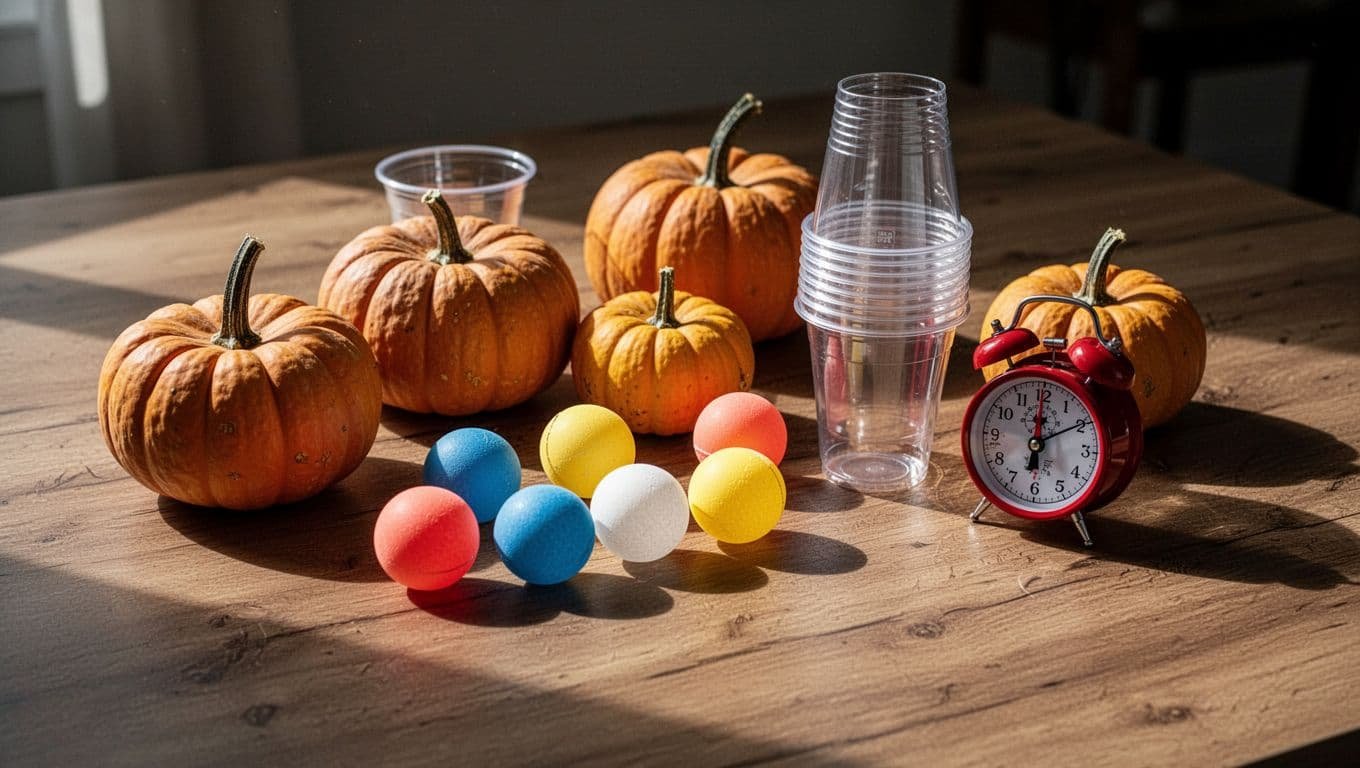
Keep the budget low by choosing items you already have, then use candy or small gift cards as prizes. A little preparation lets you adjust the games when the group needs more movement, a quieter break, or a less spooky option.
Low-Prep Halloween Icebreakers for Mixed Teen Groups
Mixed teen groups need games that create conversation without forcing anyone into the spotlight. These Halloween icebreakers use paper, pens, character cards, and one easy prop, so you can start them with little preparation.
Find Someone Who Halloween Challenge
Write prompts in a grid on index cards or print a simple bingo-style sheet. Include squares such as:
- Has watched a Halloween movie this month.
- Has dressed as a vampire.
- Prefers chocolate candy.
- Has visited a haunted house.
- Can name three spooky creatures.
Guests mingle and ask questions to complete their cards. Each person should sign only one square per card, which encourages players to speak with several people instead of relying on one friend. Set a five-minute limit, then award a small prize for completing a row or meeting the most people.
Keep prompts playful and optional. Avoid questions about dating, family situations, money, or anything else that could pressure someone to share personal information.
Haunted Aliases and Eerie Matching Pairs
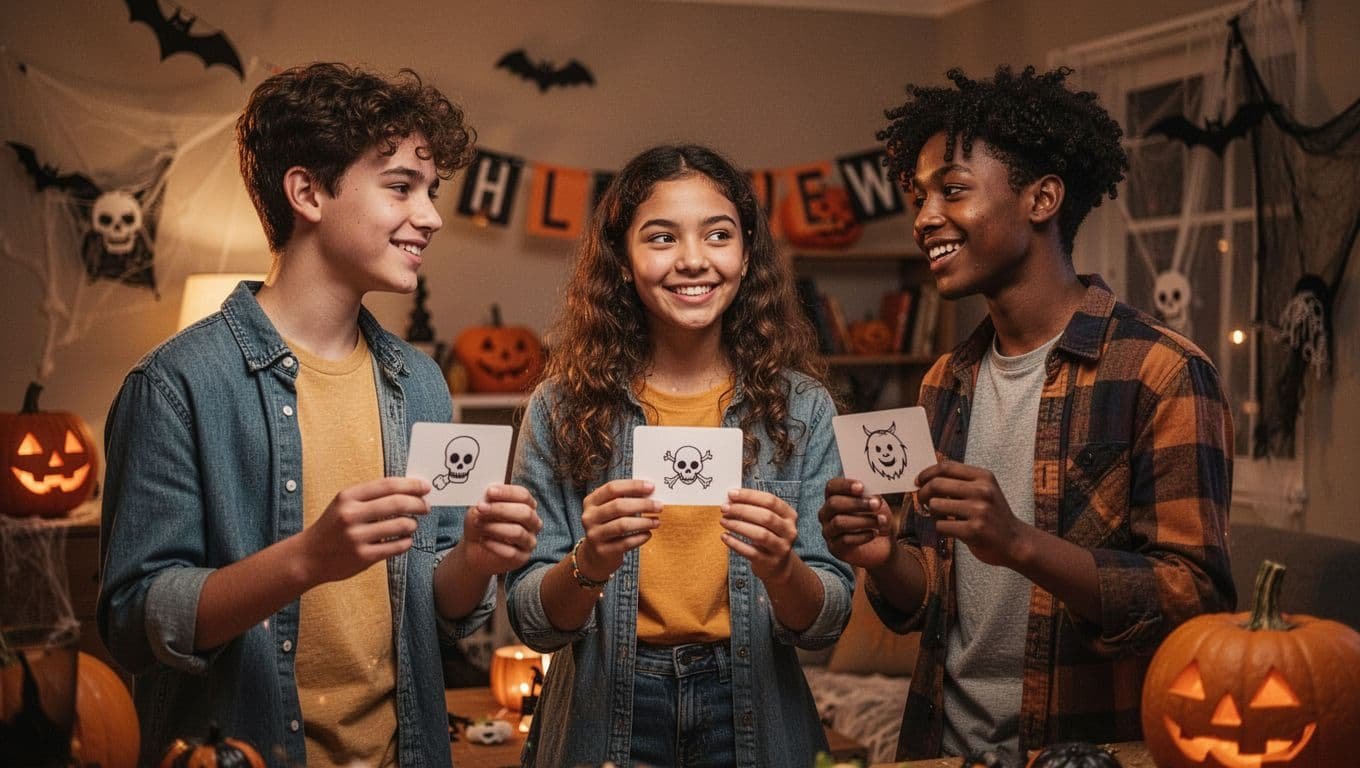
Prepare character cards in matching pairs, then hand one to each guest. A vampire matches with a bat, a witch matches with a cauldron, and a ghost matches with a haunted house. Players mingle by giving clues without saying the exact word until they find their partner.
For a more comfortable version, use fictional names only, such as Count Nightshade, Moon Bat, Hazel Witch, or Misty Manor. This keeps the game inclusive for guests who don’t want to imitate a real person or discuss personal experiences. Once pairs match, let them join another pair and create a four-person spooky team.
Halloween Questions and the Left-Right Story Game
Form a circle and ask light questions about favorite costumes, candy, Halloween movies, or an imaginary superpower. Give everyone an easy pass option, and allow pairs to answer together when a guest feels shy. Conversation prompts work well as a quick warm-up before larger party games, much like the question-based ideas in these Halloween icebreaker examples.
For the left-right story game, read a short spooky tale containing repeated cues such as “left” and “right.” Guests pass a pumpkin or soft prop in that direction whenever they hear the cue. Use one prop for a small group, keep the story under three minutes, and have players pass it only to the next person. That keeps the fun moving without turning the room into a scramble.
Fast Team Halloween Party Games for Teens With Big Energy
When teens have energy to burn, choose short team games with clear rules and quick role changes. Split a large group into teams of four to six, then rotate the thrower, runner, wrapper, scorekeeper, and clue reader after each round.
Mummy Wrap Relay With a Speedy Team Finish
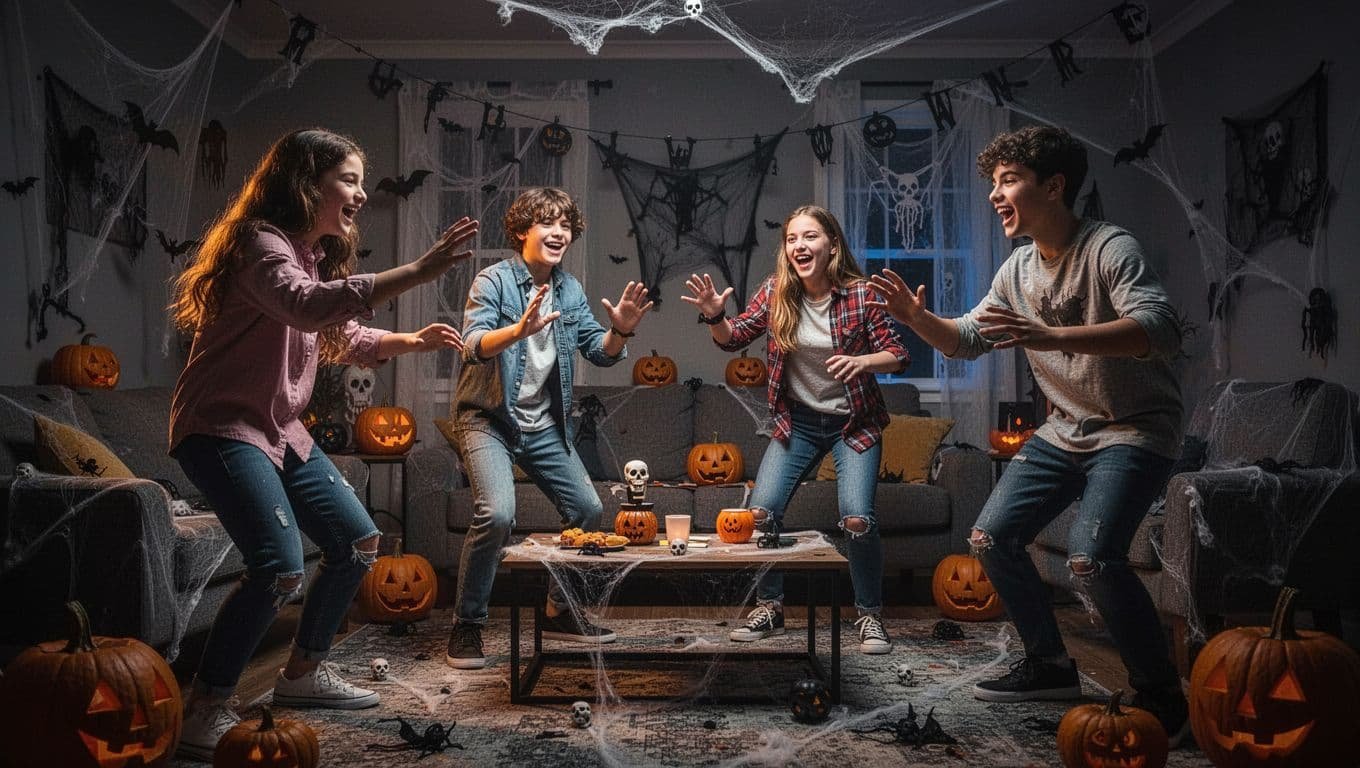
Give each team toilet paper, a timer, and one volunteer. Teams have two minutes to wrap their volunteer, then the mummy walks to a finish line and holds a pose, such as a zombie stance or raised arms. Award five points for reaching the line and one bonus point for a complete wrap that stays intact.
Use gentle wrapping around the torso, arms, and legs. Keep the volunteer’s eyes, nose, and mouth clear, and leave enough room for easy movement. No one should wrap the neck, cover the face, or run. Clear furniture from the route, place a bin nearby, and sweep up paper before starting the next game.
For a lower-mess version, use paper streamers. They tear less dramatically but still create the same team challenge.
Eyeball Ping-Pong Toss and Pumpkin Target Games
Set plastic cups on a table and mark white ping-pong balls as eyeballs with washable marker. Each player gets one minute to toss from behind a throw line. Give one point per ball in a cup, then add a two-point bonus for landing one in the farthest cup. Use safe spacing and keep spectators behind the thrower.
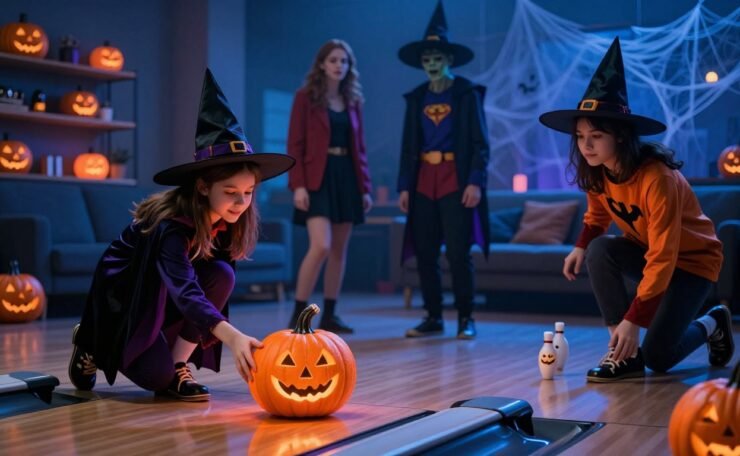
For pumpkin bowling, arrange empty plastic bottles as pins and roll a small foam or lightweight pumpkin. Give one point per pin knocked down. Pumpkin ring toss works well too, with players throwing soft rings over small pumpkin stems or cones. In a living room, use three cups and foam props. In an apartment, place targets on the floor and roll instead of throwing. A backyard allows more distance and larger targets.
Mini-Pumpkin Hunt and Spooky Scavenger Hunt
Hide small pumpkins around a defined area for a two-minute hunt. Players earn one point per pumpkin, but they must walk and return each item to their team station. For a clue-based version, hide spider rings, paper bones, fake fingers, candy, or spooky tattoos. Give teams short clues that lead to one item at a time, then award points for correct finds. This also adds light puzzle solving and teamwork, similar to other interactive party challenges.
Keep every item in visible, safe places. Tell guests not to search near stairs, roads, fragile furniture, locked rooms, or private belongings. For more team-game ideas and relay formats, browse these Halloween games for teens.
Mystery, Trivia, and Minute-to-Win-It Games That Feel More Grown-Up
Teens who prefer strategy, humor, or clever challenges can still have plenty to do without running around the house. These games feel more mature because they reward observation, teamwork, quick thinking, and a little friendly competition.
Halloween Trivia and Guessing Games for Competitive Friends
Build a trivia game around several short rounds. Ask about Halloween traditions, fictional monsters, movies, candy, music, and costume facts. Start with easy questions, such as Halloween’s date or the colors orange and black, then add harder questions about movie characters, song lyrics, or costume history. A source such as these Halloween trivia questions can help you create a balanced question bank.
Use teams of three or four so nobody needs to know every horror film. Give one point for each correct answer and two points for a difficult bonus question. For a final tie-breaker, fill a clear jar with wrapped candy and ask teams to guess the total. You can also have guests estimate the weight of a pumpkin. The closest answer wins without requiring another full round.
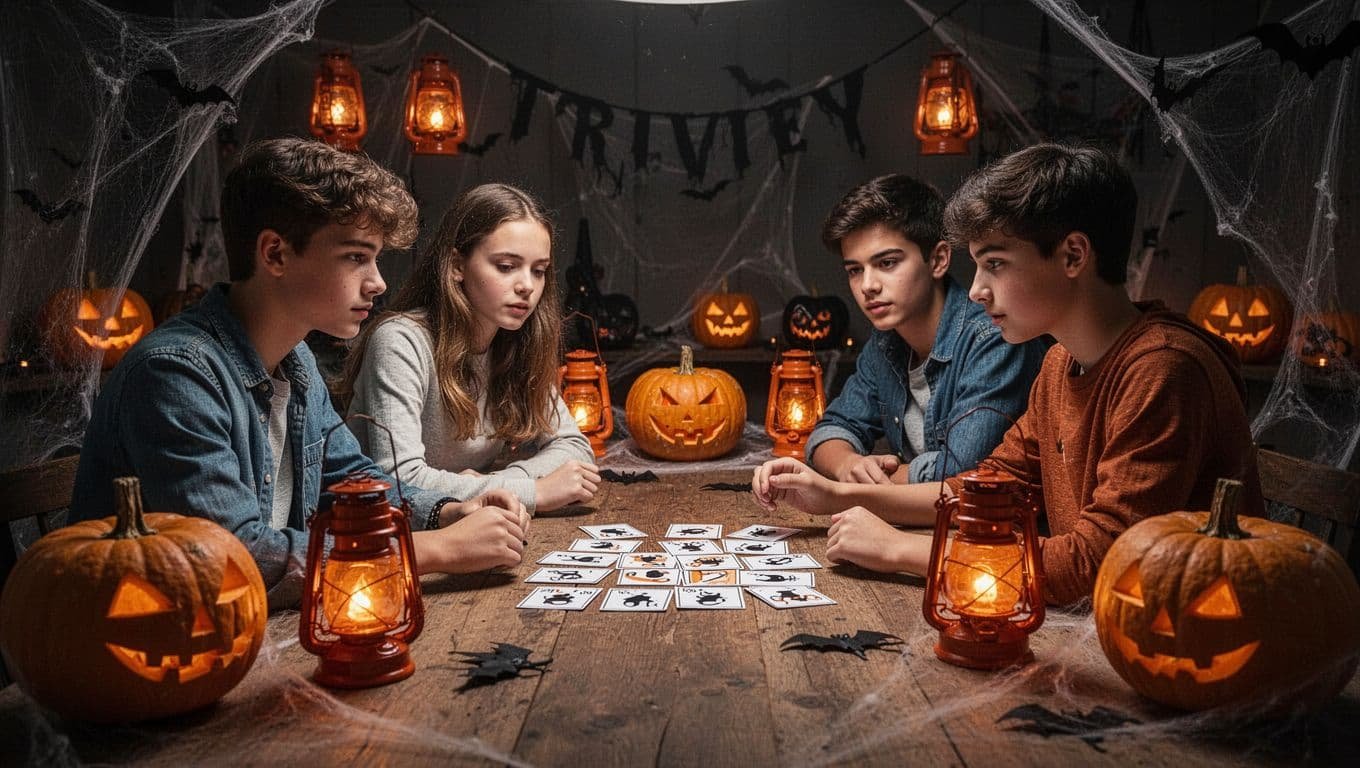
Wink Murder and a Teen-Friendly Mystery Challenge
For Wink Murder, have everyone sit in a circle and secretly choose one detective and one murderer. The detective watches the group while the murderer eliminates players by winking at them. A player who receives a wink waits a few seconds, then quietly leaves the circle. The detective may accuse someone once or twice, depending on your rules. If they identify the murderer, the detective wins. Otherwise, the murderer wins.
For a mystery variation, give each player a fictional character card, a clue, and a harmless problem, such as a missing trophy or vanished party playlist. Teams question one another, open sealed envelopes, solve riddles, and enter a final combination. Keep the story playful, avoid realistic violence, and never require forced acting. Guests should be able to pass on roles that make them uncomfortable. A few players can also handle clue reading or scorekeeping, helping everyone contribute through different strengths.
Minute-to-Win-It Stations With Simple Household Supplies
Set up four stations and let teams rotate every 60 seconds. Include cup stacking, moving spider rings with straws, transferring candy between bowls with straws, and a sensory guessing bowl with peeled grapes or cold spaghetti.
Label every food item with common allergens, wash hands before handling supplies, and use fresh ingredients. Offer tongs, pom-poms, or plastic spiders as non-food alternatives so every guest can participate. Award one point for each completed challenge, then give a small prize to the highest-scoring team.
Build a Complete Teen Halloween Party Plan Without Overspending
A memorable teen Halloween party needs a clear rhythm, not a room packed with expensive activities. Choose a few strong games, reuse what you own, and leave enough space for food, music, conversation, and unexpected changes.
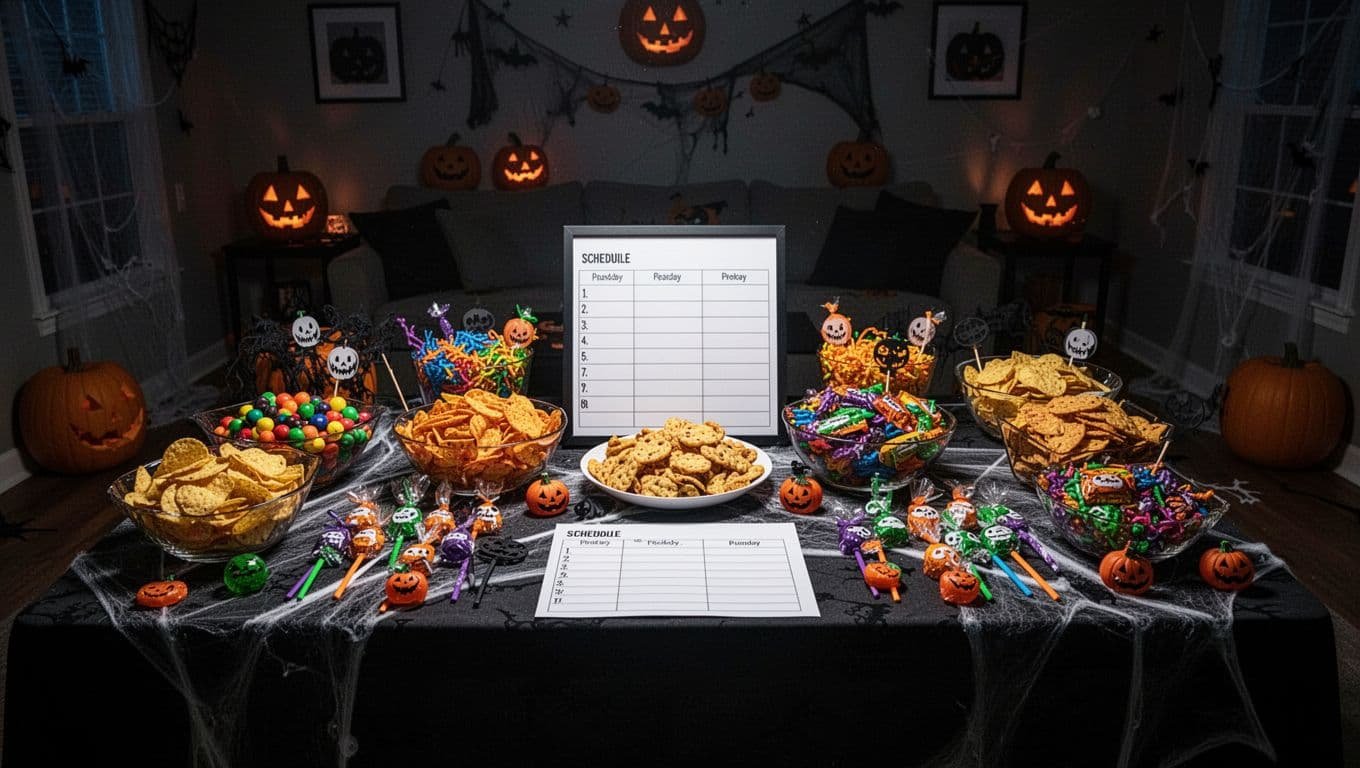
A Simple Party Schedule That Keeps the Energy Moving
Plan for two to three hours, using flexible time blocks instead of a rigid script. For example:
- Spend the first 15 to 20 minutes on a mingle game, such as Halloween bingo or matching pairs. Guests need an easy reason to speak before team competition begins.
- Allow 20 to 30 minutes for snacks, drinks, and casual conversation.
- Run an active team game for 20 minutes, such as mummy wrap relay or pumpkin bowling.
- Follow with 20 to 30 minutes of trivia, Wink Murder, or a mystery challenge. Food and quieter games give everyone time to recover.
- Finish with a simple, exciting activity, such as a scavenger hunt or final target challenge. The last game should take less than five minutes to explain.
- Reserve 10 minutes for prizes, photos, and cleanup.
Prepare two or three games for a small group and four or five for a larger group. Stop each activity while guests still want another round, rather than waiting for interest to disappear. Keep one or two unused games ready in case the weather changes, a round ends early, or a planned activity falls flat.
Budget-Friendly Supplies, Prizes, and Backup Ideas
Reuse plastic cups, cardboard boxes, jars, paper bags, towels, and soft household items. Draw pumpkins on paper instead of buying them, make clue cards from scrap paper, and cut bats or ghosts from old cardboard. Buy only small quantities of toilet paper, candy, glow sticks, stickers, or spooky notebooks.
Candy bags make easy prizes, but winners could also choose the next song or receive a glow stick. For more low-cost activity inspiration, browse these budget Halloween game ideas.
If space or weather becomes a problem, switch to paper-based trivia, drawing monsters, conversation prompts, or a phone timer challenge. Keep decorations simple with battery-powered lights, paper garlands, and washable window designs. Prepare trash bags before guests arrive, and assign a quick cleanup window between activities.
Safety and Inclusion Rules for a Better Party
Clear walkways, secure loose rugs, and use candle-free lighting. Keep costumes visible around stairs and doorways. Never pressure anyone to wear a blindfold, touch another guest, eat an unfamiliar food, or handle fake blood or scary props.
Ask about allergies before serving food, label shared dishes, and offer non-food versions of sensory games. Explain opt-out choices to the whole group so nobody feels singled out. Guests can score points, read clues, run the timer, take photos, or track music instead of joining physical rounds. One supervising adult should stay nearby without hovering, while hosts can build confidence by offering clear choices and practicing personal bravery.
Frequently Asked Questions
The right Halloween party games for teens should match your guests’ comfort levels, available space, and energy. These answers can help you choose activities that feel social without making the party feel overplanned.
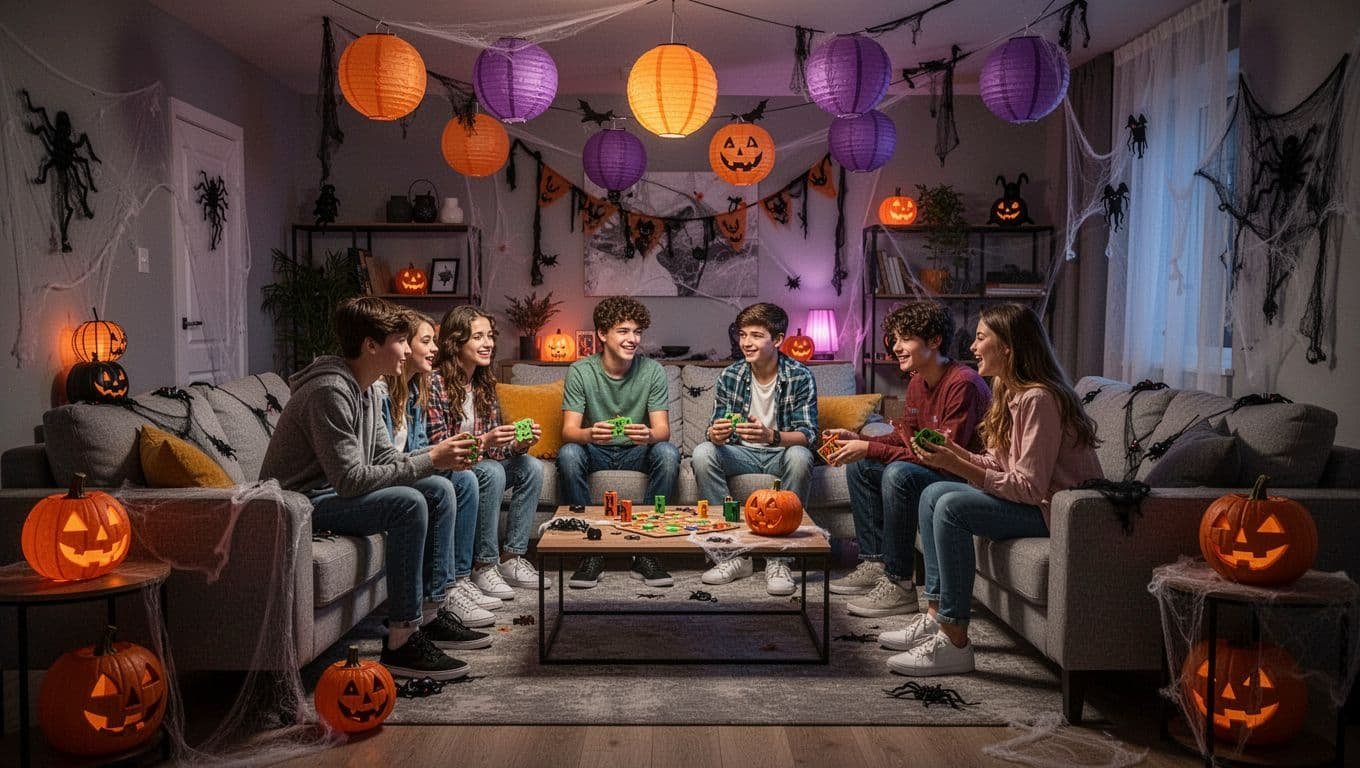
What are the best Halloween games for teens who do not know each other?
Find Someone Who cards give guests an easy reason to start conversations. Haunted aliases, low-pressure trivia teams, and short partner challenges also work because everyone shares the attention. Guests can contribute through clues, answers, timing, or scoring, which may help them discover hidden talents without performing alone. Avoid opening with solo charades, speeches, or costume performances.
How many Halloween party games should I plan for teens?
For a two- to three-hour party, prepare five to seven options but expect to use only three to five. Snacks, photos, music, costume compliments, and casual conversation take more time than many hosts expect. Choose one icebreaker, one active game, one quieter contest, and a backup activity. Keep the schedule flexible so you can stop a game while guests are still enjoying it.
What Halloween party games can teens play indoors?
Trivia, Wink Murder, cup stacking, candy-count guessing, left-right stories, mystery clues, and tabletop scavenger hunts all work well indoors. These formats need little space and appear in many teen-friendly party collections, including Halloween game ideas for teens. Protect furniture with soft props, move breakable items, mark throw lines, and set clear boundaries before play begins.
How can I make Halloween games less childish?
Use timed rounds, clever clues, team strategy, pop-culture trivia, and mystery themes. Simple prizes, darker color schemes, battery-powered lights, and stylish decorations also change the mood. The presentation often matters more than the supplies, so plastic cups can feel teen-friendly when the rules are quick and competitive.
What if some teens do not like scary or gross games?
Offer mildly spooky, funny, creative, and non-food activities at the same time. Give guests a clear way to opt out, then replace blindfolds, sensory bowls, or frightening props with trivia, puzzles, drawing, clue reading, or scoring roles. A choice feels more welcoming than asking someone to explain why they want to skip a round.
Conclusion
A successful Halloween party for teens doesn’t need expensive decorations, complicated rules, or a packed schedule. Choose a few fast games that fit the group, the available space, and the guests’ comfort levels. Clear choices help everyone join in without feeling pressured.
A strong plan can start with an easy icebreaker, move into a team challenge such as a mummy wrap relay, then slow down with mystery clues or Halloween trivia. Finish with a short scavenger hunt or target game while the energy is still high. Keep the schedule flexible so you can repeat a favorite activity or switch to a quieter option when needed.
The best moments usually come from laughter, inclusion, and time together, not from earning a perfect score.
Save the pin for later


- 8 Signs Your Ex Is Testing You And What It Really Means - September 18, 2026
- 12 Qualities Every Good Man Should Have - September 18, 2026
- How to Write a Dating Profile for a Woman Over 45: 9 Simple Steps - September 18, 2026