
 Orji Chigozie Henry
Fall creates natural moments for connection, whether you’re sharing a cozy dinner, taking a crisp evening walk, attending a work gathering, or meeting someone for a first date. Still, finding something more engaging than “How’s your week going?” can be harder than it sounds.
The right fall questions for adults can move a conversation beyond small talk without making it feel forced or too personal. You’ll find lighthearted prompts, meaningful questions, funny icebreakers, workplace conversation starters, and practical tips for choosing the right question for the moment. Some prompts also pair well with these meaningful conversation starters when you’re ready to create a more thoughtful connection.
Start with the lighter questions, pay attention to the other person’s comfort level, and let the conversation develop naturally.
Key Takeaways
- Begin with light fall topics, then move toward questions about memories, values, gratitude, and personal growth.
- Choose open-ended prompts that invite stories instead of one-word answers.
- Listen closely, ask thoughtful follow-ups, and share something personal to encourage genuine connection.
- Respect each person’s comfort level, especially when conversations become emotional or vulnerable.
- Meaningful questions work best when they show curiosity, much like asking deep questions that encourage reflection and understanding.
Fall Questions for Adults to Start Relaxed, Natural Conversations
Fall questions for adults work well at dinners, coffee dates, family gatherings, parties, and casual group conversations. Start with easy topics, then follow the other person’s interest instead of rushing toward something personal.
Cozy Fall Conversation Starters About Favorites and Everyday Life
These prompts keep the mood warm and low-pressure. They also work in groups because everyone can answer without sharing anything too private.
- What fall food do you look forward to most, and what makes it special?
- Would you choose pumpkin bread, apple pie, or something savory on a cool afternoon?
- What’s your favorite warm drink when the temperature drops?
- Do you enjoy wearing sweaters and boots, or do you prefer lighter layers?
- Which seasonal smell do you love most, such as leaves, cinnamon, wood smoke, or fresh coffee?
- What do you like most about watching the leaves change?
- What’s your ideal autumn weekend?
- Do you prefer a crisp outdoor walk, a quiet day at home, or a mix of both?
- What movie, comfort show, or book fits your perfect fall evening?
- What kind of music would you play while cooking or relaxing on a rainy night?
- How does cooler weather change your usual routine?
- What’s one outdoor activity you enjoy this time of year?
- If you had one completely free fall evening, how would you spend it?
After someone answers, keep the conversation moving with a simple follow-up such as, “What makes that special?” or “How did you get into that?” Open-ended questions help people feel heard, and the American Psychological Association’s guidance on meaningful conversations supports asking questions that show genuine listening.
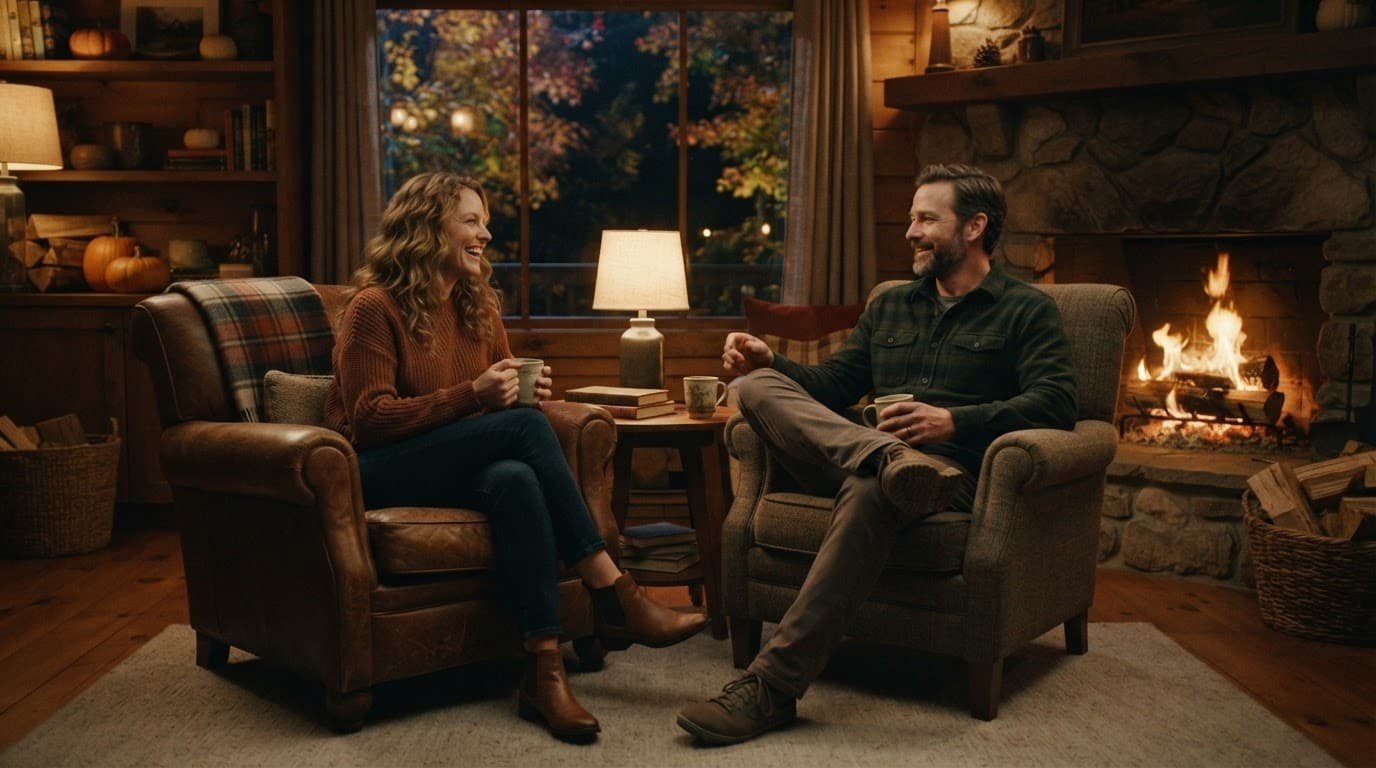
Autumn Memory Questions That Help People Open Up
Once the conversation feels comfortable, invite a gentle story. You might ask, “What do you remember most about the start of a new school year?” or “Did your family have a fall tradition when you were growing up?” Other options include, “What’s a fall trip you still remember?” and “What’s a memorable autumn meal you’ve shared with someone?”
You can also ask, “Was there a person who made this season special for you?” Share your own answer first, even briefly. For example, mention a favorite childhood walk or a meal your family made every year. That small act makes the exchange feel mutual instead of putting the other person on the spot. If they give a short answer, accept it and shift to a lighter topic rather than pressing for details.
Meaningful Fall Questions for Deeper Connection
As the season changes, you may naturally think about what has shifted in your own life. That doesn’t mean fall affects everyone in the same way, but its slower pace can create room for reflection. Ask these questions gently, then share your answer too.

Reflective Questions About Change, Growth, and Gratitude
Choose one or two prompts instead of moving through the list like an interview. A thoughtful follow-up such as “What helped you realize that?” or “How has that changed your routine?” can invite a fuller story.
- What has changed in your life since last fall?
- What personal accomplishment makes you feel proud this year?
- What lesson are you carrying forward into the final months of the year?
- What helps you feel grounded when life becomes busy?
- What small thing has brought you joy lately?
- What are you grateful for that you might have overlooked before?
- Has your confidence grown in any area recently?
- What goal would you still like to make time for before the year ends?
- What kind of rest would feel most helpful right now?
- Which relationship has supported you this year?
- What would you like to release before winter arrives?
These questions can also support developing deeper self-awareness. Still, don’t assume someone wants to discuss change, gratitude, or personal struggles. Let their answer guide the next question, and accept a short response without pressing.
Questions for Emotional Closeness Without Crossing Boundaries
Emotional closeness grows when people feel heard rather than analyzed. Ask about the relationships and support systems that matter to them, then listen without preparing your next response. Research highlighted by Harvard Business School’s conversation guidance also points to the value of thoughtful follow-up questions.
Try asking:
- Who helps you feel most understood?
- What kind of support feels best when you’re having a difficult day?
- What makes a relationship feel safe and genuine to you?
- When do you feel most connected to the people in your life?
Pause before offering advice. You might say, “That sounds difficult,” or ask, “Would you like support, advice, or just someone to listen?” Sensitive topics, including grief, mental health, finances, and family conflict, belong in the conversation only when the other person seems comfortable. Everyone has the right to pass.
Funny Fall Icebreaker Questions for Adults and Groups
Funny fall icebreaker questions help parties, game nights, community events, and informal team gatherings feel relaxed without forcing anyone into the spotlight. Keep the tone playful, let people pass, and invite short explanations when the group has time. For more seasonal inspiration, browse these fall icebreaker questions for teams.

Quick This-or-That Questions for a Lively Group
Fast choices keep the conversation moving, especially when people don’t know each other well. Ask everyone to answer quickly, then invite one or two people to explain their choice.
- Would you choose apple pie or pumpkin pie forever?
- Would you rather take a sunrise walk or attend an evening bonfire?
- Do you prefer a scary movie or a cozy movie?
- Would you pick sweater weather or summer heat?
- Would you rather take a fall road trip or enjoy a staycation?
- Would you choose crunchy leaves or a warm blanket?
- Would you rather drink apple cider or hot chocolate?
- Would you pick a corn maze or a haunted house?
- Would you rather decorate with pumpkins or fall leaves?
No answer is better than another. The fun comes from the reasons, such as someone choosing apple pie because they distrust all orange desserts.
Creative Prompts That Get Everyone Laughing
Use imaginative prompts when the group feels ready for sillier answers. These questions encourage humor without requiring personal disclosures or embarrassing stories.
- If you could eat one fall food forever, what would you choose?
- What would your autumn superpower be?
- How would you survive being trapped in a giant leaf pile?
- What seasonal name would you give your car?
- What ridiculous fall tradition should your group start?
- What would your personal fall festival include?
- What would be the strangest mascot for an autumn event?
- What three songs belong on the soundtrack of your perfect fall day?
- How would you design a haunted house for people who hate being scared?
- If pumpkins could talk, what complaint would they make first?
You can also play “two truths and a lie” using fall memories or offer one-word answers, such as “Describe autumn in one word.” Read the room with new groups and professional settings. Humor should invite people in, not pressure them to perform, reveal private details, or become the target of a joke.
Fall Questions for Work Events, Networking, and Team Building
Fall work gatherings feel more natural when questions invite useful stories without asking for private details. Choose prompts that reveal interests, work styles, and goals, then let the conversation develop at its own pace.
Professional Icebreakers That Feel Comfortable for Everyone
Keep workplace questions friendly, specific, and easy to answer in under a minute. Try these prompts:
- How do you prefer to recharge after a demanding workday?
- Are you more productive in the morning or evening?
- What’s your favorite productivity ritual?
- What skill would you like to learn this year?
- Which book or podcast would you recommend to a colleague?
- What skill do you admire in other professionals?
- Which project have you enjoyed working on recently?
- What does your ideal workday look like?
- What career lesson has helped you most?
- What topic could you give a short presentation about?
- What goal would you like to complete before the year ends?
- Where do you do your best thinking outside the office?
Leaders should answer first and keep their response concise. A manager who shares a practical example, rather than delivering a long speech, shows everyone how much detail feels appropriate. These prompts can also support better professional networking because they give people an easy way to discuss interests and experience.

Simple Ways to Use Fall Questions in Meetings and Events
Match the format to the group and the time available. In a small meeting, ask one question in the chat, then invite two volunteers to expand. At a networking event, place questions on cards or ask each person to speak with a rotating partner for two minutes.
For remote calls, post the prompt before opening breakout rooms. In a team lunch, use a one-minute round so everyone gets a turn without letting one answer take over. Large groups work best with chat responses, polls, or several small rooms.
Explain the instructions clearly, set a time limit, and always offer the option to pass.
The goal is connection, not forced personal disclosure or a longer meeting.
A facilitator can say, “Share one sentence or pass,” then model that boundary by answering first. Keep the focus on curiosity, respect, and practical conversation.
How to Choose the Right Fall Conversation Questions
The best fall conversation questions match the moment. Consider the setting, your relationship, the group size, everyone’s energy, and the time available. A first date calls for easy curiosity, while a family gathering may allow more personal stories. For shy or introverted guests, choose low-pressure prompts and allow pauses.
Open questions invite more than a yes-or-no answer. Instead of asking, “Do you like fall?” try, “What do you enjoy most about fall?” If the person mentions hiking, follow up with, “What makes a fall hike enjoyable for you?” Share your own answer too, so the exchange feels mutual.
Move From Small Talk to Meaningful Conversation Gradually
Let the conversation develop in stages. Begin with a seasonal preference, ask about the reason or story behind the answer, then invite reflection only if the person seems engaged.
For example, start with, “What’s your favorite fall activity?” If they say, “Walking through the leaves,” you might ask, “Do you usually go alone, or is that something you enjoy with other people?” If they share a warm memory, continue with, “What do you like most about those walks?”
Only then might you ask, “Has spending time outdoors changed how you handle busy weeks?” That question can lead to a meaningful conversation, but it won’t feel intrusive because it follows their interest.
A natural follow-up responds to the answer you received instead of following a prepared list.
Share your own response after asking. You could say, “I like evening walks because they help me slow down after work.” Avoid asking question after question, which can make the exchange feel like an interview. For more ideas, these meaningful conversation starters can help you vary the discussion.

Conversation Mistakes to Avoid When Asking Adults Questions
Avoid personal subjects too soon, interrupting, correcting someone’s answer, or turning every prompt toward holidays. Forced humor can create pressure, especially in mixed-age groups or with new friends. Likewise, dominating the conversation prevents others from finding their place.
Watch for short replies, crossed arms, frequent glances away, or a fading tone. These signals may mean the person wants a lighter topic or a break. Say, “We can switch topics,” and move to food, weather, hobbies, or a simple this-or-that question.
Respect a pass without asking why. At family gatherings, invite quieter people with a broad question, then let them answer voluntarily. Avoid putting them on display by saying, “You haven’t spoken yet.” A gentle, “What do you think?” works better when the timing feels comfortable. A five-minute conversation can still feel meaningful when both people participate actively, as described in this social connection research.
Frequently Asked Questions
The best fall questions for adults feel natural, give people room to answer, and match the setting. Use these answers to adjust your approach for dating, new connections, quieter groups, workplace events, and longer conversations.

What are good fall questions for adults on a first date?
Choose low-pressure questions that reveal preferences without sounding like an interview. Ask, “What would your ideal fall day look like?” or “Do you prefer seasonal travel, cozy weekends, or outdoor activities when the weather cools down?”
You can also discuss comfort food, favorite books, weekend plans, or a place they would enjoy visiting in autumn. Keep the exchange balanced by answering your own question, then notice whether they seem relaxed, curious, and willing to share.
How can I start a conversation with someone I do not know?
Begin with something you both can see or experience, such as the location, event, weather, or food. A simple introduction followed by “What brought you here today?” or “What’s your favorite thing to do on a crisp fall day?” gives the other person a clear way to respond.
Listen to their answer and ask a related follow-up instead of switching topics immediately. For more practical ideas, these conversation skills can help you speak clearly and show genuine interest.
What fall questions work best for introverts?
Thoughtful, specific questions often feel easier than loud group games or rapid-fire rounds. Try asking one person at a time about a favorite autumn recipe, a book they enjoy, or a peaceful way they spend a cool evening.
Give people time to think before expecting an answer. Written prompt cards, one-on-one chats, and small groups can create more comfortable conditions than putting everyone on the spot.
Are fall questions appropriate for the workplace?
Yes, when they remain optional, respectful, and separate from sensitive personal topics. Ask about seasonal interests, routines, professional learning, recommended books, or goals for the final months of the year.
Leaders should answer first, keep their response appropriate, and make passing easy. Workplace icebreaker collections, such as these adult icebreaker questions, can offer ideas without requiring personal disclosure.
How do I keep a conversation going after someone answers?
Respond to what the person actually said. Ask what they enjoy most, how they discovered the activity, or which memory they connect with it, then share a related experience of your own.
Allow natural pauses instead of treating questions like items on a checklist. A short silence can give both people time to think, while a genuine follow-up often creates more connection than a brand-new prompt.
Conclusion
Fall questions for adults can turn an ordinary meal, walk, date, gathering, or meeting into a more personal conversation. The best prompts are simple invitations, not tests. Choose one or two questions, share your own answer, and give the other person room to respond in their own way.
Keep listening with genuine interest, especially when the conversation becomes more thoughtful or emotional. Respect boundaries, accept a pass without pressure, and let the discussion develop naturally instead of rushing through a list. A seasonal question about change, gratitude, comfort, or connection may even help someone reflect on whether they’re ready to start a new chapter in life.
Try one fall question this week, then focus less on finding the perfect follow-up and more on being fully present for the answer.
Save the pin for later

- 8 Signs Your Ex Is Testing You And What It Really Means - September 18, 2026
- 12 Qualities Every Good Man Should Have - September 18, 2026
- How to Write a Dating Profile for a Woman Over 45: 9 Simple Steps - September 18, 2026