 Orji Chigozie Henry
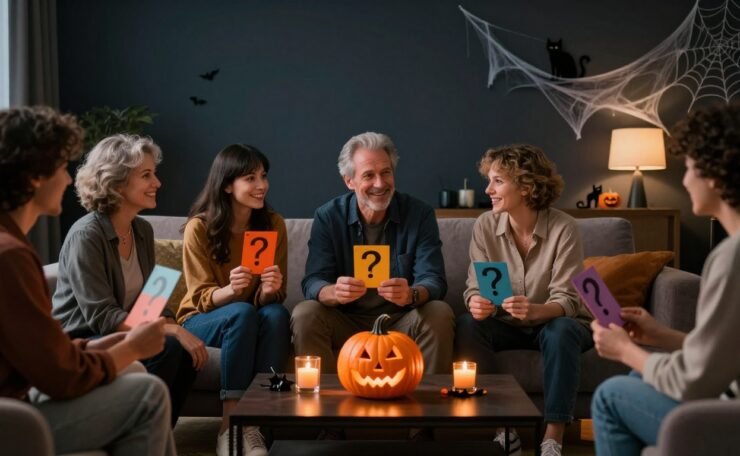
Halloween parties can feel awkward when guests, classmates, teammates, or relatives don’t know what to say beyond “Nice costume.” A few themed get to know you questions give everyone an easy way into the conversation without pressuring anyone to share something too personal.
The best prompts keep things playful, such as choosing between a haunted house and a scary movie, sharing a favorite childhood costume, or explaining which Halloween candy gets traded away first. Open-ended questions can also help people listen better and make fewer assumptions, especially when you develop critical thinking skills during group conversations.
You’ll find quick questions, funny “would you rather” choices, deeper prompts, and group game formats for parties, classrooms, team events, and family gatherings. The suggestions also include simple tips for choosing age-appropriate questions, so let’s start with easy Halloween conversation starters everyone can answer.
Key Takeaways
- Use playful Halloween questions about costumes, candy, movies, and spooky experiences to start natural conversations.
- Choose open-ended prompts that help guests share stories without asking for private or uncomfortable details.
- Mix quick questions with “would you rather” choices to keep the party lively and inclusive.
- Adjust the questions for children, adults, family gatherings, classrooms, or workplace celebrations.
- Let guests skip any prompt, then encourage active listening so everyone feels welcome and included.
Get to know you questions Halloween guests will actually enjoy
The best Halloween conversation starters are easy to answer, invite a story, and match the group’s comfort level. Hosts can ask one question as guests arrive, place prompts in a bowl, or use them during dinner, games, or costume judging.

Quick Halloween questions for an easy first conversation
These prompts work well during the first few minutes, when guests may not know one another. Each answer should take less than 30 seconds.
- What was your first Halloween costume?
- Which Halloween candy is your favorite?
- What candy do you always trade away?
- What is your favorite Halloween decoration?
- What is your best trick-or-treating memory?
- Do you prefer a scary costume or a funny costume?
- Do you enjoy carving pumpkins or decorating them?
- What spooky song belongs on every Halloween playlist?
- What Halloween tradition do you look forward to each year?
A host can ask everyone the same question, then invite one natural follow-up. These short prompts keep the conversation moving without putting anyone on the spot.
Funny Halloween questions with two playful choices
Either-or questions create quick laughs because guests must choose and explain their answer. After each response, ask, “Why did you choose that?”
- Would you rather be a witch or a vampire?
- Would you choose a haunted house or a costume party?
- Which would you decorate first, a pumpkin or a skeleton?
- Would you watch a spooky movie or a Halloween comedy?
- Would you rather have endless candy or the perfect costume?
- Would you rather be chased by one giant spider or many tiny ghosts?
The explanation is often more entertaining than the choice. These questions also work well for groups because guests can compare answers without sharing anything personal.
Story-based Halloween questions that reveal personality
When the group feels more comfortable, use prompts that invite short, funny stories:
- What is the best or worst costume you have worn?
- What funny thing happened while you were trick-or-treating?
- When did a costume mistake change your whole look?
- What is the strangest Halloween decoration you have seen?
- When did you get scared by accident?
- What Halloween plan went completely wrong?
Give everyone permission to pass on any prompt. A simple “You can skip this one” keeps the game welcoming and supports respectful conversation.
Creative Halloween questions for big laughs and imagination
These imaginative questions suit teens and adults while staying light:
- Which fictional monster would you play for one night?
- How would you design your own haunted house?
- What would you do if you survived one night as a ghost?
- What flavor would you invent for a new candy?
- What personal spooky superpower would you choose?
- Which horror movie character would you invite to dinner?
For younger children, replace horror movie characters with friendly monsters, cartoon characters, or storybook ghosts. Keep the choices playful, and let each guest answer in their own style.
Halloween Icebreaker Questions for Every Type of Group
The same Halloween question can feel fun, awkward, or confusing depending on who is in the room. Choose prompts that match the group’s age, comfort level, culture, and interest in spooky themes. Give people more than one way to respond, and let anyone pass without explanation.
Questions for kids, classrooms, and family Halloween parties
Keep questions cheerful, concrete, and easy to understand. Children can answer aloud, point to a picture, choose between two options, or draw their response.
- What costume would you wear every day if you could?
- Which Halloween color do you like best?
- Would you rather have a friendly dragon or a helpful robot?
- What candy would you put in a perfect treat bag?
- Which animal would make the funniest Halloween costume?
- What pretend power would you choose for one day?
- What would your friendly monster look like?
- Would you rather decorate a pumpkin or make a fall craft?
- Which fall activity sounds best, apple picking or a hayride?
Avoid questions about death, violence, intense fear, or embarrassing memories. For younger children and guests from different backgrounds, check whether Halloween traditions are familiar before assuming everyone celebrates in the same way.
Questions for teens and friends who want more humor
Teens and close friends may enjoy questions with stronger personalities and playful debate. Try asking, “What happened next?” after a funny answer, but never pressure anyone to reveal private information.
- What is the most embarrassing costume mistake you’ve made?
- Which unusual candy combination would you actually try?
- Do you watch horror movies through your fingers or avoid them completely?
- What would your dream Halloween party theme be?
- Which friend would survive a haunted house the longest?
- What fictional character would make the worst party guest?
- Would you rather wear an amazing costume that nobody understands or a simple costume everyone loves?
A host can keep the tone friendly by laughing with people, not at them. The Halloween icebreaker question examples for teams also work well when you need quick prompts for a larger group.
Questions for workplace and networking Halloween events
Workplace questions should stay inclusive and low-risk. Ask about seasonal foods, creative costumes, fictional superpowers, office-friendly decorations, or preferred activities.
- Which fall snack belongs at every office party?
- What fictional superpower would help you organize a busy day?
- Would you choose a pumpkin centerpiece or paper bats for the break room?
- Would you rather join a costume contest or a Halloween trivia game?
- What is the most creative group costume you’ve seen?
Keep answers brief, make participation optional, and avoid topics involving religion, politics, relationships, money, health, or trauma. Respectful communication skills in relationships help hosts notice when a joke has gone too far.
Questions for adult parties, dates, and close friends
For adults, invite slightly deeper answers without turning the game into an interview.
- What Halloween tradition did you enjoy as a child?
- Which celebration memory still makes you smile?
- How comfortable are you with haunted houses or scary movies?
- What makes a party feel welcoming to you?
- What would you create if you could design your own costume?
Read the room before using flirtatious, embarrassing, or fear-based prompts. Everyone should have consent, the right to pass, and space to answer without judgment.
Turn Halloween questions into games people want to play
Halloween questions become more engaging when guests use them to move around, swap stories, and create something together. Choose formats that match your space and group size, then remind everyone that passing is always allowed. That small rule keeps participation comfortable and supports the open-ended questions that build better conversations.
Use a question bowl for casual party conversations
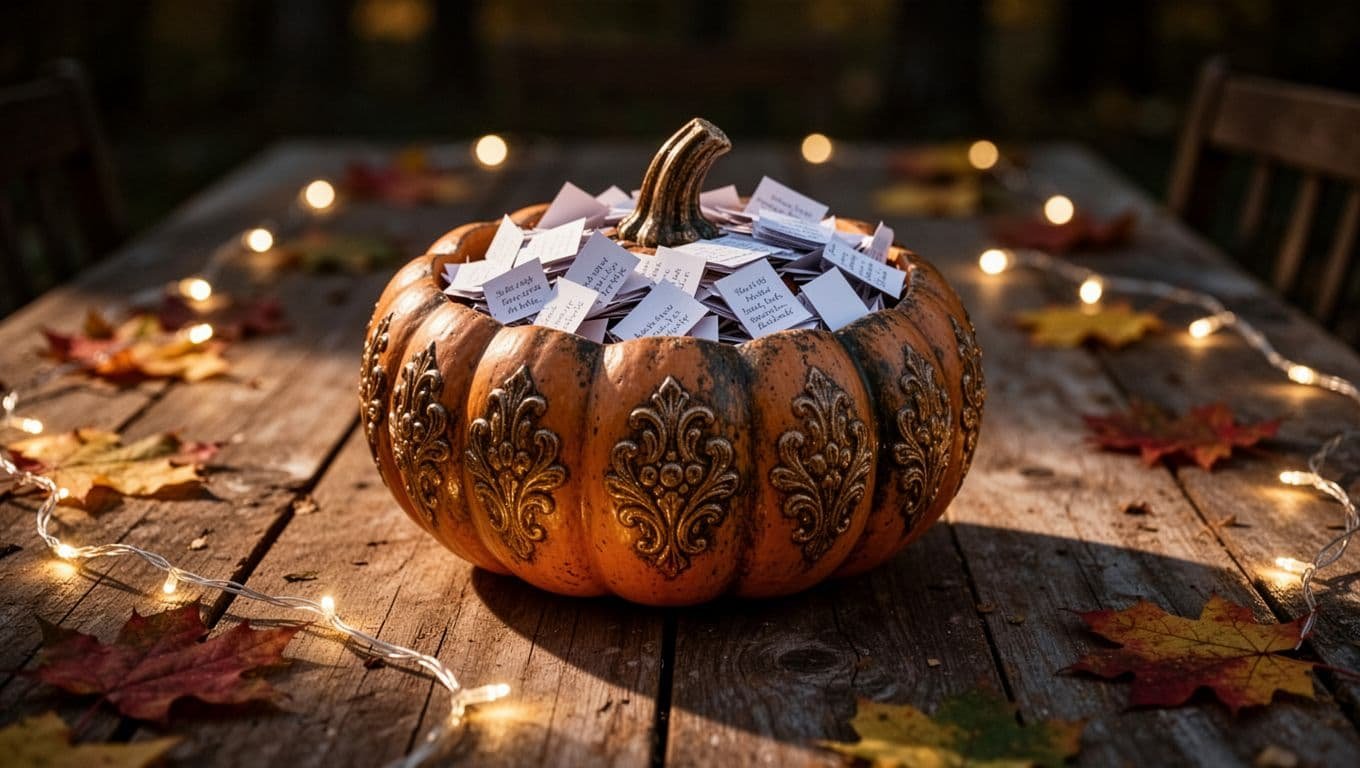
Write one prompt on each slip of paper, fold the slips, and place them in a decorated bowl, witch’s hat, or pumpkin container. When conversation slows, a guest draws one and answers aloud.
Color-coding makes the bowl easy to use:
- Green slips contain easy questions, such as, “What is your favorite Halloween candy?”
- Orange slips invite funny answers, such as, “What costume would be hardest to wear while eating?”
- Purple slips encourage imagination, such as, “What would your haunted house look like?”
One person can draw and answer, or each guest can draw a prompt for a quick round. In pairs, guests take turns answering the same question, then share their partner’s most surprising answer with the group. Around a table, pass the bowl clockwise and let everyone respond before drawing again.
Try fast rounds, partner chats, and human bingo
For a large group, give each person 30 seconds to answer one Halloween prompt. Move quickly around the room, then invite guests to find someone whose answer differed from theirs. This keeps the activity lively without letting one speaker take over.
Shy guests often prefer a two-person exchange. Pair people who do not know each other, give them two minutes, and ask each person one question. Afterward, they can continue talking or switch partners.
Human bingo helps guests meet several people instead of staying with familiar friends. Create cards with statements such as:
- Has carved a pumpkin.
- Has worn a homemade costume.
- Has watched a scary movie alone.
- Has traded Halloween candy.
- Has attended a costume party.
Players find someone who matches each square and write that person’s name. Set a goal of one completed row rather than requiring a full card, especially with younger guests.
Add Halloween twists to classic party games
In Two Truths and a Lie, each guest shares two true Halloween experiences and one invented story. The group votes on the lie, such as, “I once dressed as a vampire, I dislike chocolate, and I won a costume contest.”
For Who Am I?, place a costume or monster character on each player’s back. Guests ask yes-or-no questions until they identify the character. A collaborative spooky story works well at a table: each person adds one sentence after receiving a prompt about a costume, piece of candy, monster, or haunted house.
Keep turns short, use a timer, and rotate the first speaker. Elimination is optional, so everyone can stay involved even after a wrong guess.
How to choose the right get to know you questions for Halloween
The best Halloween questions match the people, setting, and time available. Before choosing prompts, decide whether your goal is to welcome new guests, help coworkers connect, entertain children, or add conversation between party games. The purpose will guide the tone.
Consider these details first:
- Group size: A small circle can handle stories, while a large crowd needs quick choices or pairs.
- Age range: Use simple, friendly prompts for children and more flexible questions for adults.
- Setting: A classroom, workplace, family room, and costume party each require different boundaries.
- Energy level: Choose calm conversation starters for dinner and lively choices for a game-filled party.
- Available time: Prepare a short set for a five-minute arrival activity and a larger set for an evening gathering.
Balance silly, personal, and imaginative prompts
A strong list shouldn’t contain only scary questions or nonstop jokes. Too much fear can exclude guests, while constant humor may leave quieter people with no comfortable way to participate. Aim for about half quick choice questions, one quarter story prompts, and one quarter imaginative questions.
Quick prompts might ask whether someone prefers a haunted house or a scary movie. Story prompts can invite a favorite costume memory. Imaginative questions could ask what superpower a person would choose for Halloween.
Start with easy questions, then watch the group’s response before moving into more personal stories. A follow-up such as “What made that your favorite?” can deepen the conversation without making anyone feel interviewed. Hosts who want to keep building their own communication skills can find practical ideas for investing in personal growth.
Keep the activity inclusive, comfortable, and easy to join
Set clear ground rules before the first question. Passing is always allowed, nobody should mock an answer, and guests shouldn’t face touching, jump scares, or pressure to wear a costume.
Make participation accessible by reading prompts aloud, offering written answers, using larger print, and allowing extra response time. A quiet guest might prefer writing an answer, discussing it with a partner, or placing a response in a question bowl.
Avoid assuming that everyone celebrates Halloween, follows the same traditions, has a close family, or enjoys ghosts, blood, spiders, or horror films. Use neutral seasonal prompts when needed, and let each person decide how much they want to share.
Plan the timing so questions do not take over the party
Keep the activity short and connected to the rest of the event. Ask questions for five minutes as guests arrive, run a brief round before food, or use one prompt between party games.
For a group of 10, prepare about 12 to 15 prompts. That gives people choices without creating a long session. Larger groups can work in pairs or rotating circles, which gives everyone more time to speak.
Prepare a few extra questions, mix easy and creative prompts, and end while the energy remains high. Then move naturally to snacks, music, or the next game. A written-answer option also gives guests who dislike public speaking a comfortable way to take part.
Frequently Asked Questions
The right Halloween questions make conversation easier without turning the party into an interview. Use these answers to adjust your prompts for new guests, different age groups, and varied comfort levels.
What are good Halloween questions for people who have just met?
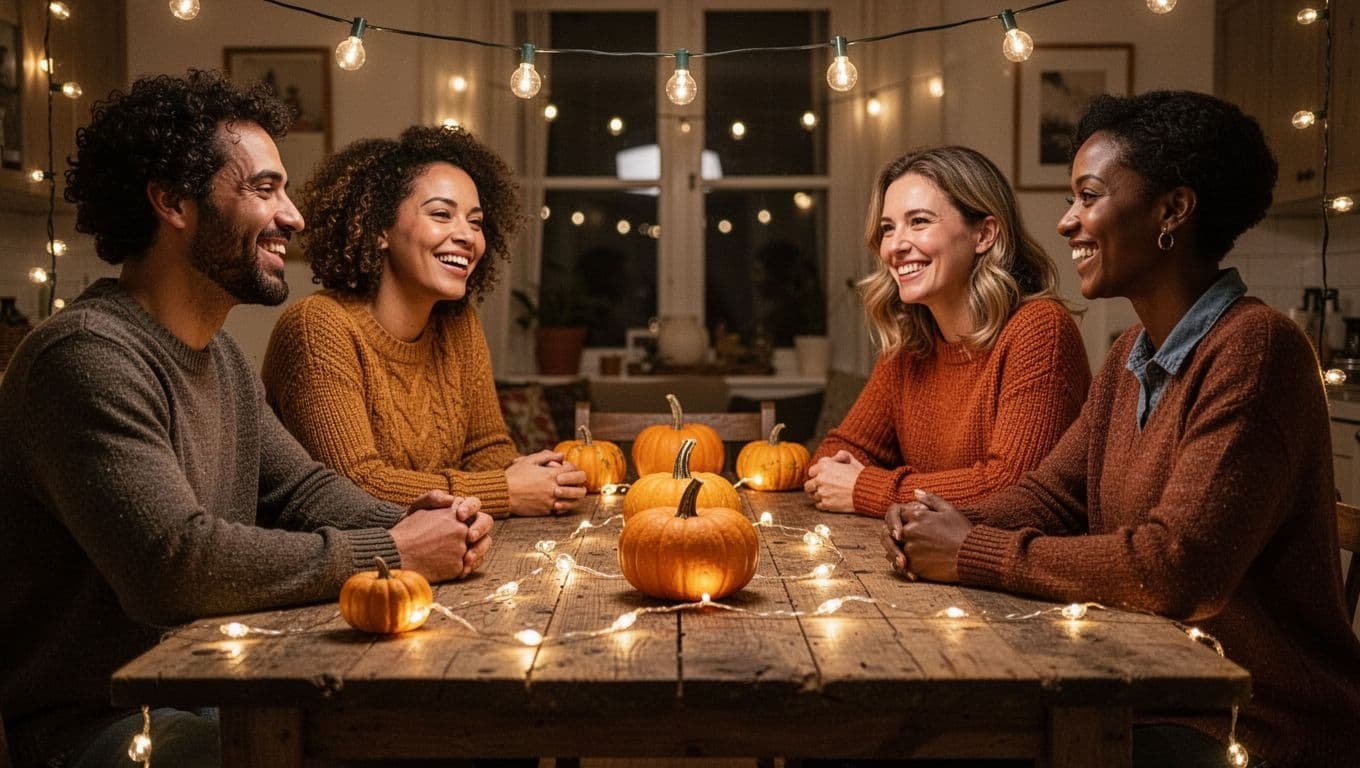
Start with low-pressure prompts that have simple answers, such as, “What candy do you always trade away?” or “Do you prefer funny costumes or scary costumes?” You can also ask about favorite decorations, fall activities, pumpkin carving, or whether someone prefers a scary movie or a Halloween comedy.
These questions help people relax because nobody needs to tell a long story. Once the group feels more comfortable, follow up with, “What made you choose that?” A short explanation can naturally lead to a funny memory or a shared interest. Favorite candy, costumes, and traditions are also common themes in Halloween icebreaker question collections.
How many Halloween icebreaker questions should I prepare?
Prepare more prompts than you expect to use, then stop while the activity still feels fresh. For a small group, 10 to 15 questions provide enough variety for a short round. A large party may need 20 to 30 prompts, especially if guests work in pairs or rotate through several conversations.
Classrooms benefit from one question per student plus a few extras. For a workplace event, prepare around 10 easy prompts and let the host choose based on the room’s energy. Extra questions give you flexibility without forcing the group to complete every card.
What Halloween questions work best for shy guests?
Either-or questions are often easiest: “Would you rather decorate a pumpkin or make a costume?” Written cards, anonymous answers, and partner conversations also give shy guests more control.
Choose prompts that don’t require a dramatic story. A guest can name a favorite candy, pick a fictional character, or describe a preferred fall activity in one sentence. Never require anyone to answer in front of the full group.
How can I make Halloween questions appropriate for work?
Keep workplace prompts neutral and inclusive. Ask about seasonal food, creative costumes, decorations, fictional characters, or favorite autumn activities.
Avoid questions about religion, politics, money, health, relationships, family conflict, trauma, or embarrassing experiences. Participation should remain voluntary, and employees should be able to pass without explaining why.
Can I use these questions with children?
Yes, when the prompts match the child’s age and comfort level. Choose friendly questions about colors, costumes, candy, animals, crafts, and pretend characters, then remove references to violence, intense fear, or private experiences.
Children can answer by speaking, drawing, pointing to a choice, or holding up a card. Short answers count, and adults should avoid correcting a child’s imagination.
What should I do if a Halloween question makes someone uncomfortable?
Accept a pass without comment and move to a different prompt. Don’t ask the guest to explain, defend the answer, or try again for the group’s entertainment.
You can also remind everyone that skipping is always allowed. A successful icebreaker helps people connect, so guest comfort matters more than completing every question.
Conclusion
The best get to know you questions for Halloween are simple, playful, and flexible. Start with an easy prompt that helps guests feel comfortable, then listen to each answer instead of rushing to the next person. A thoughtful follow-up, such as “What made that costume special?” or “Why do you prefer that one?”, can turn a quick response into a genuine conversation.
A useful starter set includes: “What was your favorite Halloween costume?”, “Would you rather choose a spooky costume or a funny one?”, and “What is your most memorable Halloween moment?” These questions invite preferences, humor, and personal stories without asking anyone to share more than they want.
Keep the activity voluntary, adjust the tone for the group, and let guests pass when needed. Then use these questions at your next party, classroom gathering, team event, or family celebration to help people relax, laugh, and connect.
Save the pin for later

- 8 Signs Your Ex Is Testing You And What It Really Means - September 18, 2026
- 12 Qualities Every Good Man Should Have - September 18, 2026
- How to Write a Dating Profile for a Woman Over 45: 9 Simple Steps - September 18, 2026