 Orji Chigozie Henry
Labor Day trivia can bring extra energy to family gatherings, classroom activities, office games, and holiday parties. These Labor Day trivia questions and answers give you a ready-to-use mix of facts about the holiday’s history, traditions, dates, and the American workers it honors.
The quiz should feel fun, but Labor Day also has strong ties to the labor movement and efforts to improve wages, working hours, and workplace safety. Use the questions ahead to spark friendly competition while keeping the meaning of the holiday in view. Let’s begin with the first set of questions and answers.
Key Takeaways
- Labor Day honors American workers and the labor movement’s push for fair pay, safer workplaces, and shorter hours.
- The first Labor Day celebration took place in New York City on September 5, 1882, according to the U.S. Department of Labor’s history.
- The federal holiday falls on the first Monday in September, creating a long weekend for many Americans.
- These 50 trivia questions cover Labor Day history, traditions, symbols, dates, and surprising facts.
- Use the questions for family gatherings, classroom games, office activities, or friendly holiday competitions.
Labor Day Trivia Questions and Answers About Its History
Labor Day history turns a familiar long weekend into a story about organized workers, public demonstrations, and political pressure. Use these questions to test your group while keeping the holiday’s original purpose in view.
Questions About the First Labor Day Celebration
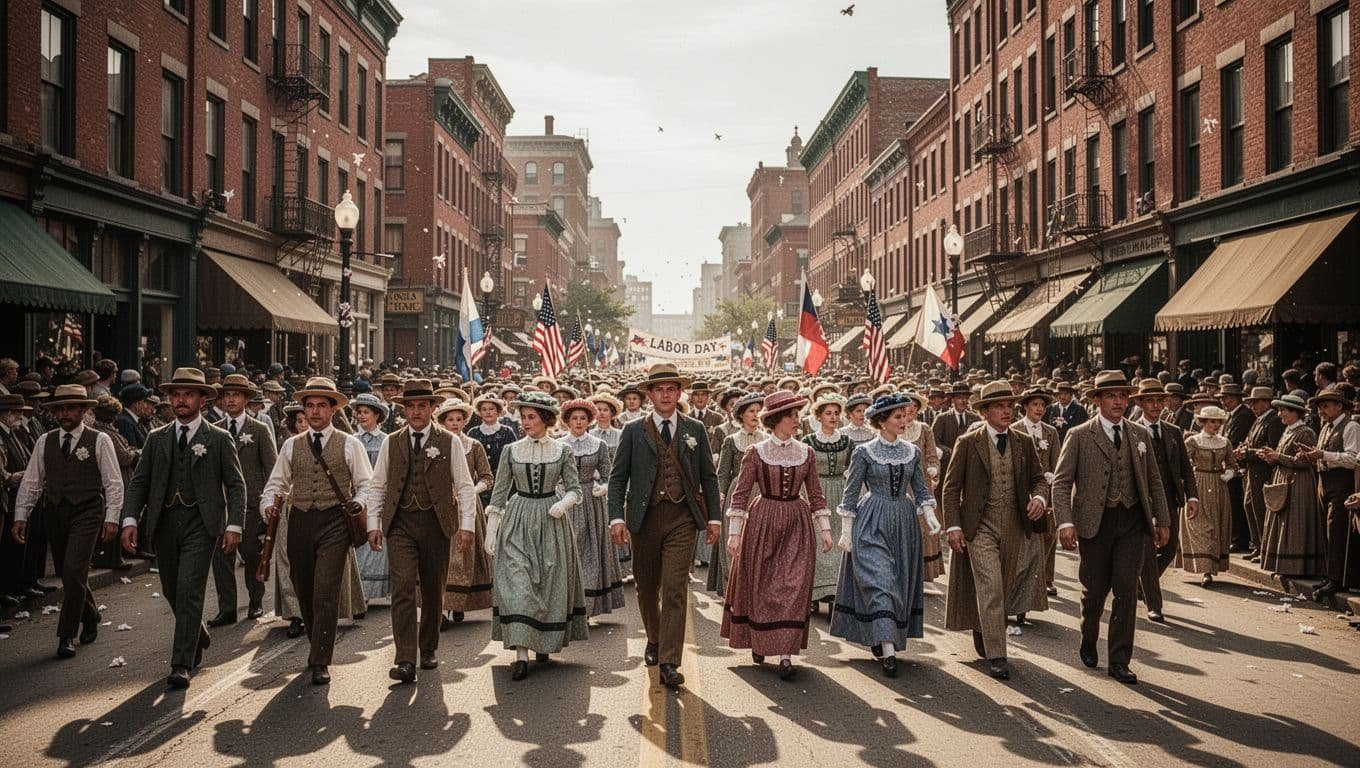
1. When was the first Labor Day celebration held? It took place on September 5, 1882, a Tuesday.
2. Where was the first Labor Day celebration held? The event took place in New York City, beginning near City Hall.
3. Which organization organized the first celebration? The Central Labor Union organized the event, although some accounts also connect the planning to the Knights of Labor.
4. What kind of event was the first Labor Day celebration? It featured a worker parade, speeches, music, and a large public gathering.
5. What route did the first Labor Day march follow? Marchers traveled from City Hall through Broadway toward Union Square, with some accounts extending the route farther north.
6. How many people joined the first Labor Day parade? Historians commonly estimate 10,000 to 20,000 marchers, so the exact number isn’t certain.
7. What did workers sacrifice to attend the first celebration? Many gave up a day’s pay to participate, showing how strongly they supported organized labor.
8. What issues did the early celebration bring forward? Workers called attention to fair wages, shorter working hours, safer workplaces, and stronger labor rights. The U.S. Department of Labor’s Labor Day history provides additional background.
Questions About Labor Day Becoming a Federal Holiday
9. Which state first recognized Labor Day by law? Oregon became the first state to recognize Labor Day by law in 1887.
10. When did Labor Day become a federal holiday? Congress made it a federal holiday in 1894.
11. Which president signed the federal Labor Day law? President Grover Cleveland signed the law on June 28, 1894.
12. What labor conflict influenced federal recognition? The Pullman Strike helped shape the decision. Widespread unrest and tensions between workers, companies, and the government increased pressure for a national labor observance.
13. Why did the Pullman Strike matter to Labor Day’s history? The violent conflict exposed serious problems in labor relations and made worker concerns harder for national leaders to ignore.
14. What date does Labor Day use today? It falls on the first Monday in September.
15. Why does Labor Day remain connected to workers’ rights? The holiday grew from workers joining together to demand better treatment. Asking life-changing questions about fairness and personal values can also add thoughtful discussion to a trivia gathering.
Fun Labor Day Quiz Questions About Dates, Traditions, and Symbols
Labor Day trivia gets more interesting when familiar customs connect to the holiday’s history. Use these questions for a quick quiz round, then invite guests to share how they celebrate the long weekend.
Labor Day Calendar and Date Questions
16. What day of the week is Labor Day always celebrated? Labor Day falls on the first Monday in September.
17. Does Labor Day always fall on September 1? No. Its date changes because the holiday follows the weekday rule, not a fixed calendar date.
18. Can Labor Day fall on September 5? Yes. September 5 is possible when it is the first Monday of the month.
19. Why should hosts check the calendar before planning a Labor Day event? The holiday can occur on different dates each year. Check the calendar for the event’s year instead of assuming Labor Day is always September 1 or September 5. The U.S. Department of Labor’s history of Labor Day confirms the first-Monday rule.
American Labor Day Versus May Day
20. When do many countries observe International Workers’ Day? Many countries observe it on May 1, although traditions and public holidays differ by nation.
21. How does the U.S. date differ from May Day? The United States celebrates Labor Day on the first Monday in September rather than May 1.
22. Why was September selected for the American holiday? New York labor groups already held a worker celebration in September. U.S. leaders also wanted distance from May 1, which had become linked to politically charged labor protests and radical movements.
23. Are U.S. Labor Day and International Workers’ Day exactly the same holiday? No. Both honor workers, but countries observe them in different ways, with different histories, dates, and public traditions.
Lighthearted Questions About Modern Labor Day Traditions
24. What public event is commonly associated with Labor Day? A parade is a traditional choice, especially in communities with strong labor histories.
25. What foods often appear at Labor Day gatherings? Many families serve picnic foods, grilled dishes, cold drinks, and other casual barbecue fare.
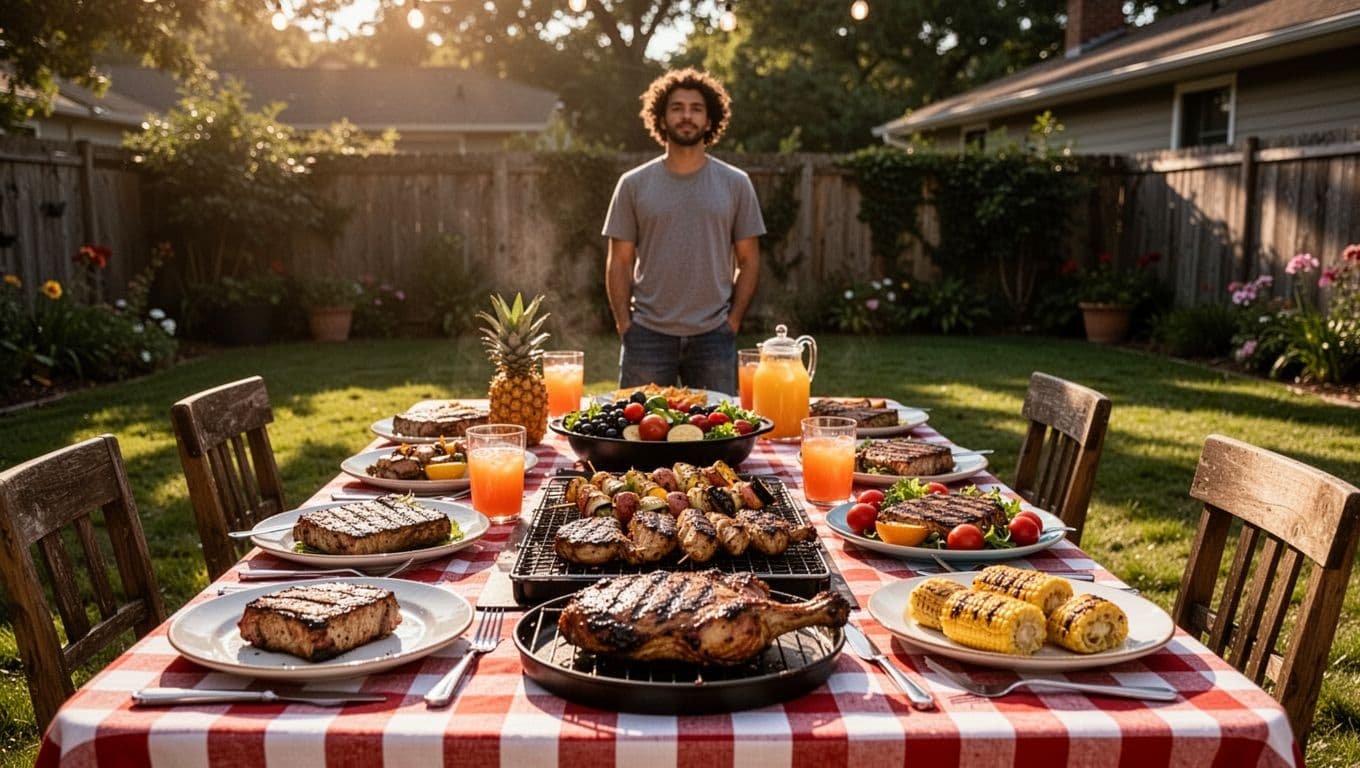
26. What does Labor Day often signal in American culture? It is commonly treated as the unofficial end of summer, though warm weather continues in many places.
27. Why do some families connect Labor Day with back-to-school plans? Schools often begin shortly before or after the holiday, so families use the weekend to finish shopping and adjust schedules.
28. What type of shopping event is common over Labor Day weekend? Retailers often promote holiday sales on clothing, appliances, furniture, and seasonal products.
29. Why do many people travel during Labor Day weekend? The three-day weekend gives people time for short trips, family visits, beach outings, or outdoor recreation.
30. Which sports may become part of Labor Day weekend plans? People might watch college football, baseball, tennis, or local sporting events. These are common activities, not official Labor Day requirements.
31. What does the phrase “don’t wear white after Labor Day” describe? It describes an old fashion saying, not a law. Many people no longer follow it, and modern clothing choices rarely treat the rule as binding.
Easy Labor Day Trivia Questions for Kids, Adults, and Teams
These Labor Day trivia questions work well for classrooms, family gatherings, office games, and online quizzes. Start with the multiple-choice round, then use the challenge questions to test players who know more about labor history.
Multiple-Choice Labor Day Questions With Clear Answers
1. Where was the first Labor Day celebration held? A. Boston B. New York City C. Chicago D. Philadelphia
Answer: B. New York City. The first celebration took place there on September 5, 1882. 2. What year did the first Labor Day celebration take place? A. 1776 B. 1865 C. 1882 D. 1901
Answer: C. 1882. The event included a parade, speeches, music, and a public gathering. 3. Which state first recognized Labor Day by law? A. Oregon B. Ohio C. New York D. Illinois
Answer: A. Oregon. Oregon passed a Labor Day law in 1887. 4. Which president signed the law making Labor Day a federal holiday? A. Abraham Lincoln B. Theodore Roosevelt C. Grover Cleveland D. William Howard Taft
Answer: C. Grover Cleveland. He signed the federal law on June 28, 1894. 5. When does the United States observe Labor Day? A. September 1 B. The first Monday in September C. The last Monday in August D. May 1
Answer: B. The first Monday in September. The date changes each year, but the weekday rule stays the same. 6. Which group helped organize the first Labor Day event? A. Central Labor Union B. Continental Congress C. Red Cross D. Federal Reserve
Answer: A. Central Labor Union. The group represented several local labor organizations in New York.
For more historical background, compare your answers with the U.S. Department of Labor’s Labor Day history.
True-or-False and Challenge Questions
- True or false: Labor Day always falls on September 1. Answer: False. It falls on the first Monday in September, so the calendar date changes.
- True or false: May Day and U.S. Labor Day are observed on the same date. Answer: False. May Day is commonly observed on May 1, while U.S. Labor Day occurs in September.
- Is the rule against wearing white after Labor Day an actual law? Answer: No. It is an old fashion custom, not a legal requirement.
- What major 1894 conflict involved railroad workers and the Pullman Company? Answer: The Pullman Strike. The dispute increased national concern about labor relations.
- Which organization organized the first Labor Day celebration in New York City? Answer: The Central Labor Union. This challenge question tests a detail often confused with the Knights of Labor.
- Short answer: What did early Labor Day events honor? Answer: Workers and their contributions. Early celebrations also called attention to fair wages, shorter hours, and safer workplaces.
How to Use These Labor Day Trivia Questions at a Party or Event
Labor Day trivia works best when the rules are clear and the pace stays lively. Choose a host, divide guests into teams, and decide whether players will answer aloud or write responses on paper. A short time limit, such as 20 to 30 seconds per question, keeps the game moving without pressuring younger players.

You can adapt the format to almost any gathering:
- At a family barbecue, mix children and adults on each team, then offer snacks or summer-themed prizes.
- In a classroom, use teams, whiteboards, or a quick written quiz. Explain unfamiliar labor terms in age-appropriate language.
- At an office gathering, keep the tone relaxed and avoid questions that put anyone on the spot about personal work experiences.
- During a virtual meeting, place players in breakout rooms and have the host read each question aloud.
- For a social media post, publish a few questions at a time and invite followers to share their scores.
A host can also borrow ideas from these holiday game night activities and adjust them for a Labor Day theme.
Simple Scoring Rules and Tie-Breakers
Award one point for every correct answer. Do not give points for guesses unless the question clearly asks players to estimate a number. For multiple-choice questions, a correct selected answer earns the point, while an incorrect answer earns zero.
Mix easier questions with harder history questions so everyone has a chance to contribute. Read the correct answer after each round, then add one sentence of context. When discussing names such as Grover Cleveland or the Central Labor Union, pronounce them carefully and explain the historical background respectfully.
Bonus points can work well, but state them before the game begins. For example, you might award one extra point for a clearly labeled challenge question. Avoid changing the scoring halfway through, since consistent rules keep the competition friendly.
For a tie, ask teams to estimate the number of people at the first Labor Day parade. Historical sources commonly report a range of about 10,000 to 20,000 participants, so the team with the closest estimate wins. If you prefer a fact-based tie-breaker, ask: “In what year did Labor Day become a federal holiday?” The answer is 1894, a date also featured in AARP’s Labor Day quiz. Offer small prizes such as snacks, gift cards, or summer-themed items.
How to Check Labor Day Trivia Facts Before Publishing or Hosting
Accurate Labor Day trivia protects your credibility and prevents avoidable confusion during the game. Before publishing questions or reading them aloud, verify dates, names, participant estimates, and claims about the holiday’s traditions.
Start With Reliable Historical Sources
Use government and research institutions for the core timeline. The U.S. Department of Labor, Library of Congress, National Archives, and established history references can confirm when the first celebration occurred, which state first recognized the holiday, and when Congress made it federal law.
For example, reliable sources agree that the first Labor Day celebration took place in New York City on September 5, 1882. Oregon passed the first state Labor Day law in 1887, and President Grover Cleveland signed the federal holiday legislation in 1894. You can compare your wording with this Labor Day history reference before finalizing a quiz.
Check each claim against more than one respected source when possible. A quick review can catch errors such as saying Labor Day always falls on September 1 or describing the white-after-Labor-Day custom as a law.
Handle Disputed Details With Care
Some historical details don’t have one universally accepted answer. Accounts differ on the exact number of people at the 1882 parade, with estimates often ranging from 10,000 to 20,000 participants. The amount of credit given to the Knights of Labor also varies. Many sources identify the Central Labor Union as the organizer, while others discuss the Knights of Labor’s involvement.
Use careful wording when evidence varies:
- Say “commonly credited to” when historians identify more than one person.
- Use “many sources report” before an uncertain participant estimate.
- Identify the Central Labor Union as the group commonly associated with organizing the first celebration.
- Separate official holiday facts from modern customs, such as barbecues, retail sales, and the end-of-summer tradition.
That wording keeps your questions fair while showing players where history contains reasonable disagreement.
Frequently Asked Questions
These quick answers clarify a few Labor Day details that often create confusion during trivia games. For a reliable historical timeline, see the U.S. Department of Labor’s Labor Day history.
When was the first Labor Day celebrated in the United States?
The first recorded Labor Day celebration took place in New York City on Tuesday, September 5, 1882. The Central Labor Union organized a public parade that brought workers and supporters together to honor labor.
The event included speeches, music, and a large gathering. Many participants gave up a day’s pay to attend, which showed their support for organized labor.
Why does Labor Day fall on the first Monday in September?
The first-Monday rule became an established U.S. tradition in the late 19th century. September connected with an early New York labor celebration, while the date also helped create a separate American holiday from May 1.
Today, Labor Day always falls on the first Monday in September. Its calendar date changes each year, but the weekday remains the same.
Who made Labor Day a federal holiday?
President Grover Cleveland signed the federal Labor Day law on June 28, 1894. Congress approved the measure during a period of serious conflict between workers, companies, and government officials.
The decision followed major unrest, including the Pullman Strike, a nationwide railroad dispute that led to violence and federal intervention. That tense setting increased pressure for a national holiday honoring workers.
Is Labor Day the same as May Day?
No. The holidays share connections to workers and labor movements, but they are not the same U.S. holiday.
The United States celebrates Labor Day in September. Many countries observe International Workers’ Day on May 1, a date also known as May Day.
What are common ways people celebrate Labor Day?
Popular customs include barbecues, picnics, parades, family gatherings, travel, shopping, and end-of-summer events. Some people attend community celebrations, while others use the long weekend for rest or a short trip.
These activities are traditions, not required parts of the holiday. You can celebrate Labor Day in a way that fits your plans, budget, and family.
Is it illegal to wear white after Labor Day?
No. The rule against wearing white after Labor Day is an old fashion tradition, not a law. It once reflected seasonal clothing customs and social expectations.
Modern clothing is much more flexible, so you can wear white whenever you like. Personal style matters more than an outdated calendar rule.
Conclusion
Labor Day is more than a day off, a cookout, or a retail sale. Its history began with organized workers who called for fair wages, shorter hours, safer workplaces, and respect for their social and economic contributions. Those efforts gave the holiday a lasting connection to the labor movement and the people who help communities and businesses thrive.
Choose a few of these Labor Day trivia questions for your next family gathering, classroom activity, office game, or holiday party. Share the quiz with friends, then use the answers to start respectful conversations about how the holiday began and why workers’ rights still matter. A little friendly competition can make the history easier to remember and more meaningful to discuss.
Gather your favorite people, test your knowledge, and celebrate Labor Day together.
Save the pin for later

- 8 Signs Your Ex Is Testing You And What It Really Means - September 18, 2026
- 12 Qualities Every Good Man Should Have - September 18, 2026
- How to Write a Dating Profile for a Woman Over 45: 9 Simple Steps - September 18, 2026