
 Orji Chigozie Henry
Fall has a way of slowing the day down. A crunchy walk to school, a warm drink after soccer practice, or a pile of leaves in the yard can open the door to a good chat.
These fall questions for kids give parents, teachers, and caregivers easy ways to connect without making conversation feel like an interview. Offer a prompt, listen without rushing to correct the answer, and let kids take the idea wherever it goes.
Key Takeaways
- Ask one or two seasonal questions at a time instead of running through a long list.
- Mix simple choices with open-ended prompts about nature, feelings, school, and imagination.
- Real fall activities, such as walks and pumpkin patches, make talking feel easier.
- Let children pass, draw, or give a silly answer when they don’t want to talk.
- A calm follow-up such as “What makes you say that?” often leads to the best answers.
Fall Questions for Kids That Spark Easy, Meaningful Conversations
Treat these prompts as invitations, not a quiz. One child may answer before you finish the question, while another may need quiet time. Both responses are fine.
Start with a question that fits the moment. At dinner, ask about a favorite fall smell. On the drive home, ask what part of the day felt most like autumn. If a child gives a short answer, share your answer too, then try a gentle follow-up: “What makes you say that?” or “Can you tell me more?”
Questions about everyday moments often work better than “How was school?” Fall family conversation prompts can also help you build a small collection for busy afternoons.
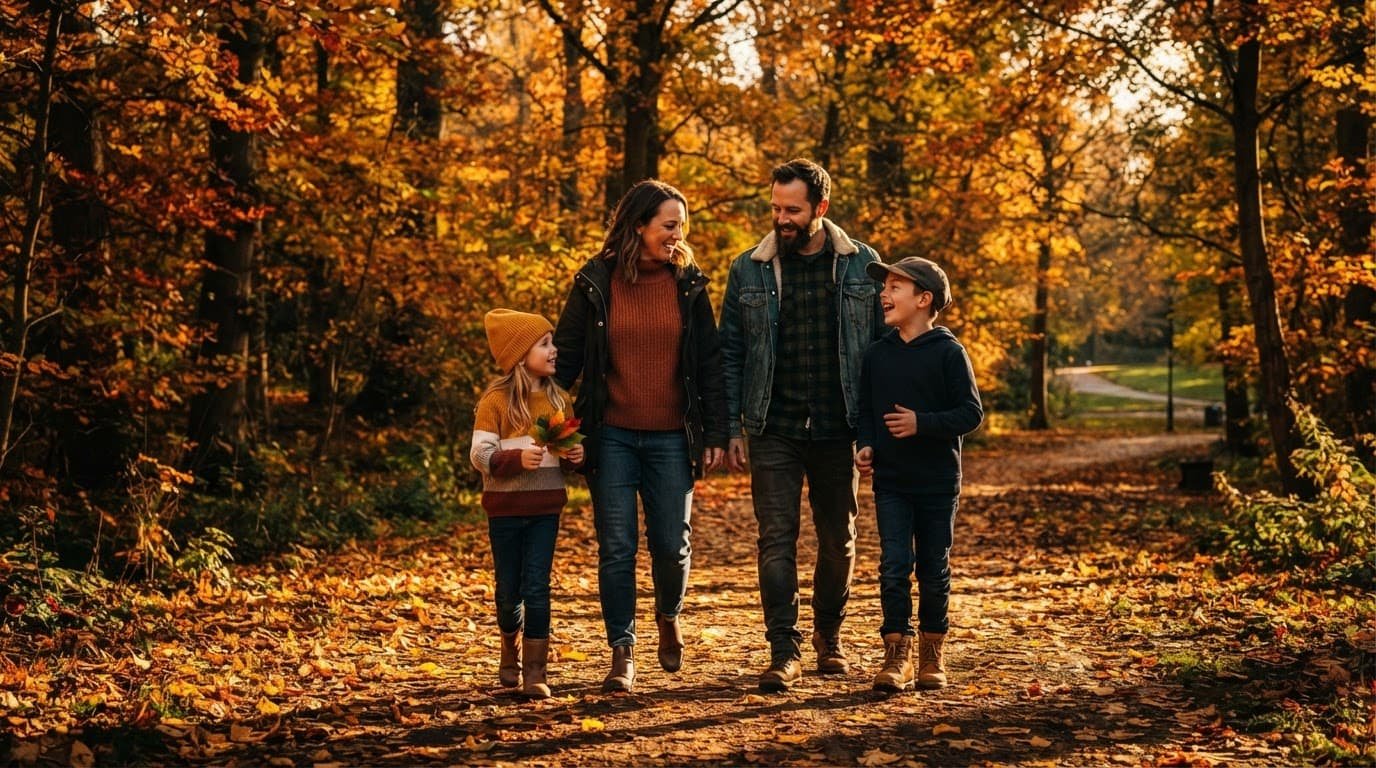
Fun Questions About Favorite Fall Things
Younger children often enjoy questions with familiar choices. Older kids may use the same prompt to tell a longer story.
Try these:
- Would you rather pick apples or choose a pumpkin?
- What fall food would you eat every day if you could?
- Which smells better, cinnamon, wet leaves, or a campfire?
- What color do you notice most outside right now?
- Would you rather jump in a leaf pile or find your way through a corn maze?
- What should you wear on the perfect chilly day?
- Which fall holiday do you like most, and what do you enjoy about it?
- Is there a book, movie, or song that feels like fall to you?
- What sound tells you that summer is over?
- If you could invent a new autumn snack, what would be in it?
Keep the mood light. A child who says “pizza-flavored hot cocoa” is offering a chance to laugh and build on the idea.
Thoughtful Questions About Feelings, Friends, and Change
Fall can bring new classrooms, darker evenings, packed schedules, and shifting friendships. These changes may feel exciting, uncomfortable, or both. You don’t need to press for a personal answer.
Ask, “What part of your school day feels easiest lately?” You might also try, “Has anything at school surprised you this week?” or “What helps you feel safe when something feels new?”
Other gentle prompts include:
- What are you looking forward to before winter comes?
- When do you feel most proud of yourself at school?
- What makes a rainy afternoon feel cozy?
- Is there someone who made you smile this week?
- What are you thankful to have right now?
When a child shares a worry, begin with validation. “That sounds frustrating” shows that you heard them. Advice can wait until they ask for it. Patient listening is one of the simplest ways to improve your communication skills at home.
A child’s unusual answer is often more useful than a polished one because it shows what they are noticing and feeling.
Nature and Imagination Questions to Ask During Fall Activities
A leaf in a small hand gives a conversation somewhere to begin. Bring a few prompts on a nature walk, apple-picking trip, pumpkin patch visit, or afternoon spent making leaf art.
Objects make abstract questions easier. Instead of asking a child to explain fall, ask them to compare two leaves or predict what an acorn might become. You can then let their observations guide the next question.
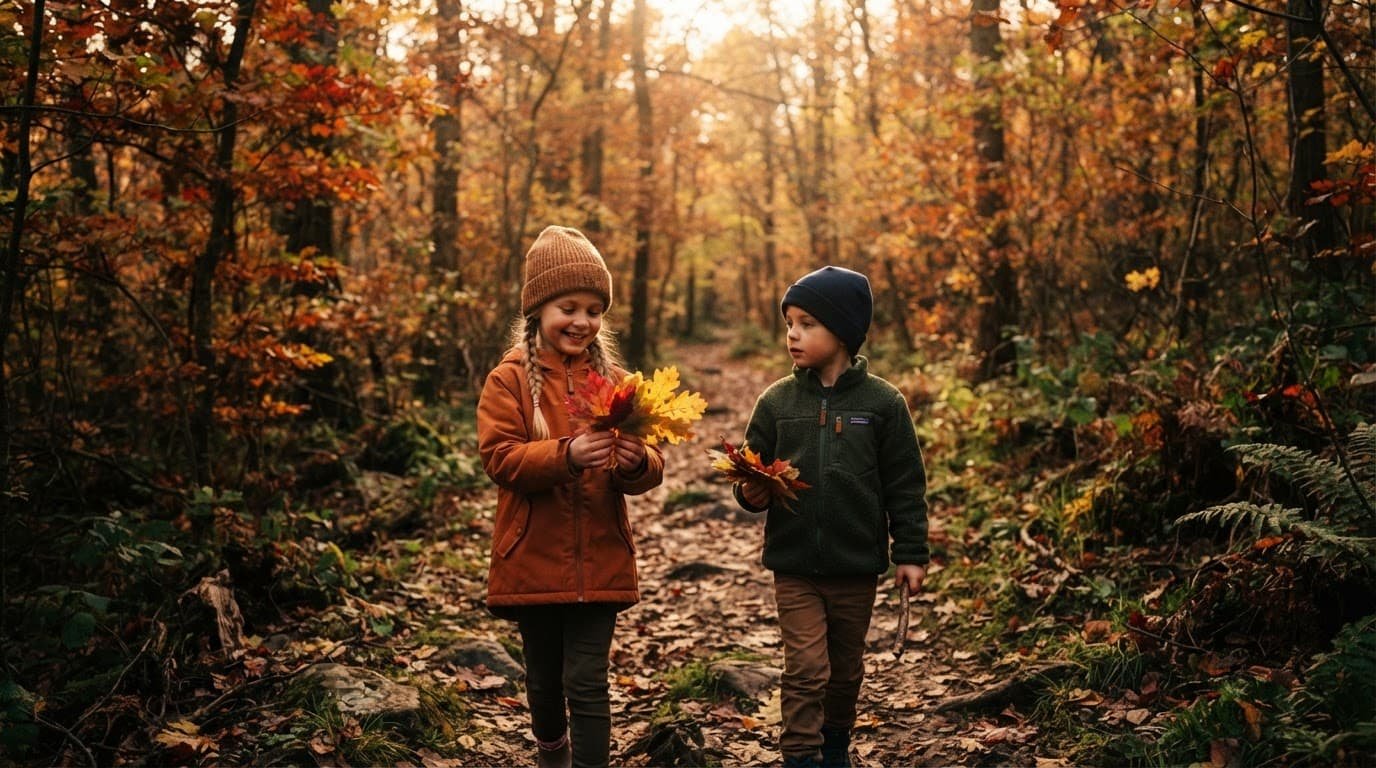
Fall Nature Questions for Outdoor Adventures
Ask children to notice first, then wonder aloud. “Which leaf has the most colors?” is easier than asking for a lesson about trees.
Use prompts such as:
- Why do you think this leaf changed color?
- Which tree would make the best home for a squirrel?
- Where might insects go when the weather gets colder?
- What sounds can you hear when you stop walking?
- Do you think this acorn will look different next spring?
- Which cloud looks like it could bring rain?
- What do you think animals collect before winter?
Not every tree changes color or loses its leaves. A child-friendly guide to fall nature questions explains the difference between deciduous and evergreen trees in simple terms.
Stay on marked paths, avoid touching mushrooms or unknown berries, and wash hands after handling natural objects. Children can explore freely while still learning basic outdoor safety.
Silly Fall Imagination Questions
Imagination prompts give children control over the story. There is no wrong answer, so they can be bold, weird, or wonderfully detailed.
Ask, “If pumpkins could talk, what would they complain about?” Then ask what a pumpkin would say about its favorite day. You could also try, “What superpower would a leaf superhero have?” or “Which woodland animal would make the funniest school principal?”
For a longer shared story, ask a few fall questions for kids in a row:
- If you found a door inside a giant tree, where would it lead?
- What would a friendly fox pack for a rainy-day adventure?
- What costume would you create if you could use only leaves, acorns, and sticks?
- What would happen at a holiday invented by squirrels?
- How would you design a perfect fall day for your family?
Accept plot twists. A story about a pumpkin who wants to become a bus driver can become a family joke for years.
How to Use Fall Conversation Starters at Home, School, or on the Go
The best moment may arrive when nobody planned it. Ask a prompt while buckling seat belts, stirring muffin batter, taking the dog out, or settling down before bed.
At home, place handwritten questions in a bowl and let someone choose one at dinner. In a classroom, use one question during morning circle or after recess. During a walk, turn observation prompts into a scavenger hunt, such as finding something red, rough, tiny, or shaped like a heart.
Preschoolers respond well to choices and pointing. Elementary-age children often enjoy “why” and “what if” questions. Older kids may prefer prompts about memories, friendships, favorite music, or how they would redesign a fall tradition.
A shared journal also works well. Let children write one sentence, make a drawing, or dictate their answer. Resources with fall classroom conversation activities can offer extra ideas for teachers and homeschool families.
Tips for Getting More Than a One-Word Answer
Open-ended wording gives kids room to answer. Instead of “Did you like the pumpkin patch?” ask, “What was the strangest thing you saw at the pumpkin patch?”
Then pause. Silence can feel long to adults, but children often need a few seconds to sort out their thoughts. Ask about a detail they already mentioned, such as the biggest pumpkin or the muddiest boot.
Some children talk more while their hands are busy. Try prompts while coloring, building with blocks, baking, or tossing a ball. A moving conversation often feels less intense than face-to-face questions at the table.
Questions That Help Shy or Reluctant Kids Join In
Letting a child pass protects trust. They may listen to everyone else’s answers and join later when the pressure is gone.
Offer easy options: “Would you rather draw your answer or tell me?” Use leaf-shaped paper cards, a favorite stuffed animal, or a photo from a recent outing as a prop. You can also ask low-pressure questions like, “Which fall color would your backpack choose?”
Don’t demand a private feeling to fill silence. A child who isn’t ready to discuss school worries can still enjoy inventing a leaf superhero. Those small, playful exchanges keep the door open.
Frequently Asked Questions
What age are fall conversation questions best for?
Children as young as 2 or 3 can answer simple choice questions about colors, foods, and outdoor play. Adjust the wording for their age, then offer more reflective or imaginative prompts as they grow.
How many questions should I ask at once?
One or two is usually enough. If the child stays engaged, follow their answer rather than switching quickly to another prompt.
What if my child gives a silly answer?
Go with it. Silly answers often lead to laughter, storytelling, and more relaxed conversation, which matters more than getting a serious response.
Can teachers use these questions in class?
Yes. Use a prompt during morning meeting, a writing warm-up, or an art activity. Give students the choice to speak, draw, or pass so everyone can participate comfortably.
Do these prompts work for children who dislike fall?
They can. Ask what they miss about summer, what they dislike about cold weather, or what would make a gray day better. Honest answers are more meaningful than forced enthusiasm.
A Small Question Can Build a Bigger Connection
A good seasonal question doesn’t need a perfect setting or a carefully planned activity. It only needs a few unhurried minutes and an adult willing to listen.
Choose one fall question for kids during an ordinary moment today. Their answer may be funny, thoughtful, brief, or unexpected, but the attention you give it helps build trust.
Save the pin for later

- 8 Signs Your Ex Is Testing You And What It Really Means - September 18, 2026
- 12 Qualities Every Good Man Should Have - September 18, 2026
- How to Write a Dating Profile for a Woman Over 45: 9 Simple Steps - September 18, 2026