
 Orji Chigozie Henry
Autumn brings a slower rhythm, cooler air, and a natural urge to take stock. Autumn reflection questions give you a simple way to notice what the year has taught you without turning your journal into a performance review.
You don’t need polished answers or pages of writing. A few honest lines can help you honor progress, release what feels heavy, and choose a better direction for the months ahead.
Key Takeaways
- Honest reflection includes meaningful wins, painful lessons, and ordinary moments that mattered.
- Specific memories reveal more than broad statements such as “this year was busy.”
- Your energy, habits, and boundaries show what supports your well-being.
- Letting go can mean changing a belief, commitment, expectation, or routine.
- One small action gives a journal insight a place in daily life.
Autumn Reflection Questions for Looking Back With Honesty
Reflection works best when it is curious rather than critical. Give yourself credit for what went well, then look at hard moments with the same fairness. Journaling can support mood and help people process distress, according to HelpGuide’s overview of journaling and wellness.

What moments, people, and choices shaped your year?
Write about the best moment you experienced and the choice that made you proud. Which unexpected change altered your plans? Who made you feel supported, understood, or more like yourself?
Then ask: What am I most grateful for right now? Which memory do I want to carry into winter? A regular gratitude practice can make these answers easier to notice, especially when life feels rushed.
Use names, places, and details. “My sister’s Sunday calls helped me through March” tells you more than “family mattered.”
What did your challenges teach you about yourself?
Consider a setback, fear, mistake, or difficult emotion you faced. What did you try? What helped, and what made the situation harder? You might discover patience, courage, or a need to ask for help sooner.
A hard experience doesn’t need a silver lining to hold a lesson. Ask what you would do differently next time, then leave judgment out of the answer.
Reflect on Your Energy, Habits, and Daily Balance
Your calendar can reveal as much as your journal. Notice which parts of a typical week leave you focused and settled, and which ones leave you tense or depleted. Research on journaling shows promise for mental health support, although a 2022 research review also calls for stronger long-term studies.
Which habits and routines helped you feel your best?
Ask yourself which routines improved your mood, focus, health, confidence, or peace of mind. Maybe a morning walk helped, or perhaps putting your phone outside the bedroom improved sleep.
Choose one habit to build, reduce, or stop before year-end. Make it small: set a cue, complete one clear action, and give yourself a modest reward. For example, put on walking shoes after lunch, walk for ten minutes, then enjoy a favorite podcast.
What or who gives you energy, and what drains it?
List the activities, places, people, duties, and thought patterns that affect your energy. Do your days reflect your real priorities, or are other people’s expectations directing too much of your time?
Autumn walks can offer a useful reset. Pew’s reporting on nature and mental health connects time outdoors with positive emotions and lower negative feelings. Protect more time for people and places that help you feel present.
Use Autumn Reflection Questions to Let Go and Find Direction
Autumn reflection questions can separate what you need to release from what you want to build. First, name the weight you have carried. Then decide what deserves your attention for the rest of the year.
What are you ready to release this season?
Write about guilt, perfectionism, resentment, comparison, clutter, unrealistic goals, or a commitment that no longer fits. You may also want to question a limiting belief, such as “I always disappoint people when I say no.”
Finish with one release statement and one action: “I release the need to answer every message immediately. I will turn off notifications during dinner.” Reflection and critical thinking can help you test old assumptions instead of accepting them as facts.
What matters most for the rest of this year?
Identify your core values, your closest relationships, and one or two areas where you want to grow. Ask: What deserves more attention? What can wait until later? What would meaningful progress look like by December?
Keep the answer short. A long goal list often hides the few commitments that matter most.
Turn Your Reflections Into Small, Meaningful Actions
A journal entry becomes more useful when it changes one decision. Pick a single focus area, choose a first step, and set a date to review how it went.
Choose one intention and one first step
Turn “I want better balance” into “I will protect Wednesday evening for rest.” Turn “I want to reconnect” into “I will call my friend on Sunday.” You could practice a skill for ten minutes, schedule a weekly walk, or complete one unfinished task.
The first step should be small enough to start today and clear enough to measure. Building routines that support your goals is one practical way to invest in yourself.
Create a simple autumn journaling routine
Set aside 10 to 20 minutes in a quiet spot. Answer only the prompts that feel useful, whether you write by hand, type notes, or talk with someone you trust.
Review your answers after a week or month. Look for progress and patterns, not perfect consistency.
Frequently Asked Questions
How often should I use autumn reflection questions?
Once at the start of the season is enough to gain perspective. However, revisiting two or three prompts every few weeks helps you notice changes in your priorities and energy.
What if a prompt brings up painful feelings?
Pause and write only what feels safe to explore. If difficult feelings stay intense or interfere with daily life, talk with a licensed mental health professional or someone you trust.
Do I need a special journal for seasonal reflection?
No. A basic notebook, notes app, or voice memo works well. The best format is the one you will use honestly and consistently.
Can I reflect with another person?
Yes, if you both agree to listen without fixing or judging. Sharing answers can build closeness, especially when the conversation includes boundaries and privacy.
Let the Season Give You a Pause
Reflection isn’t a demand for a perfect plan or a reason to criticize the past. It is a chance to see your year more clearly and make room for one meaningful next step.
Choose a few questions, write what feels true, and return to your answers as autumn unfolds.
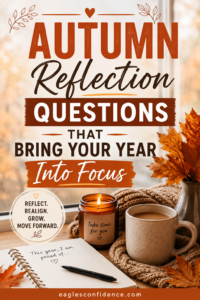
Save the pin for later

- 8 Signs Your Ex Is Testing You And What It Really Means - September 18, 2026
- 12 Qualities Every Good Man Should Have - September 18, 2026
- How to Write a Dating Profile for a Woman Over 45: 9 Simple Steps - September 18, 2026