
 Orji Chigozie Henry
Crisp air, colorful leaves, and the promise of cozy treats make fall an exciting season for kids. However, keeping everyone entertained can take some planning when the weather changes from sunny to rainy in a single afternoon.
This fall bucket list for kids includes outdoor adventures, creative projects, seasonal treats, and rainy-day activities, so you can choose ideas that fit your children’s ages, energy levels, budget, and local weather. Add a simple family gratitude activity to help everyone notice the small moments that make the season special, then start with these easy fall ideas. For extra inspiration, watch this fall activities video for kids.
Key Takeaways
- Build your fall bucket list for kids around the weather, with outdoor plans for crisp days and indoor backups for rain.
- Encourage nature play through leaf collecting, scavenger hunts, apple picking, pumpkin visits, and puddle walks.
- Keep rainy afternoons enjoyable with autumn crafts, forts, baking, reading, and simple science experiments.
- Match activities to your children’s ages, interests, energy levels, and attention spans.
- Add meaningful family moments, such as sharing gratitude, taking photos, or choosing a favorite activity to repeat.
Fall Bucket List for Kids: Outdoor Adventures to Try
Autumn invites kids outside with simple activities that turn an ordinary afternoon into a lasting memory. Choose one adventure that fits the forecast, then let your children set the pace instead of trying to complete every idea.
Explore Leaves, Acorns, and Changing Trees
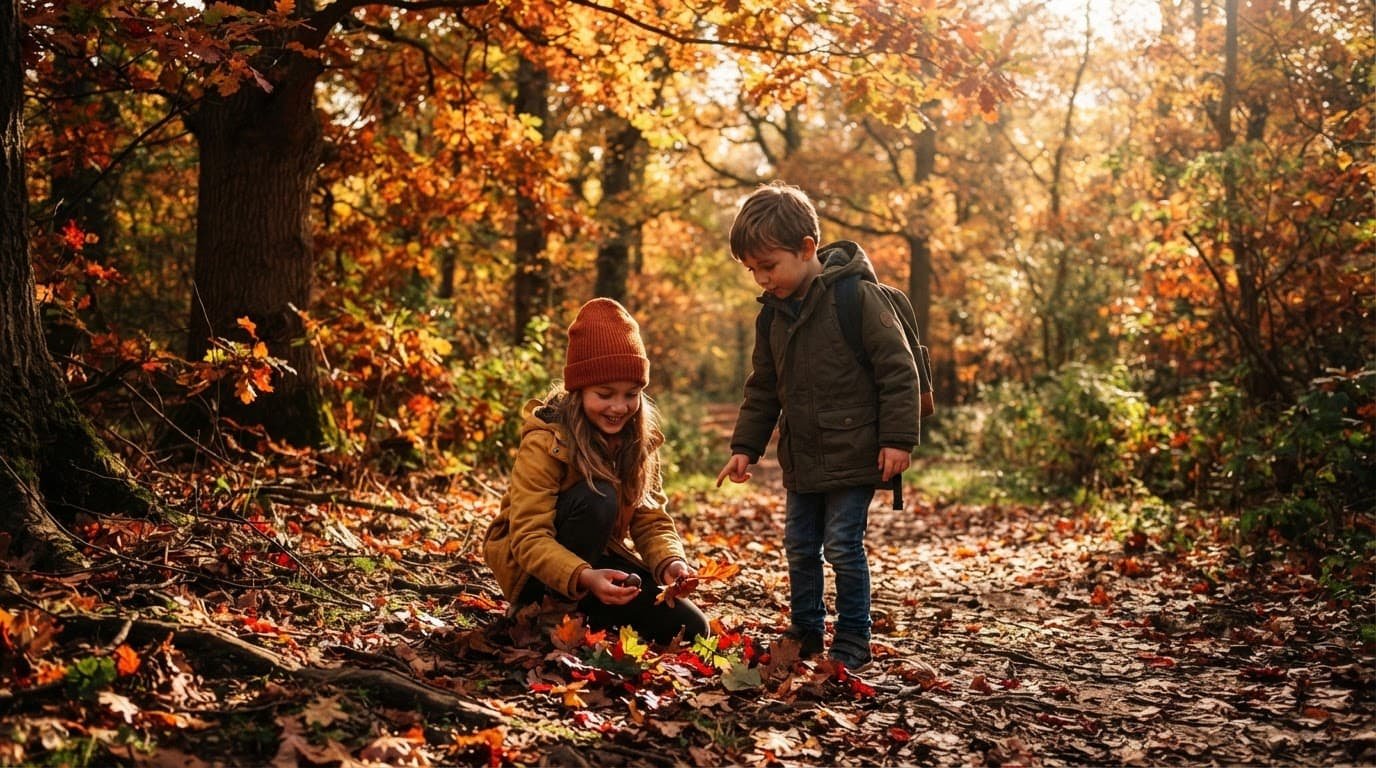
Take a fall nature walk through a park, backyard, or quiet neighborhood. Give each child a small bag or basket for a leaf-collecting challenge, then search for specific colors, shapes, textures, acorns, pine cones, and chestnuts.
Older children can create a color chart or compare leaves from different trees. Younger kids might enjoy finding one crunchy leaf, one smooth leaf, and one with an unusual edge. Add a simple scavenger hunt with prompts such as:
- Find something red, yellow, and orange.
- Spot a leaf bigger than your hand.
- Look for rough bark and smooth bark.
- Find a curled leaf, a pine cone, and an acorn.
Look up at the tree canopy, too. Can your children find the greenest tree, the brightest tree, and the one that has lost most of its leaves? Remind everyone to leave protected plants alone, avoid disturbing wildlife, and never eat anything found outdoors.
Enjoy Apple Picking, Pumpkin Picking, or a Hayride
An orchard, pumpkin patch, farm, or hayride can fill an entire fall day. Before leaving home, check opening hours, admission fees, weather policies, parking, accessibility, and available activities. Some locations offer playgrounds, corn mazes, petting areas, food stands, or seasonal workshops.
Keep the outing affordable by bringing water and packing lunch or snacks. You might choose one paid activity, such as a hayride, then enjoy free wandering, photos, and outdoor play. Younger children may prefer a short visit with one clear goal, while older kids can help compare pumpkins or plan the family route. Browse more ideas in this fall family activities guide.
Plan a Picnic, Park Game Day, or Windy Beach Walk
On a mild day, pack a picnic and add relay races, nature bingo, sidewalk chalk games, or a family photo challenge. At the beach, children can collect shells, fly a kite, and search for interesting patterns in the sand.
Check the forecast before you go, and keep a backup plan ready for cold wind or sudden rain. Layers, comfortable shoes, and a change of clothes help active children stay comfortable.
Make a Lantern and Take an Evening Walk
Create lanterns with paper cups, jars, stickers, and battery-powered tea lights. Avoid open flames, especially with young children. At dusk, take a short walk along a familiar, well-lit route with adults supervising closely.
Choose reflective clothing if you will walk near roads, and keep the route close to home. The soft glow, cool air, and early darkness create a cozy seasonal moment without making the outing complicated.
Creative Fall Activities Kids Can Do at Home
Rainy afternoons and chilly weekends are perfect for low-cost fall activities. Gather leaves, cardboard, paint, and pantry basics, then let your children choose a project that matches their age and attention span. Keep scissors, craft tools, kitchen tasks, and small objects supervised, especially around toddlers.
Create Leaf Art, Nature Crafts, and a Fall Display
Start with a nature walk, then turn the collected materials into a small art station. To dry leaves, place them between sheets of paper inside a heavy book for several days. For faster results, press them under a stack of books and replace the paper if it becomes damp.
Children can make pressed-leaf pictures, leaf rubbings, or a colorful fall collage. Place a leaf under recycled paper, hold it still, and rub the side of a crayon across the page. Older kids can arrange leaves into animals or landscapes, while younger children can glue large leaves onto cardboard.
Painted rocks, chestnut figures, and paper pumpkins add variety. Use markers or washable paint on smooth rocks, then turn chestnuts into tiny characters with paper features. For paper pumpkins, cut pumpkin shapes from cereal boxes or shipping cardboard and decorate them with scraps from old magazines, paper bags, or unused wrapping paper.
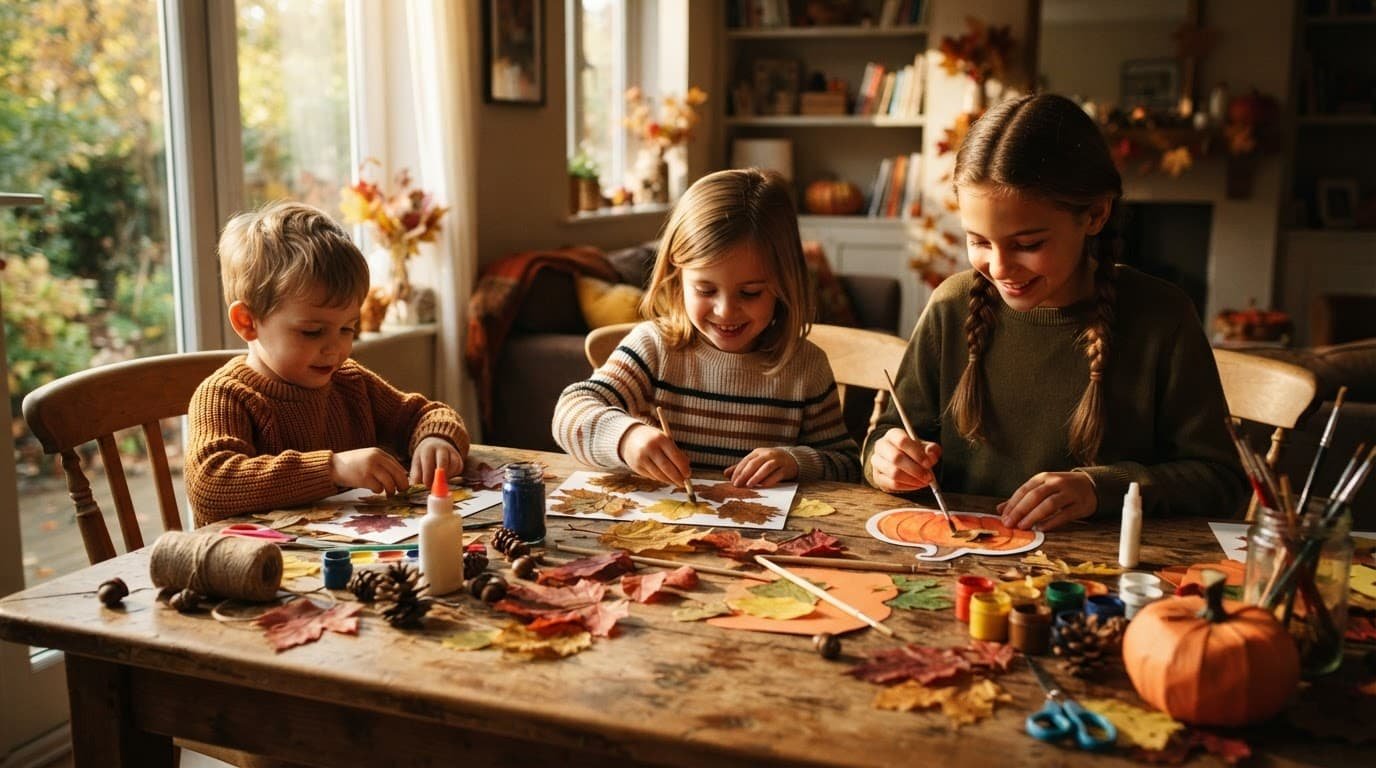
Protect finished artwork with clear contact paper, a thin layer of glue, or a recycled folder cover. Display the pieces on a shelf with pine cones, twigs, acorns, and small gourds. For more hands-on craft activities, invite children to invent names, stories, or a game around their display.
Carve or Decorate Pumpkins Safely
Young children can decorate pumpkins with stickers, washable markers, paint, yarn, paper shapes, or craft pom-poms. Older children may design a face before an adult handles the carving tools. Keep sharp knives and pumpkin saws in adult hands, and supervise every step.
Battery-powered lights are safer than candles inside pumpkins, particularly near children, pets, curtains, or dry leaves. If your family saves pumpkin seeds for roasting, wash them well and check for food allergies before serving them.
Bake a Simple Fall Treat Together
Choose an age-friendly recipe such as apple crisp, apple muffins, pumpkin bread, roasted pumpkin seeds, or warm soup. Younger children can wash produce, tear herbs, stir batter, and sprinkle toppings. Older kids can measure ingredients, read steps aloud, decorate muffins, and help wipe the counter.
Adults should handle ovens, stovetops, hot pans, and sharp knives. Check every ingredient for allergies, and give each child a kitchen job that fits their skills. Cleaning up together also teaches children that cooking includes the work after the last bite. For extra ideas, browse these easy fall crafts for kids and adapt the projects with materials you already have.
Rainy-Day Fall Activities for Kids
Rainy and cold weather doesn’t have to end your fall plans. Choose activities that help children learn, move, create, and connect, then adjust the pace as their energy changes. A cozy morning at home can be just as memorable as an afternoon outing.
Turn the Living Room Into an Indoor Adventure
Give children a few choices, then let them help plan the day. They might build a blanket fort with chairs, cushions, and sheets, create a reading corner inside, or turn it into a pretend campsite. Keep walkways clear and set simple rules, such as no climbing on furniture and no running near sharp corners.
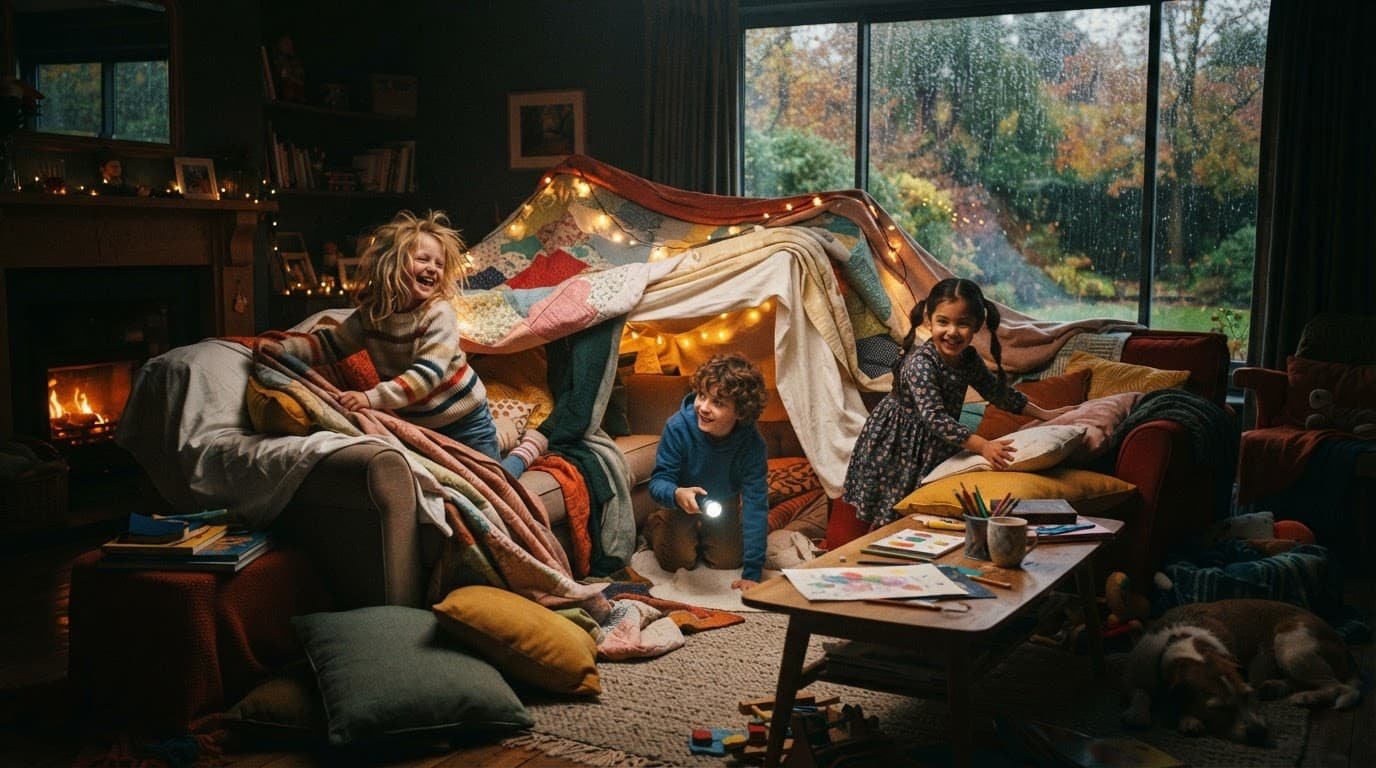
An at-home escape room can use handwritten clues, hidden objects, and a small prize at the end. Older children can write the clues, while younger kids search for colors, shapes, or familiar objects. These critical thinking games add a learning element without making the afternoon feel like school.
For active play, arrange pillows, painter’s tape lines, and soft toys into an indoor obstacle course. Children can crawl under a table, step over cushions, balance along a tape path, and toss rolled-up socks into a basket. Remove fragile items first, and change the course when the challenge starts to feel repetitive.
You can also host a board-game tournament, followed by a family movie afternoon. Rotate activities every 30 to 60 minutes so children get movement, quiet time, and shared attention. Let them choose the games, create teams, prepare snacks, or design simple scorecards.
A child who helps plan the afternoon is more likely to stay involved when the weather keeps everyone indoors.
Visit a Museum, Indoor Playground, Pool, or Library
When everyone needs a change of scenery, check nearby children’s museums, science centers, libraries, indoor playgrounds, swimming pools, bowling alleys, and seasonal festivals. Smaller towns often have community centers, library programs, school events, or indoor recreation hours that cost little or nothing.
Before leaving, compare admission prices, travel time, parking, age limits, reservation policies, sensory needs, and accessibility. Some popular play spaces and pools require timed tickets, while museums may offer discounted family days. A local rainy-day activity guide can also spark ideas, even if you live elsewhere.
Choose one main outing rather than packing the day too tightly. Bring dry clothes, water, and a snack, then leave room for a quiet library visit or story time if your children tire quickly.
How to Make a Fall Bucket List That Works for Your Family
A realistic fall bucket list should fit your family’s actual schedule, budget, and energy. Start with a short mix of activities instead of filling every weekend. Choose a few free ideas, one or two special outings, and several indoor backups for rainy days.
You can also borrow the simple idea of setting realistic expectations from this realistic fall bucket list guide. The goal is to create shared memories, not finish a demanding seasonal schedule.
Choose Activities by Age, Energy, and Interest
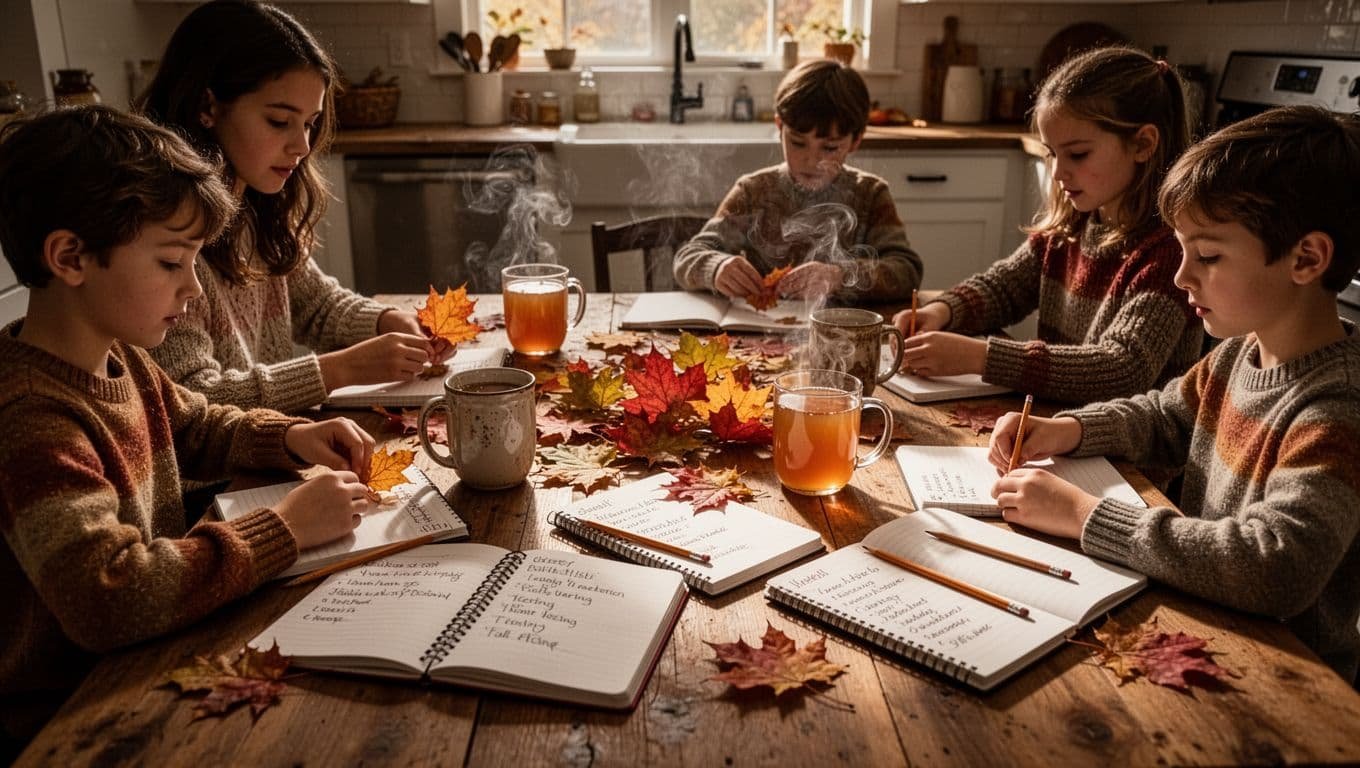
Toddlers often enjoy simple experiences that take only a few minutes. Collecting leaves, feeling different textures, splashing in puddles, or taking a short walk can feel exciting without causing frustration. Add sensory play at home with a bin of large leaves, pine cones, and scoops, while supervising closely and keeping small objects away from young children.
Older children may prefer more choice and challenge. Offer ideas such as a fall scavenger hunt, apple baking, leaf crafts, backyard sports, or a full afternoon at a pumpkin patch. Some children will want to plan the route, pack the snacks, or decide which activity comes next.
Give each child a chance to add one idea and choose one activity from the list. That small amount of control makes the bucket list feel collaborative rather than like a set of chores.
Prepare for Weather, Safety, and Small Budgets
Check the forecast before committing to outdoor plans, then dress everyone in layers that can be added or removed. Pack water, snacks, tissues, and an extra shirt for messy walks or puddle play. If you’re outside after dark, use reflective clothing or accessories, stay on familiar routes, and keep emergency contacts handy.
A memorable fall plan doesn’t need to cost much. Add free options such as a neighborhood leaf walk, backyard games, a library visit, homemade crafts, or a family cooking night. Mix one paid outing with several low-cost activities so the list stays enjoyable without stretching your budget.
Keep the Checklist Flexible and Focus on Connection
Treat the list as inspiration, not a competition. Use stickers, a shared calendar, or family photos to track the moments you enjoyed, but leave blank spaces for tired days and changed plans.
A child who helps choose, prepare, and adapt activities practices confidence, creativity, and teamwork. Even a short baking session or quiet reading break can become meaningful family time when everyone feels included. Choose a few seasonal favorites, then let the rest happen naturally.
Frequently Asked Questions
A fall bucket list should make family time easier, not add pressure to your calendar. These answers can help you adjust seasonal plans when your children’s needs, interests, or schedules don’t match.

How many activities should a kids’ fall bucket list include?
Start with 10 to 15 ideas, then let your family add more if they want. A shorter list gives children enough variety without making every weekend feel scheduled. Include a mix of free activities, home projects, outdoor adventures, and simple rainy-day options.
You can also use a family fall bucket list for inspiration, then adjust each idea for your location, budget, and children’s ages.
What if my child doesn’t want to try an activity?
Give your child a choice instead of insisting on one specific plan. For example, offer a leaf walk, pumpkin decorating, or baking, then let them select the activity that feels most appealing.
If they still say no, listen without turning the moment into an argument. Trying something new takes confidence, so praise small steps and let children participate at their own comfort level. These ways to build confidence can also support children as they face unfamiliar activities.
How can siblings with different interests enjoy the same fall activity?
Choose plans with more than one possible role. During apple picking, one child can search for ripe fruit, another can take photos, and a third can help plan the snack afterward.
You can also let each child choose one activity for the family list. Rotate who gets to make the final choice, so everyone has a turn without expecting every child to love every idea.
How can we make fall activities accessible for a child with sensory or mobility needs?
Call venues before visiting and ask about parking, paths, restrooms, crowd levels, lighting, noise, and quiet spaces. A shorter route, stroller-friendly trail, noise-reducing headphones, or an earlier visit may make the experience more comfortable.
At home, adapt crafts and games with larger materials, seated options, visual instructions, or extra breaks. The best activity is one where your child can participate without feeling rushed.
Are fall bucket list activities only for weekends?
No. Many memorable ideas take 15 minutes or less. Try a short leaf hunt after school, warm cider during story time, a porch photo, or a quick sunset walk.
Keep a few easy options ready for busy weekdays. Small seasonal moments can keep the list active without taking over your family’s routine.
How do we keep the list from becoming another source of stress?
Treat the list as a menu, not a contract. Mark completed ideas with photos or stickers, but leave room for canceled plans, tired children, and unexpected weather.
Choose the activities that bring your family together, even when they seem ordinary. A quiet baking session or a short walk may become the memory everyone talks about later.
Conclusion
A memorable fall bucket list for kids can include outdoor play, creative projects, seasonal traditions, and cozy indoor time. The strongest plans stay flexible, fit your family’s energy and budget, and leave room for meaningful family connections.
Choose one easy activity to try this week, such as a leaf walk, a simple craft, or a family baking session. Your list doesn’t need to be expensive, long, or perfectly completed. Make it your own, and let the ordinary moments become part of the season you remember.
Save the pin for later


- 8 Signs Your Ex Is Testing You And What It Really Means - September 18, 2026
- 12 Qualities Every Good Man Should Have - September 18, 2026
- How to Write a Dating Profile for a Woman Over 45: 9 Simple Steps - September 18, 2026