
 Orji Chigozie Henry
“How was school?” often gets the same quick answer: “Fine.” On the first day, that short reply may hide excitement, nerves, new friendships, confusing classroom routines, or a small moment your child hasn’t found the words to explain yet.
Asking first day of school questions for kids can help, but the wording matters. Specific, low-pressure prompts such as “Who did you talk to first?” or “What was the funniest thing that happened?” give children something concrete to remember and share without feeling tested. You can also use respectful communication and patient listening to make the conversation feel safe and natural.
The goal isn’t to ask every question at once or turn dinner into an interview; choose one or two, listen without rushing to fix anything, and follow your child’s lead. Start with these age-friendly questions and simple conversation tips to help your child open up about the moments that mattered most.
Key Takeaways
- Ask specific first day of school questions instead of relying on “How was school?” to encourage fuller answers.
- Choose one or two low-pressure prompts about classmates, activities, feelings, or funny moments.
- Open-ended questions help children share more details and guide the conversation naturally.
- Listen without interrupting, judging, or rushing to solve a problem.
- Pay attention to changes in your child’s mood, tone, or behavior, especially when their words are brief.
First Day of School Questions for Kids That Start Real Conversations
Specific questions help children recall clear moments instead of searching for one answer to “How was school?” Choose only one or two prompts at a time. Too many questions can feel like an interview, especially when your child is tired.

Questions About the Best, Funniest, and Most Surprising Moments
Playful questions can help shy children begin talking without pressure. Try asking:
- “What made you smile today?”
- “What was the funniest thing that happened?”
- “What would you like to do again tomorrow?”
- “What surprised you about your first day?”
- “What part of the day felt the most exciting?”
If your child mentions a funny classroom moment, stay with that answer. Say, “What happened next?” or “Why was that so funny?” A curious response keeps the conversation open, while quickly changing subjects can make your child stop sharing.
You can find more age-friendly ideas in these inclusive questions for students, then adjust the wording to fit your child’s age and personality.
Questions About Friends, Classmates, and Kindness
Social questions work best when they focus on connection rather than popularity. Ask who your child met, sat with, or played with during the day.
- “Who did you talk to first?”
- “Who did you sit beside at lunch?”
- “Was there anyone you’d like to know better?”
- “Did someone do something kind for you?”
- “Did you help anyone today?”
- “Did anyone seem lonely or nervous?”
Listen for feelings, not just names. If your child says another student looked nervous, you might respond, “What made you notice that?” If they helped someone, invite more detail without turning the moment into a performance review. Patient, compassionate listening skills help children feel heard and safe.
Questions About Learning, Rules, and the Classroom
Concrete prompts can reveal details your child may skip in a broad summary. Ask about one part of the day at a time:
- “What did you like about your teacher?”
- “What was the classroom setup like?”
- “Which activity did you enjoy most?”
- “What new thing did you learn?”
- “What rule seemed important?”
- “What happened during recess or lunch?”
- “What do you want to learn this year?”
If your child gives a short answer, share a small detail from your own day first. Then pause. Children often continue when the conversation feels mutual rather than pressured.
Questions That Help Kids Name Their First-Day Feelings
Children may show feelings through behavior before they can explain them. A child who becomes clingy, unusually quiet, irritable, or restless may be tired, worried, embarrassed, or overwhelmed. Gentle questions help you understand what happened without demanding a cheerful story.
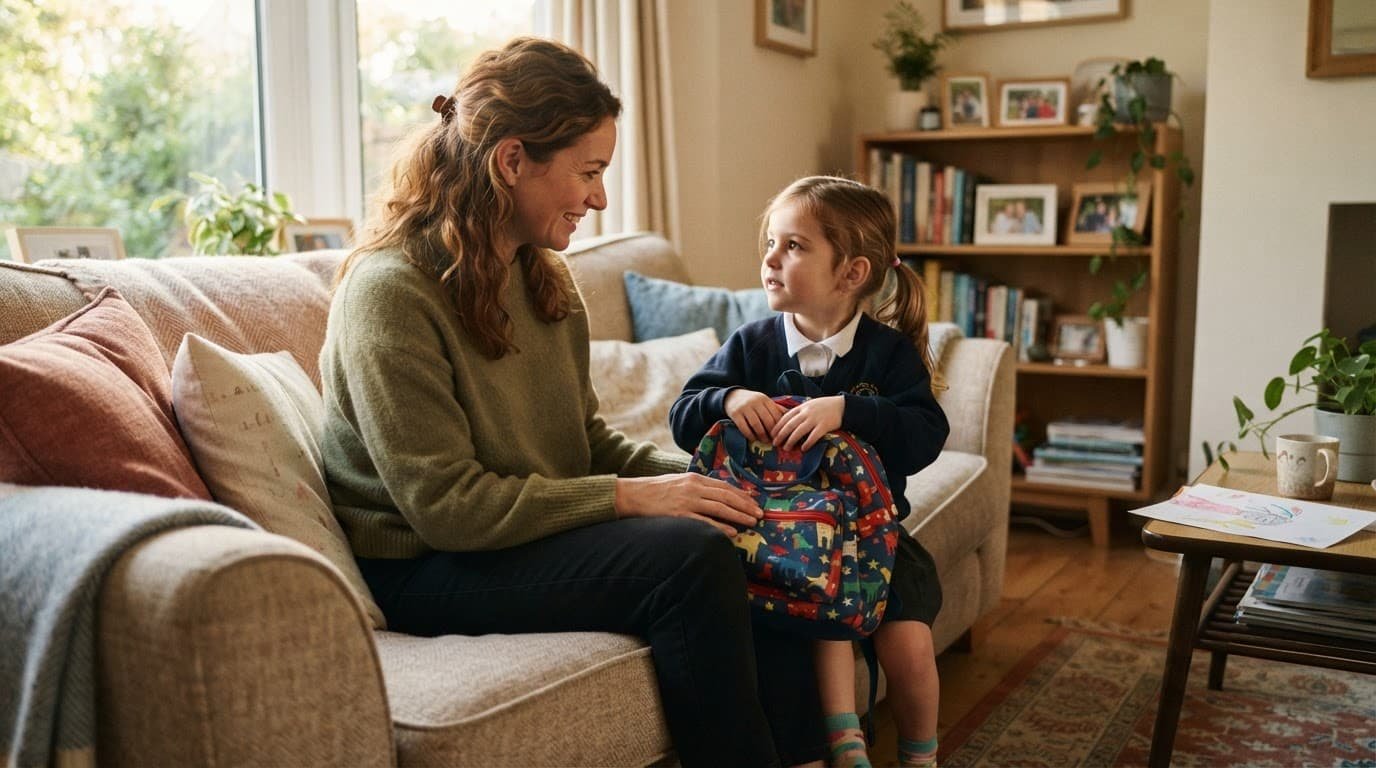
Gentle Prompts for Excitement, Worry, or Nervousness
Start with questions that invite details rather than a single verdict about the day.
- “When did you feel most excited?”
- “Did anything feel scary, confusing, or uncomfortable?”
- “What helped you feel comfortable?”
- “Was there a moment when you felt nervous?”
- “When did you feel bored, relieved, or happy?”
Younger children may find sentence starters easier than direct questions. Try, “I felt happy when…” or “I felt worried when….” You can also offer choices, such as, “Did your stomach feel calm, jumpy, or somewhere in between?”
A child can have good and hard feelings on the same day. Excitement about meeting a teacher can exist beside worry about finding the bathroom. Accept both feelings without correcting the child or saying, “But you had fun.” Emotional check-ins can help children build ways to manage those feelings, as described in these emotional check-in ideas for kids.
Questions About Challenges, Mistakes, and Asking for Help
Keep your tone curious and neutral when you ask about difficult moments. “What was the hardest part of today?” leaves room for an honest answer, while “Why didn’t you ask for help?” can sound like blame.
Ask, “Did you make a mistake that taught you something?” and “Did you need help with anything?” Follow up with, “Who helped you?” or “What could the adults do to make tomorrow easier?”
Listen before offering advice. Reflect what you hear by saying, “That sounds confusing,” or “You wanted help but didn’t know who to ask.” Then ask, “Would you like advice, or would you like me to listen?” Your child may need comfort before solutions.
Questions That Build Pride and Confidence
Invite your child to notice effort, courage, and persistence.
- “What did you try, even though it felt new?”
- “What did you handle by yourself?”
- “When did you keep going?”
- “What are you proud of today?”
- “Did you show kindness or help someone?”
Praise the action rather than demanding perfect behavior or achievement. Say, “You kept trying when the activity felt difficult,” instead of focusing only on grades or classroom performance. These questions help children see confidence as something they practice through effort, bravery, kindness, and persistence.
How to Match First-Day Questions to Your Child’s Age and Personality
The best first-day school question depends on more than age. Consider your child’s development, energy level, communication style, and comfort with school. A tired preschooler may share one detail, while a curious tween may want to discuss the teacher’s expectations or a friendship.
Simple Questions for Preschoolers and Kindergarteners
Young children usually respond best to short, concrete questions. Ask about something they can picture, such as:
- “What toy did you play with?”
- “What snack did you eat?”
- “Did you find the bathroom?”
- “What did you do at recess?”
- “What was your teacher like?”
- “Who did you meet today?”
If recalling the day feels difficult, offer choices instead of asking for a full story. Try, “Was recess fun, tricky, or both?” You can also use a drawing, toy figures, photos, or pretend play. Ask your child to show what happened rather than explain everything in words. Young children may remember only one detail, and that small detail can open the door to a longer conversation.
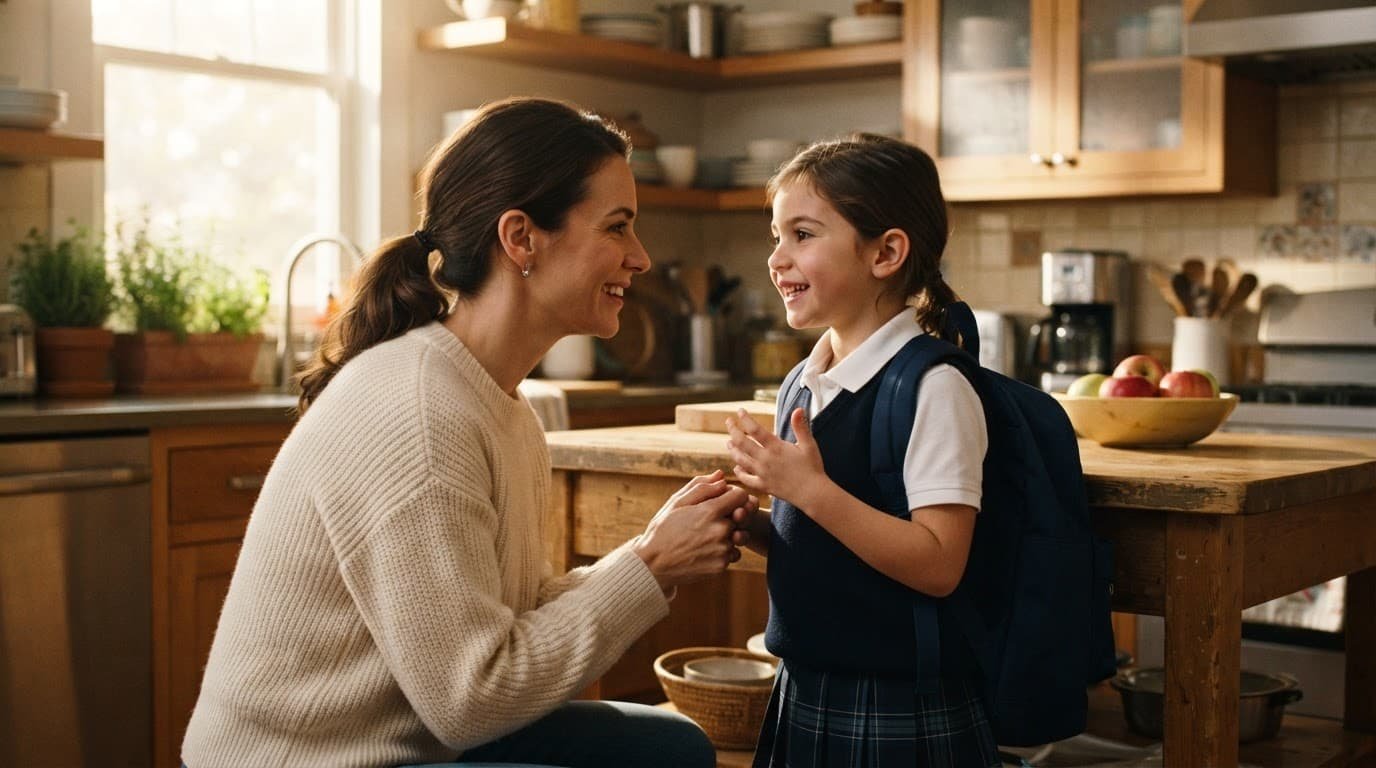
More Reflective Questions for Elementary Kids and Tweens
Elementary-age children and tweens can usually discuss opinions, comparisons, goals, and choices. Ask, “What would you change about today?” or “What do you hope to learn this year?” You might also say, “Which part felt easier than you expected?”
Questions about friends should invite sharing without demanding private details. Try, “Who made you feel welcome?” or “What was one good classroom moment?” To support confidence, ask, “How did you show kindness?” or “When did you speak up or ask for help?” Offering a small menu gives older children more control: “Would you rather tell me about a friend, a class, or something surprising?”
Conversation Starters for Quiet, Anxious, or Reluctant Kids
Some children talk later, during a snack, car ride, walk, bedtime routine, or shared activity. Model a brief honest response about your own day, then leave space. A one-word check-in or scale from 1 to 5 may feel easier than a broad question.
Avoid asking the same question repeatedly. Instead, invite another form of expression, such as a note, drawing, emojis, or a conversation while you build, cook, or walk side by side. Small moments of connection can help a child who needs time feel safe enough to share.
The Best Time and Way to Ask About the First School Day
The first conversation about school often works best after your child has had time to reconnect with you and recover from the day’s noise. Offer a snack, a hug, or a quiet activity before asking about the first school day. Then choose one focused question when your child seems calm, rather than expecting a full report at pickup.
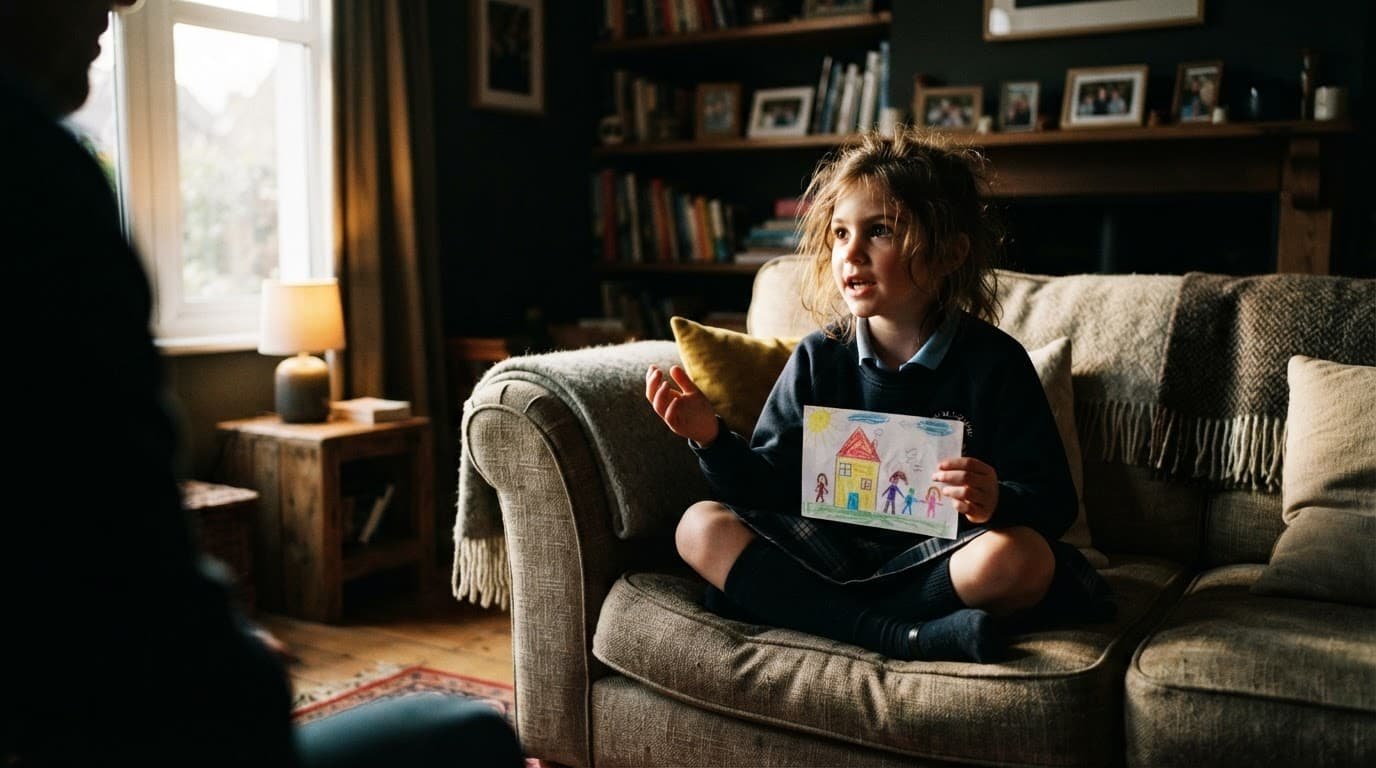
Choose One or Two Questions Instead of Asking Everything
A tired child may need time before they can describe what happened. Start with one question about their experience, such as, “What was one good part of today?” Pair it with one practical question, such as, “Do you need anything for lunch tomorrow?” You might also ask about supplies, homework, or the next morning’s routine.
Spread questions across the first week instead of trying to cover every detail on day one. Ask about friends tonight, classroom routines tomorrow, and recess or lunch later. A relaxed rhythm gives your child room to remember details naturally.
Rapid-fire questions can feel like an interview. Avoid interrupting, correcting small details, or insisting on eye contact while your child talks. Some children share more easily while drawing, walking, playing, or sitting beside you in the car.
Use Follow-Up Questions That Keep the Conversation Open
When your child offers a detail, reflect it before asking for more. Say, “You weren’t sure where to sit,” then pause. Helpful follow-ups include:
- “What happened next?”
- “How did that feel?”
- “Tell me more about that.”
- “What would make tomorrow easier?”
Give your child time to think, even if silence feels uncomfortable. A short answer may mean they are tired, not that they are hiding something or refusing to connect. Respect the response, then let the conversation end if they don’t want to continue.
Know When to Listen, Comfort, or Contact the School
One complaint about a hard day is common. Offer comfort and curiosity first: “That sounds upsetting. Do you want me to listen, help, or just sit with you?” Contact the teacher or school if your child describes repeated fear, exclusion, bullying, safety concerns, or major distress.
Don’t promise secrecy when safety is involved. Tell your child, “I won’t share this with everyone, but I may need to tell an adult who can help keep you safe.” Ask gentle questions, but don’t interrogate them for proof. Their wellbeing matters more than collecting a perfect account.
Turn First-Day Answers Into Confidence-Building Conversations
Your child’s first-day answers can guide more than the next question. They can help your child name feelings, recognize effort, solve manageable problems, and see school as a place where growth takes time. Listen for the feeling beneath the story, then respond in a way that builds trust.
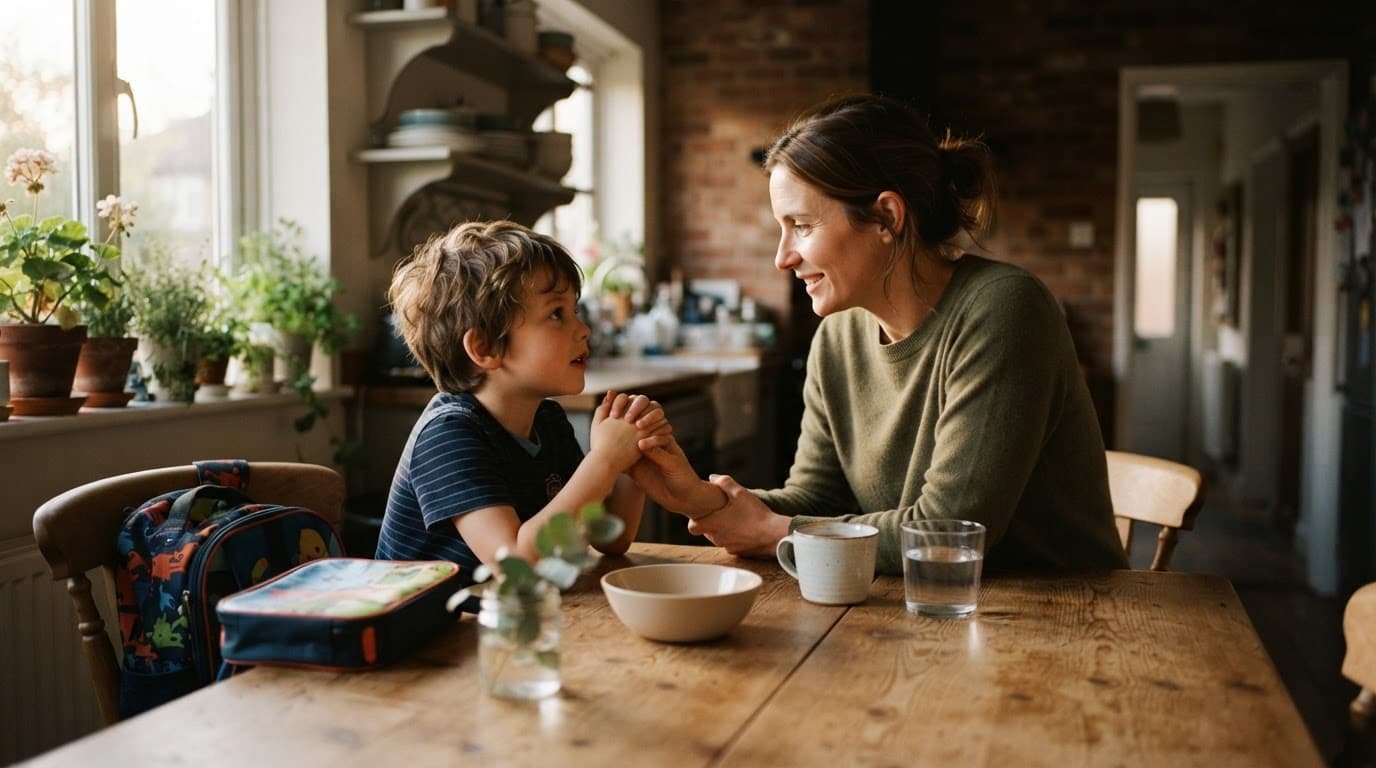
Validate the Answer Before Offering Advice
When your child says lunch felt lonely or the teacher’s instructions were confusing, pause before suggesting what to do. Start by naming the emotion you hear:
- “That sounds disappointing.”
- “I can see why you felt nervous.”
- “It took courage to try that.”
- “You wanted to join in, but you weren’t sure how.”
Validation means taking the child’s feelings seriously. It doesn’t mean agreeing with every interpretation or approving every action. You can say, “I understand why you felt angry. Hitting still isn’t okay, but we can talk about what happened.”
Before offering solutions, ask, “Do you want help solving it, or do you want me to listen?” This gives your child a voice in the conversation and teaches a useful communication habit. Research on positive parenting also connects supportive responses with children’s emotional development and relationships, as discussed in this positive parenting research.
Help Kids Make a Small Plan for Tomorrow
Once your child feels heard, choose one action that stays within their control. If they didn’t talk to anyone, they might greet one classmate. If they felt confused, they could ask the teacher one question. Other small plans include:
- Packing a preferred snack for a smoother lunch break.
- Practicing, “Can I play too?” before recess.
- Choosing where to stand or sit during an unfamiliar routine.
Keep the plan small enough to feel possible. The goal is one brave step, not a perfect second day. You can support your child’s effort with confidence-building strategies that focus on practice rather than performance.
End With Reassurance and a Positive Connection
Close with encouragement that leaves room for difficult feelings. Say, “New routines take time, and you handled a lot today.” Mention a specific strength, such as waiting patiently, asking for help, or returning to class after feeling nervous.
A calm bedtime story, packed backpack, or short morning hug can provide reassuring structure. Your child doesn’t need to deliver a flawless school report. They need to know that you care about the whole experience and will listen again tomorrow.
Frequently Asked Questions
These common questions can help you adjust your approach when your child’s first-day answers are brief, confusing, or emotional. Use them as a guide, then follow your child’s personality and needs.

What if my child refuses to talk about the first day?
Give your child space without treating silence as a problem. Offer a snack, sit nearby, or start a quiet activity together, then try again later with one simple prompt. Some children communicate through drawing, play, or gestures before they can explain the day in detail.
Should I ask first-day school questions every day?
You can ask about school regularly, but you don’t need a formal conversation each afternoon. One thoughtful question during dinner, a car ride, or bedtime may work better than repeated questioning at pickup. A steady routine helps your child know that you’re available without making school talk feel like an obligation.
How can I tell whether my child is tired or truly upset?
Look for patterns rather than judging one difficult afternoon. Hunger, exhaustion, and sensory overload can make children quiet or irritable after school, while repeated stomachaches, sleep changes, intense fear, or refusal to attend school may need more attention. If the change continues, write down what you notice and contact the teacher or pediatrician.
How do I ask about bullying without putting ideas in my child’s head?
Use neutral questions about belonging and safety instead of naming a specific child or making an accusation. Ask, “Did anyone make it hard for you to join in?” or “Did you see someone being left out?” Listen carefully, avoid promising secrecy, and involve the school when your child reports repeated unkind or unsafe behavior.
What should I do if my child gives an answer that worries me?
Stay calm and ask for the basic facts before reacting. Say, “Tell me what happened next,” then repeat what you heard so your child can correct any misunderstanding. If the concern involves safety, threats, abuse, or persistent exclusion, speak with the teacher or school promptly.
How can I help my child feel brave enough to share?
Make honesty feel safer than giving the answer you want to hear. Thank your child for telling you, even when the story is difficult, and notice small acts of courage, such as asking a question or joining a group. These traits of bravery grow through practice, support, and respectful conversations. Children also vary in how they express feelings and experiences, as outlined in this child development resource.
Save the pin for later

- 8 Signs Your Ex Is Testing You And What It Really Means - September 18, 2026
- 12 Qualities Every Good Man Should Have - September 18, 2026
- How to Write a Dating Profile for a Woman Over 45: 9 Simple Steps - September 18, 2026