
 Orji Chigozie Henry
One silly dare can turn a quiet Halloween party into a room full of laughter. Halloween truth or dare questions for kids work well at family parties, classrooms, sleepovers, and neighborhood gatherings because children can join in without complicated rules.
The best prompts are funny, mildly spooky, simple, and safe. Use the ideas below to plan a cheerful game with age-based choices, easy setup tips, and clear boundaries.
Key Takeaways
- Choose questions about costumes, candy, monsters, movies, and imagination.
- Keep dares short, silly, optional, and easy to complete safely.
- Let children pass, switch choices, or suggest another prompt.
- Adjust the game for preschoolers, elementary-age children, and tweens.
- Prepare labeled cards and backup prompts before the party begins.
Halloween truth or dare questions for kids
Each player chooses truth, which means answering a question honestly, or dare, which means completing a playful challenge. Keep turns brief so everyone gets several chances to play.
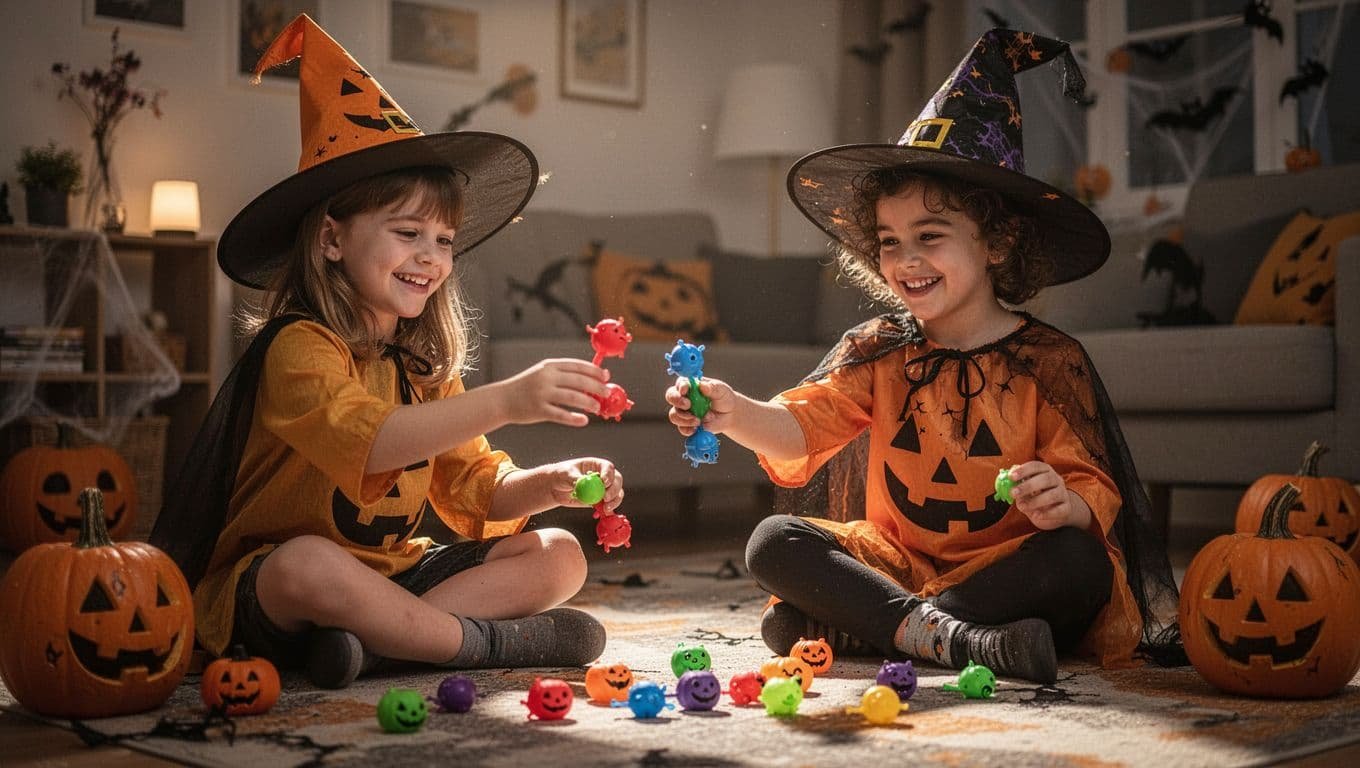
For more party inspiration, these Halloween truth or dare ideas include printable prompts for family gatherings and sleepovers.
Funny Halloween truth questions kids will enjoy
Write these on cards or read them aloud:
- What costume would you wear every day if you could?
- Which Halloween candy would you save for last?
- What would your superhero name be?
- Which friendly monster would you invite to dinner?
- What Halloween movie makes you laugh?
- What would your dream pumpkin look like?
- If you invented a monster, what would it eat?
- Have you ever forgotten part of your costume?
- Would you rather carve a pumpkin or decorate a cookie?
- What sound would your ghost make?
- What would you put inside a haunted house?
- Which animal would make the funniest vampire?
- What is the silliest Halloween decoration you have seen?
- If you could create a candy flavor, what would it taste like?
- What would your perfect trick-or-treating route include?
- Which costume would you never choose?
- What would you name a pet bat?
- What is your funniest Halloween memory?
- If you had a magic broom, where would you fly?
- What would your dream costume look like?
Children can answer with a favorite, an invention, or a quick story. Avoid questions about family problems, fears, appearance, school trouble, or private experiences.
Playful Halloween dares that are safe and silly
Keep each dare short and optional. Children can perform these indoors or in a clear outdoor space:
- Walk like a zombie for ten seconds.
- Act like a black cat crossing the room.
- Do a short monster dance.
- Sing “Happy Birthday” in an opera voice.
- Make your funniest Halloween face.
- Balance a wrapped candy on your head.
- Pretend to eat an invisible sandwich.
- Make three friendly ghost sounds.
- Pose like a Halloween decoration.
- Pretend to stir a giant witch’s potion.
- Do a slow-motion werewolf transformation.
- Create a toilet-paper mummy with a teammate.
- Waddle like a pumpkin with tiny feet.
- Say your name in a robot voice.
- Pretend to answer a phone carried by a bat.
- Make a sound effect for a creaky door.
The goal is shared laughter, not a perfect performance. A child who feels shy can choose a team dare or take a pass.
How to play Halloween truth or dare with kids
Arrange everyone in a circle and choose the first player with a simple method, such as the person wearing the most colorful costume. That player selects truth or dare, answers the question, or completes the challenge, then chooses the next player.
Place truth cards and dare cards in separate bowls or Halloween bags. A timer can give each turn a 30-second limit, while a no-repeat rule keeps the game fresh. Small non-food prizes, such as stickers or glow bracelets, can reward participation without making winners the focus.
A calm host also helps children practice being more spontaneous without pressuring anyone to perform.
Simple ways to make the game work for different ages
Preschoolers usually need picture cards, one-step actions, and an adult who reads questions aloud. Use prompts about colors, animals, sounds, and costumes.
Elementary-age children can handle imaginative questions and short solo dares. Tweens may enjoy team challenges, character voices, and creative monster stories, but keep every topic suitable for their age.
Fun Halloween themes for a party or sleepover
Choose a theme such as friendly ghosts, silly monsters, pumpkins, creepy-crawly animals, or costume characters. Orange and purple cards, plastic spiders, costume accessories, and Halloween music add atmosphere without making the room too frightening.
A trick-or-treat adventure theme can include dares that involve finding a paper pumpkin or posing beside a decoration. Keep the play area clear and supervised.
Safety rules that keep kids comfortable and included
Every child should be allowed to pass, switch from truth to dare, or choose a different card. Nobody should tease a player for saying no.
Avoid dares involving climbing, roads, fire, sharp objects, unsafe foods, strangers, online posting, unwanted touching, or property damage. Check allergies before using candy or food in a prompt. Also consider children who dislike loud sounds, darkness, costumes, or messy textures.
A safe Halloween dare should create a funny moment, not a frightening memory.
Parents and hosts should stay nearby, especially with young children. For ideas that build confidence through small, manageable challenges, see these traits of bravery.
How to handle a dare that feels too scary or difficult
Stop the dare as soon as a child looks uncomfortable or says no. Thank the child for speaking up, then offer two safer choices.
Replace a ghost dare with a funny sound effect. Swap a physical challenge for a team activity, such as inventing a monster together. Move to the next turn without making the child explain the decision.
Easy ways to prepare printable truth and dare cards
Write one prompt per card and label each card Truth or Dare. Use different colors, such as purple for truth and orange for dare, then cut the cards apart. Laminate them if you want to reuse them next Halloween.
Before guests arrive, count the players, choose a clear play area, set a time limit, gather simple supplies, and prepare backup cards. Add a few problem-solving games for kids if the group needs a calmer activity between rounds.
Frequently Asked Questions
How many cards should I prepare?
Prepare about three cards per child. A group of eight children will have enough variety with roughly 24 cards, though extra prompts help if a child skips a card.
Should children play truth or dare in teams?
Teams work well for shy children and younger groups. Pair players for dances, monster sounds, or mummy-making challenges so nobody feels singled out.
Can I use candy in a dare?
You can use sealed, allergy-safe candy for simple prompts, such as balancing one on a head. Never require eating, blindfold children, or use foods that could cause choking or allergic reactions.
How long should a Halloween game last?
A 15- to 30-minute game usually holds children’s attention. Stop while the group is still having fun, then offer another activity.
What if a child keeps refusing every prompt?
Let the child watch, help draw cards, keep score, or choose the next player. Participation can grow when children have control over their role.
Conclusion
A successful Halloween game needs prompts that match the children’s ages, personalities, and comfort levels. Start with easy questions, offer silly dares, and let children help choose the cards.
When everyone can pass without teasing, Halloween truth or dare questions for kids become a simple way to share laughter and create warm party memories.
Save the pin for later

- 8 Signs Your Ex Is Testing You And What It Really Means - September 18, 2026
- 12 Qualities Every Good Man Should Have - September 18, 2026
- How to Write a Dating Profile for a Woman Over 45: 9 Simple Steps - September 18, 2026