
 Orji Chigozie Henry
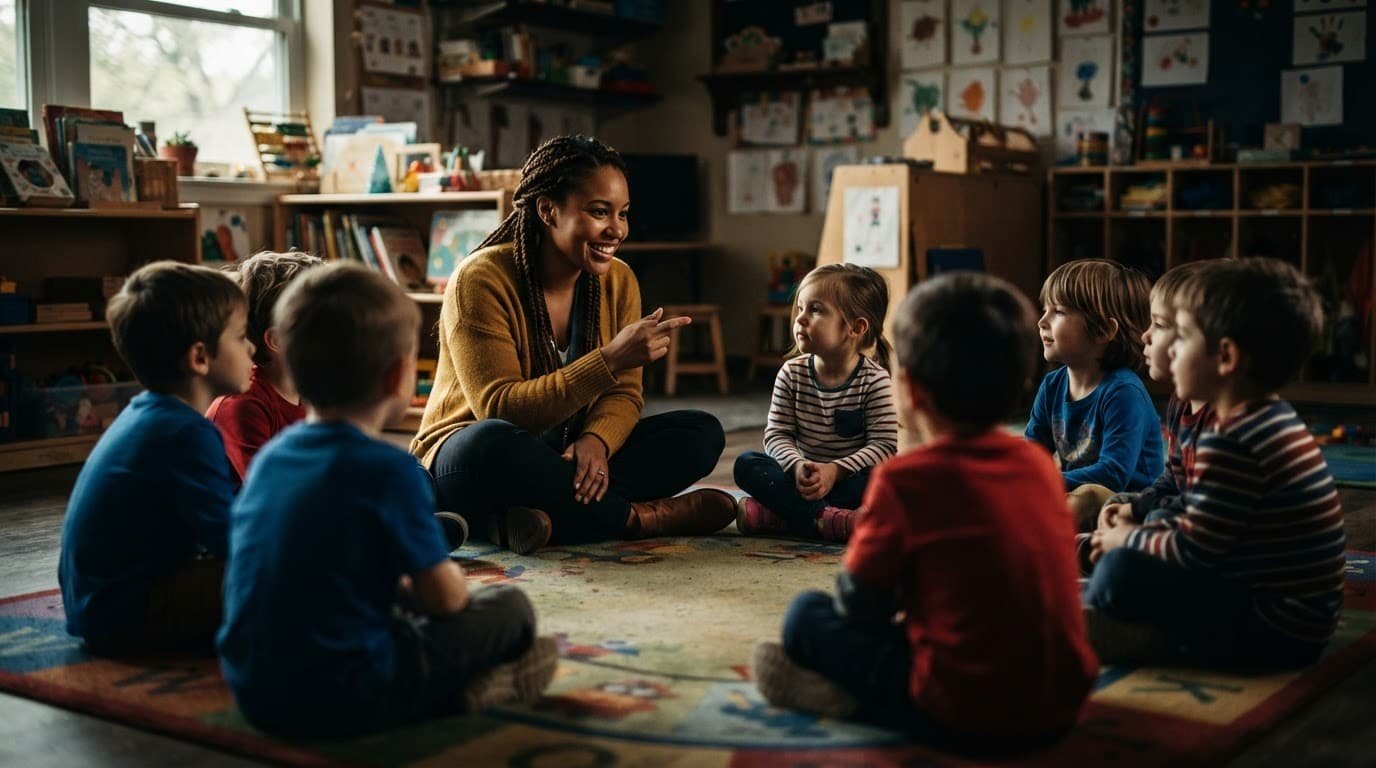
A daily fall question of the day gives preschoolers an easy way to talk, listen, and connect during a busy classroom routine. A short prompt about leaves, weather, favorite fall activities, or seasonal feelings helps children practice turn-taking, self-expression, and careful observation while they share their ideas with classmates.
You can also turn answers into simple early math practice. Children might vote for their favorite fall color, place their names under a weather picture, or help create a quick class graph. These small moments support participation and building self-confidence in children without putting pressure on reluctant speakers. Use the questions during circle time, morning meetings, arrival routines, or small groups, then adjust the format with picture choices, gestures, drawing, or partner sharing.
Next, you’ll find ready-to-use fall questions, easy ways to display answers, adaptations for different learners, and tips for keeping each discussion welcoming and brief.
Key Takeaways
- Use short, open-ended fall questions of the day to help preschoolers practice speaking, listening, and taking turns.
- Invite children to discuss leaves, weather, animals, favorite activities, and seasonal feelings during circle time.
- Offer picture choices, gestures, drawing, or partner sharing so every child can participate comfortably.
- Turn answers into early math practice with simple votes, sorting activities, and class graphs.
- Keep discussions brief and welcoming, using these circle time question strategies to build confidence and connection.
Fall Questions of the Day Preschool Teachers Can Use Right Away
Preschool fall questions should be short, concrete, and connected to children’s real experiences. Use a mix of choice, observation, emotion, and imagination prompts. Children can answer with words, gestures, picture cards, movement, or a drawing.
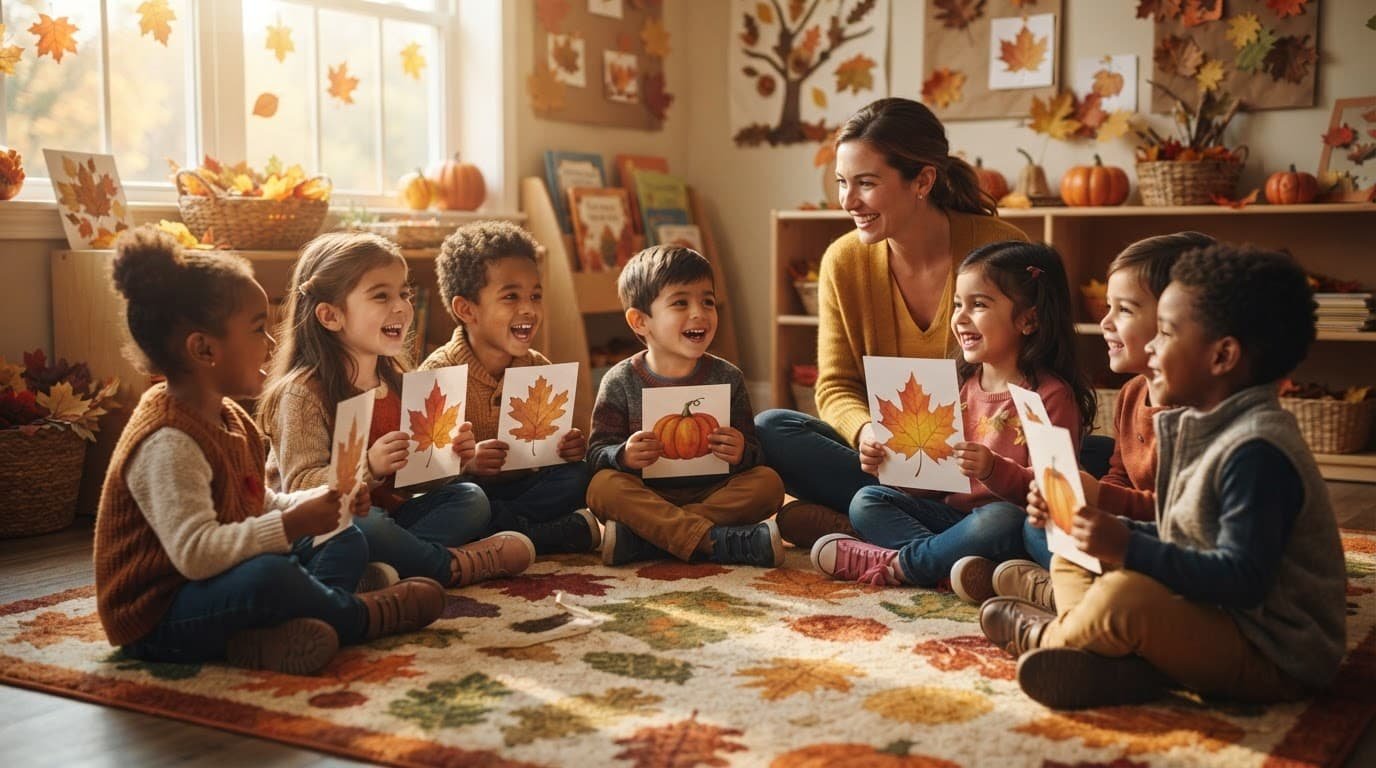
Simple Fall Choice Questions for Quick Circle-Time Participation
Two-option questions help shy children and children who need extra processing time join the conversation. Invite each child to point, hold up a picture, move to one side of the room, or say the answer.
- Do you like red leaves or yellow leaves?
- Would you wear boots or sneakers?
- Would you eat an apple or a pear?
- Do you like windy days or rainy days?
- Would you rather jump in leaves or collect leaves?
- Do you like pumpkins or apples?
- Would you choose a sweater or a raincoat?
- Do you hear birds or squirrels outside?
- Would you play with dry leaves or wet leaves?
- Do you like small pumpkins or big pumpkins?
Open-Ended Fall Questions That Build Conversation Skills
Open-ended prompts invite more than one correct answer. Ask children to describe what they see, remember, enjoy, or wonder about. You can model a complete sentence without correcting every small grammar mistake.
- What changes do you see in the trees?
- What sounds do you hear outside?
- What happens to leaves after they fall?
- What is your favorite fall activity?
- How do you stay warm on a cool day?
- What could we do with the leaves we collect?
- How can you help during our classroom cleanup?
- What would you like to learn about fall?
Follow up with, “What makes you think that?” or “Can you tell us more?” These prompts keep the conversation moving while giving children time to develop their ideas.
Imaginative Fall Prompts for Creative Thinking
Fantasy questions support storytelling, vocabulary, social connection, and confidence because children aren’t searching for one correct answer.
- If you were a falling leaf, where would you go?
- What would you say to a squirrel?
- What would it be like to live inside a pumpkin?
- Where would you ride if the wind carried you?
- What would you put in a cozy animal nest?
- What adventure could a tiny acorn have?
Fall Feelings and Friendship Questions for Social-Emotional Learning
Keep feelings questions gentle. Never pressure a child to share private emotions. A child may pass, choose a feeling picture, or answer about a pretend character.
- How does rainy weather make you feel?
- How do you feel when fall routines change?
- What helps you feel comfortable on a chilly day?
- How can you help a friend outside?
- When might someone need extra kindness?
- What could help a friend feel brave?
- What makes outdoor play feel safe and fun?
How to Turn a Fall Question Into a Meaningful Preschool Morning Meeting
A fall question can anchor a 10- to 15-minute morning meeting without taking over the entire routine. Begin with a greeting song, then introduce one clear prompt and show the related picture or object. Give children quiet thinking time before collecting answers. Invite a few children to explain, then close with a movement activity or seasonal song. This predictable structure supports connection while keeping the meeting active and brief. Morning meetings work best when they combine community-building with simple learning experiences, as described in this morning meeting overview.
Model an answer first, such as, “I choose yellow because it reminds me of sunshine.” Set a speaking order with a name card, helper, or turn-taking signal. Children may also point, gesture, use a picture, or pass. You don’t need every child to speak every day. The goal is comfortable participation, so move on while attention is still strong.
Use Pictures, Objects, and Movement to Make Questions Accessible
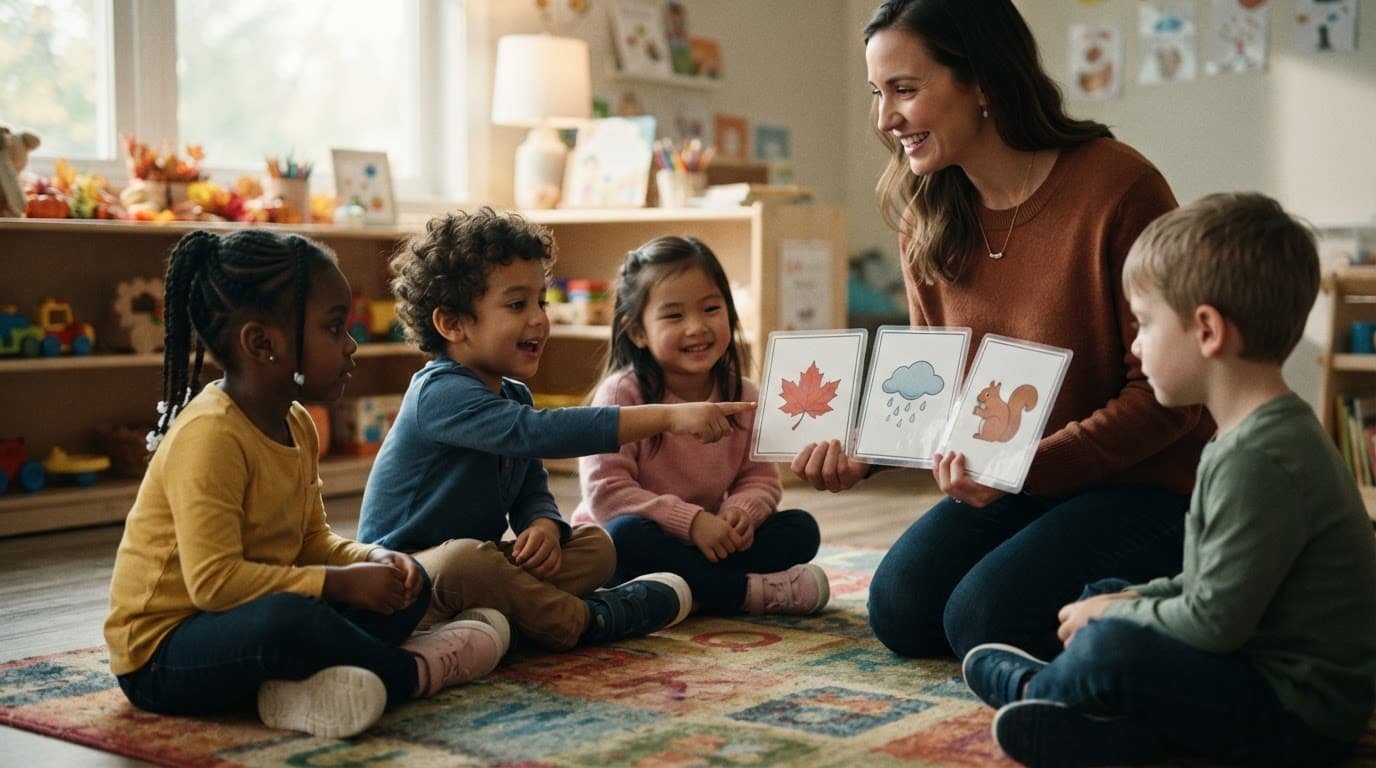
Visuals turn an abstract question into something children can see and understand. For a weather prompt, show weather icons. For a clothing question, offer cards with boots, sweaters, and raincoats. Photos of leaves, feeling faces, real pumpkins, or a basket of natural objects give children concrete choices.
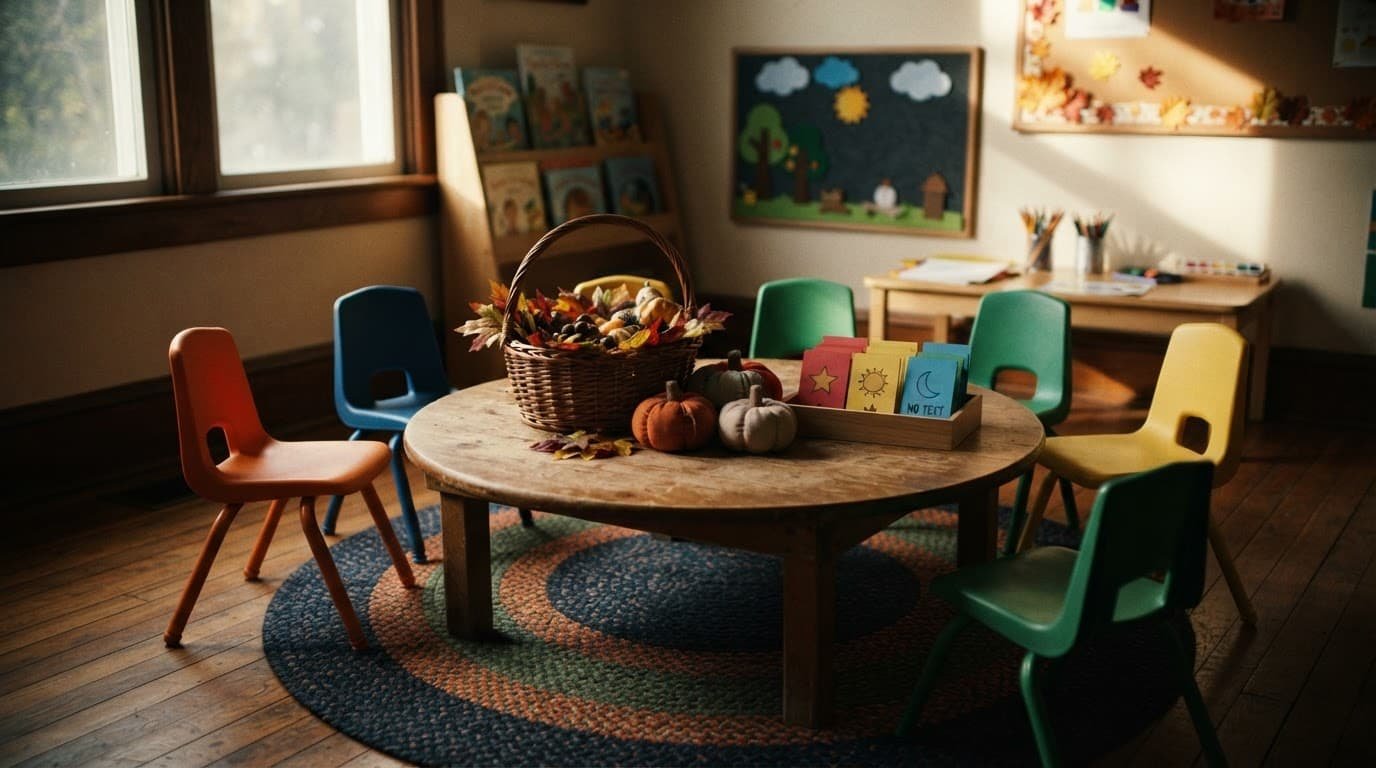
Children can vote with sticky notes, clothespins, linking cubes, or hand signals. They can also stand near the choice they prefer. These options support children who are learning English, have speech delays, or communicate in different ways. A child who doesn’t answer aloud still has a meaningful place in the conversation.
Movement adds another simple entry point. Ask children to tiptoe toward the pumpkin picture, stretch like a tall tree, or crouch like a squirrel. Props and movement make the question easier to process while keeping bodies involved.
Build Early Math and Literacy Skills Without Making It Feel Like a Worksheet
One fall question can lead to several playful learning moments. Ask, “Which fall color do you like best, red, yellow, or orange?” Each child places a cube under a color card. Count the cubes together, compare which column has more or fewer, and notice any patterns.
Next, label the class graph with color words. Invite children to help clap the syllables, match uppercase and lowercase letters, or find the first sound in red. Dictate a shared sentence such as, “Our class likes yellow best.” The teacher can write while children contribute the words.
Keep the language connected to real objects and sensory experiences. Ask whether a leaf feels smooth, crunchy, or damp, or whether the morning air feels chilly. Children might describe a bright pumpkin or listen for rustling leaves. These vocabulary moments feel like conversation because children are observing, moving, and sharing rather than completing a worksheet.
Ways to Adapt Fall Questions for Different Ages and Learning Needs
A fall question of the day should open a door, not create a test. Adjust the wording, response choices, wait time, and materials so younger preschoolers, older children, mixed-age groups, and children with language or sensory needs can participate.
Make the Same Question Easier or More Challenging
Start with one idea, then change the question to match each child’s current skills. For example, “What do you notice about fall?” may feel too broad for a younger child. Show a leaf and ask, “What color is this leaf?” A child who needs language support can point to a red or yellow card, while another child can answer with, “I notice the leaf is yellow.”
Older preschoolers may be ready for comparison or reasoning: “How are these two leaves alike and different?” They might explain that both leaves are small, but one is red and the other is brown. Mixed-age groups can hear the same topic with different entry points.
Use sentence starters to reduce pressure and build complete responses:
- “I notice…”
- “I like…”
- “I wonder…”
- “I would choose…”
For a child who needs more support, repeat the question with fewer words, offer two choices, or pause for several seconds before speaking again. Children may answer by pointing, drawing, holding up a picture, using a gesture, or telling a partner. These responses carry meaning, even when they don’t sound like a long verbal answer.
| Learning need | Helpful adjustment |
|---|---|
| Younger preschooler | Use one-step questions about color, size, sound, or choice. |
| Older preschooler | Ask “why,” comparison, prediction, or problem-solving questions. |
| Mixed-age group | Ask a simple question first, then add an optional follow-up. |
| Language support | Pair spoken words with photos, objects, gestures, and sentence starters. |
| Sensory support | Let children observe from a comfortable spot or respond without touching materials. |
A simpler answer is not a wrong answer. When a child points to a leaf, says “yellow,” or shares a detailed explanation, acknowledge each contribution with equal respect. A brief circle time with clear choices and movement breaks may also help children participate more successfully. The Inclusive Preschool Through the Seasons guide offers useful ideas for adapting seasonal classroom experiences.
Keep Seasonal Discussions Inclusive, Safe, and Comfortable
Fall does not feel the same to every child. Cold weather, loud wind, wet leaves, insects, costumes, or holiday activities may cause discomfort. Offer neutral prompts such as, “What color do you like?” “What is a cozy activity?” or “What did you notice inside our classroom?”
Avoid assuming that every family celebrates the same fall holidays or has access to parks, gardens, costumes, or outdoor play. Invite children to share familiar experiences, while making classroom examples available to everyone.
Check allergies and safety before using apples, seeds, plants, pinecones, or other natural materials. Wash items, supervise handling, and provide picture cards or classroom objects when touching or tasting isn’t appropriate. Set a simple rule: Different answers are welcome, and we listen without laughing at someone else’s idea.
Creative Ways to Display and Reuse Preschool Fall Questions
A fall question can become more than a morning conversation. With a few simple materials, you can turn children’s answers into classroom records that support language, early math, creativity, and self-confidence. A question board, pocket chart, or shared book also gives children a reason to revisit their ideas later.
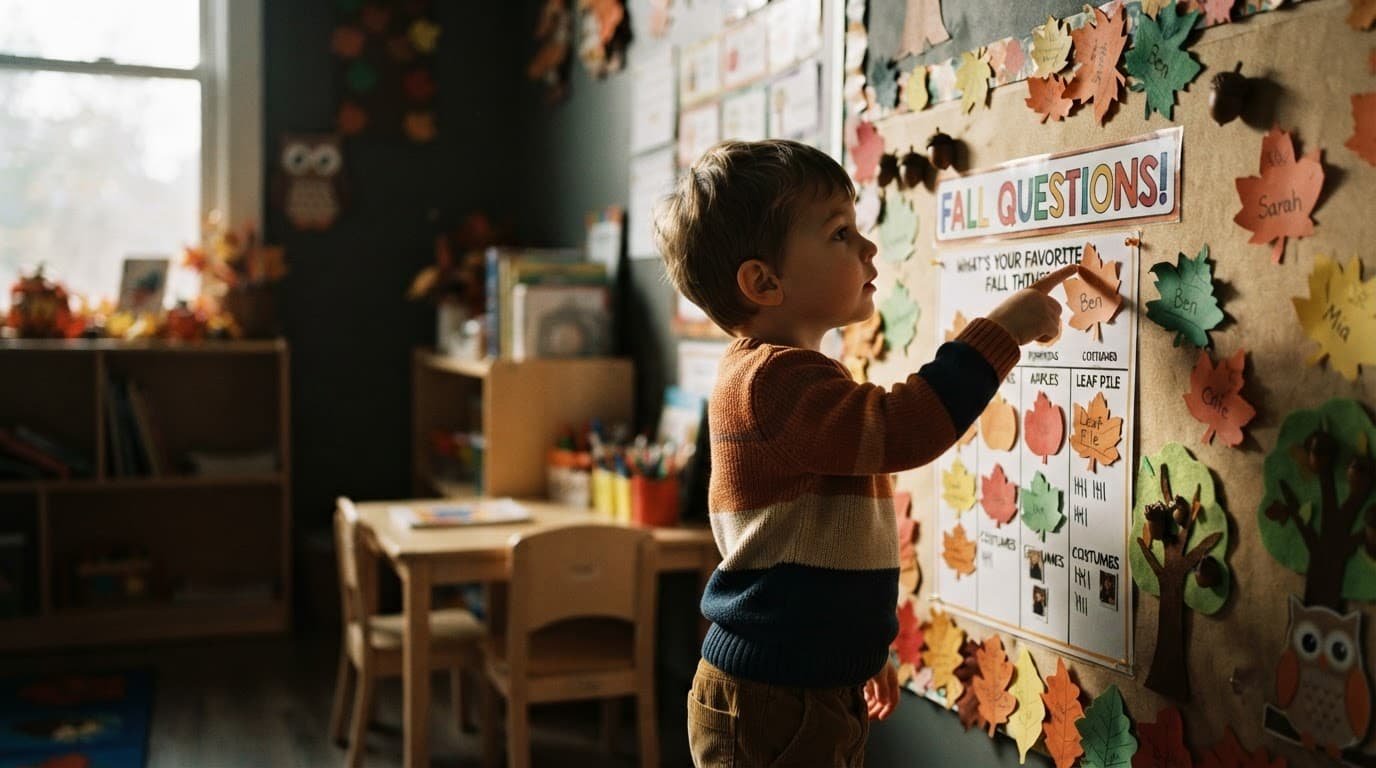
Create a Class Graph, Shared Book, or Fall Conversation Journal
Start with a four- to six-week rotation so you don’t need to create a new prompt each morning. Post one question in a seasonal pocket chart or on a small question board. Keep a folder of fall picture cards nearby, then change the card when you begin a new week.
A simple weekly pattern keeps the conversations balanced:
- Monday uses a choice question, such as, “Which fall color do you like best?”
- Tuesday focuses on observation, such as, “What do you notice about this leaf?”
- Wednesday invites feelings, such as, “What helps you feel cozy on a chilly day?”
- Thursday encourages imagination, such as, “What would you do if you were a leaf?”
- Friday supports reflection, such as, “What did you learn or notice this week?”
For Monday’s color question, children can place a sticky note, clothespin, or linking cube under red, yellow, orange, or brown. Count the groups together and compare which color has more or fewer votes. On Thursday, record each child’s dictated response in a shared class book. One page might say, “If I were a leaf, I would fly to Grandma’s house.” Add the child’s drawing, a classroom photo, or a leaf rubbing.
A fall conversation journal can stay in the writing center. Pair a child’s exact words with a drawing, photograph, or sample of collected leaves. Later, revisit the journal during art, science, dramatic play, or story time. Children can paint the color they chose, sort leaves by shape, pretend to run a leaf market, or retell an imagined leaf adventure.
You can also display selected pages in the hallway or send a weekly question home. Families might discuss, “What fall food do you enjoy?” and return a drawing or short response. These records show children that their ideas matter. They also help you notice new vocabulary, participation patterns, and changing interests over time. A display can become a classroom memory map, not just decoration.
Frequently Asked Questions
These answers can help you keep fall question time simple, inclusive, and easy to fit into a preschool routine. The best conversations feel welcoming rather than like a test.
How often should preschool teachers use a question of the day?
One question each day is enough, especially when it fits into a short morning meeting. You can use the routine daily or choose a few days each week, depending on your schedule and the children’s attention.
If children start losing focus, shorten the discussion or move to a song, story, or movement activity. A predictable routine with clear expectations can help the group stay engaged, as recommended in these circle time guidance tips.
What makes a fall question appropriate for preschoolers?
The best prompts use familiar words and focus on one idea. A question such as, “Do you like apples or pumpkins?” is easier to understand than a question with several parts.
Let children answer through speech, pointing, movement, drawing, or a choice. Avoid prompts that require advanced background knowledge or suggest that only one response is correct.
Should every child answer the fall question?
Encourage participation, but don’t force a child to speak in front of the group. Offer wait time, partner sharing, visual choices, or a pass option when a child feels unsure.
Children can join in different ways, including pointing to a picture or holding up a card. Give everyone repeated chances to participate across the week, so one quiet morning doesn’t become a lasting pattern.
How can teachers use fall questions with children who are learning English?
Use real leaves, pumpkins, clothing, photos, gestures, and facial expressions to support the words you say. Repeated sentence frames, such as “I like __” or “I see __,” give children a familiar structure for answering.
Home-language support can also help children connect new vocabulary with ideas they already understand. Two-choice questions and short answers build confidence while children develop English, and nonverbal communication gives them a meaningful way to participate.
Can families use these preschool fall questions at home?
Yes. Choose one prompt during a meal, walk, bath, or bedtime routine instead of asking many questions at once.
Adults can share their own answer, listen without turning the exchange into a quiz, and follow the child’s interests. If a child starts talking about a squirrel rather than leaves, that change may lead to the most engaging conversation.
What can teachers do when children give silly or unrelated answers?
Respond with curiosity, then briefly restate the original question. Decide whether the playful answer can lead to a useful conversation, especially if it reveals imagination or a new interest.
If the answer moves too far off topic, offer a visual choice or invite the child to answer later. A gentle response protects the child’s willingness to share while keeping the group discussion moving.
Conclusion
Fall questions of the day give preschoolers a simple way to talk about the weather, notice seasonal changes, and share their ideas with the group. They also support language, curiosity, early math, and building healthy self-esteem when teachers listen with patience and respect. The strongest conversations don’t depend on perfect answers. They grow from children feeling safe enough to participate in their own way.
You don’t need elaborate materials or a long lesson. Choose one question that matches the day’s weather, classroom activity, or group mood. Add a few picture cards or real objects, then adjust the prompt when children need more time, movement, or another way to respond.
Every idea has value, whether a child speaks, points, draws, or acts out an answer. When teachers make room for those different responses, a short fall question becomes a meaningful part of classroom connection.
save the pin for later

- 8 Signs Your Ex Is Testing You And What It Really Means - September 18, 2026
- 12 Qualities Every Good Man Should Have - September 18, 2026
- How to Write a Dating Profile for a Woman Over 45: 9 Simple Steps - September 18, 2026